By Claire Jeong, Chief Conference Officer, Vice President of Investor Research, Asia BD, LSN
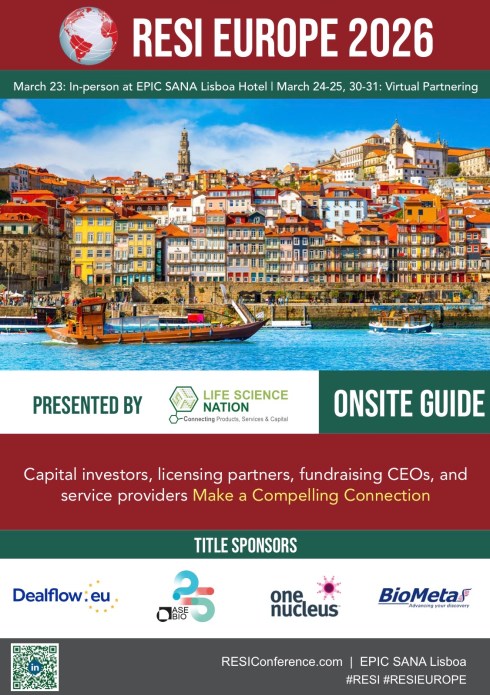
Life Science Nation (LSN) is pleased to introduce the investor panel lineup for RESI Europe, bringing together venture capital firms, family offices, corporate investors, and strategic partners actively funding and partnering across the global life science ecosystem. Designed to reflect how capital is being deployed today, these panels examine what investors are prioritizing, how partnership decisions are made, and what founders need to demonstrate to stand out in an increasingly selective market.
From pharma partnering and preclinical investing to digital health, medtech, and cross-border capital flows, the RESI Europe investor program offers a practical look at how decisions are being made across stages and sectors. Each session pairs candid investor perspectives with real-world expectations founders must meet to advance conversations beyond the first meeting.
Monday, March 23 – Investor Panels
9:00 – 9:50 AM | Pharma Partnering: Getting on Pharma’s Radar
As large pharmaceutical companies increasingly rely on external innovation, early-stage partnerships are becoming a core driver of pipeline growth. This session explores how pharma evaluates emerging science, which data packages resonate with business development teams, and how founders can structure partnership discussions that align with long-term strategic priorities.
10:00 – 10:50 AM | Funding New Science: How VCs Evaluate Preclinical Programs
With capital efficiency under intense scrutiny, therapeutic investors are rethinking how they assess risk and differentiation at the preclinical stage. Panelists will share how they evaluate programs ahead of clinical data, the milestones that matter most, and what founders must show to compete in today’s Series A environment.
11:00 – 11:50 AM | Family Offices: The Rise of the Venture Builder
Family offices have evolved into active healthcare investors, launching dedicated funds and building internal operating expertise. This discussion examines how these groups source deals, lead early-stage rounds, and make investment decisions differently from traditional institutional venture firms.
1:00 – 1:50 PM | Building Investable Medtech: Devices, Diagnostics, and De-risking
Investors in medtech are focused on solutions that combine technical innovation with clear clinical and regulatory pathways. This panel breaks down current investor interest across devices and diagnostics, highlighting the milestones that signal scalability and commercial readiness.
2:00 – 2:50 PM | Digital Health: Moving from Hype to Sustainable Value
As the digital health sector matures, investors are prioritizing solutions with measurable clinical and economic outcomes. Panelists will discuss where capital is being deployed, including AI-driven diagnostics and data platforms, and how companies can demonstrate long-term viability in real-world settings.
3:00 – 3:50 PM | Capital Without Borders: The European Life Science Landscape
Europe’s research ecosystem continues to produce world-class innovation, while investment dynamics increasingly span borders. This session explores how European life science companies can attract international capital, navigate regional differences, and compete on a global stage.
4:00 – 4:50 PM | Backing the First Believers: Deciding to Write the First Check
Pre-seed and formation-stage investors often commit capital before significant data exists, backing teams, vision, and early signals of execution. This panel examines how first-check investors assess founders, build conviction, and help shape companies into institutional-grade opportunities.
These investor panels are designed to foster meaningful dialogue between capital providers and innovators, creating informed conversations that continue beyond the stage and into partnering meetings.
Join the RESI Speaker Lineup
Are you an investor or strategic partner with valuable insights to share with early-stage life science companies? We are looking for dynamic speakers to join our RESI panels.
As is customary at the turn of the year, we have taken the opportunity to take a look back at financing deals we covered since issue#1, which went live in April last year. Together, these data offer a snapshot of how capital flowed into early-stage, preclinical therapeutic startups in 2025 — and where it did not.
Before diving into the numbers, it is worth qualifying that this analysis captures only publicly disclosed financing rounds, rather than the full universe of early-stage biotech funding. An increasing fraction of preclinical companies now operate in stealth, in part because of fast-moving competition from regions such as China. As a result, the figures presented here likely undercount the true level of early-stage activity.
From the start of our coverage in Q2 2025 through the end of December, we reported 195 preclinical financing rounds. Because Haystack Science focuses on discovery-stage and pre-IND companies, this number excludes financings for assets already in clinical development. Even so, the dataset provides a useful lens on early-stage investor behavior.
Independent industry analyses paint a consistent picture. Multiple sources indicate that 2025 was a year in which venture capital shifted toward later-stage, clinical-stage deals, which were fewer in number but larger in size. This trend was reinforced by ‘Q4 2025 Biopharma Licensing and Venture Report’, presented at the JP Morgan conference. According to JP Morgan, 2025 saw just 191 seed and Series A financings, the lowest total since 2020.
Seed and Series A investment slowed through Q4 2025, losing momentum built earlier in the year and further lagging Series B and later rounds. The slowdown in early-stage funding reflects heightened diligence standards and longer decision timelines for early-stage startups. Source: JP Morgan
According to the Haystack Science data sample, no venture fund made a series A investment in more than three companies last year (these series A financings ranged from $8–300 million, with a median of $42.5 million). As the deals that Haystack tracks are only the publicly disclosed subset, we expect our sample is skewed to companies that raised larger sums. In the deals we tracked, the most bloated series A ($300 million) went to Cambridge, Mass.-based Lila Sciences, a generative ML model powered startup building “autonomous, closed-loop experimentation using generative ML models to generate drug mechanism hypotheses, test them robotically in the lab with minimal human intervention, and iteratively learn from results.” Lila was backed by megafund Flagship Pioneering and General Catalyst.
21 funds invested in more than one series A round. These were: Arch Ventures, Atlas Venture, Lightstone Ventures, 3E Bioventures, Access Industries/Biotechnology, BGF, BVF Partners, Canaan Partners, Cormorant Asset Management, Dementia Discovery Fund, Eight Roads, Johnson & Johnson Innovation – JJDC, Khosla, Omega Funds, Orbimed, Polaris Partners, Samsara, Santé Ventures, Sofinnova Partners, The Column Group, and Versant Ventures. No fund invested in more than 3 series A investments in last year’s sample.
Further back in the pipeline, we tracked 60 deals. These seed financings—which ranged from $1.1–54.5 million with a median of $10.45 million—were mostly for smaller amounts ($1–$30 million), with a few much larger financing amounts. Overall, 85 different funds, family offices, angels and individuals participated in funding preclinical therapeutic startups in 2025. Of these 85 sources of financing, only 7 financed more than one company. The takeaway from this is that most (>90%) of companies at the seed stage receive funds from a completely unique set of investors.
The 7 financing entities involved in more than one seed deal were: AdBio Partners, Kurma Partners, NRW Bank, Ackermans & van Haaren (AvH), Bioinnovation Institute (BII), ClavystBio and ExSight Ventures. It is noteworthy that two of these funds are based in Paris, France: AdBio Partners and Kurma Partners. AdBio specializes in early-stage investments across Europe with a ~€86 million ($102 million) fund raised in 2021 focusing on oncology, immunology, and rare diseases. Kurma is part of the Eurazeo group, managing >€600 million in assets across several funds focused on early-stage therapeutics and diagnostics.
NRW.BANK, based in North Rhine-Westphalia, Germany, invests in innovative biotech companies focusing on tech-driven healthcare, bio-digital integration, and novel platforms for data/discovery, aligning with broader innovation goals. They appear to be an important source for the small scattering of financing (13) deals in German-speaking countries. NRW works closely with AvH, an Antwerp, Belgium-based diversified holding company and investment firm, with AvH Growth Capital a proactive investor in early-stage companies like DISCO Pharmaceuticals and Evla Bio.
Another very interesting seed funder is BII in Copenhagen Denmark. The institute provides in-kind grants of up to €3 million for bridging translational studies in European academic institutions. For those projects that progress to a company build, a combination of convertible loans of €500K (Venture Lab) and then €1.3 million (Venture House) are made available to complete seed funding. As of January 2026, BII has supported over 130 early-stage life science and deep tech companies, with many attracting significant external funding. This month, there was news that Novo Nordisk has just plowed another $856 million of funding into BII.
The United States continues to dwarf other countries in its ability to galvanize preclinical biotech startups receiving seed or series A financing, with the UK a far second place (itself hosting double the number of startups of other non-US countries). Source: Haystack Science
Overall, in terms of the location of where most investment is occurring, our analysis reveals the capacity to host startups is expanding across the globe, with at least 19 countries hosting one preclinical startup that received funding in 2025. These countries were: USA, UK, France, Switzerland, China, The Netherlands, Canada, Denmark, Germany, Belgium, Japan, Spain, Israel, Australia, Ireland, Norway, Portugal, South Korea and Singapore. Perhaps the prominence of France as a location for preclinical therapeutic startups was most surprising from our sample. Interestingly, a lot of ex-US startups now also have a US (usually Cambridge, Mass.-based) headquarters. Digging deeper, 85 different cities around the world host a startup that obtained financing (pre-seed to series B) in 2025, with 20 cities hosting two or more. As expected, the Boston cluster led with 28 preclinical therapeutic startups, the Bay area hosted 19, and the UK’s Golden Triangle had 13. Of the following pack, some interesting standout cities were Paris, France (with 5 in our sample) and New York City (with 7), the latter long in the shadow of its Boston neighbor.
Cities hosting two or more startups that received seed or series A funding in 2025 (85 different cities hosted at least one biotech startup receiving financing). Boston and the Bay Area in the United States and the UK’s Golden Triangle (London, Cambridge and Oxford) are the most successful biotech clusters, far ahead of rest of the world. Source: Haystack Science
In terms of the disease areas attracting early-stage investor money, cancer dominates, comprising the focus for 34.4% of the funding raises. This is slightly lower than the biopharma sector as a whole, where cancer comprises up to 45% of pipelines. Following cancer, neurodegenerative disease, autoimmune disease and inflammatory disease all figured prominently. The uptick in deals for companies tackling CNS disorders has been a rolling theme recently, given the burden of neurodegenerative disease and dementia on public health systems and the paucity of disease-modifying treatments. With the continuing stampede around GLP-1s/incretins, there was also a healthy number of metabolic/ endocrine disease startups financed.
Disease focus of pre-seed, seed, series A and series B deals for preclinical startups tracked by Haystack Science in 2025. Source: Haystack Science
One last area we looked at was the type of therapeutic being financed by investment groups. Here again, the pharmaceutical industry’s traditional workhorse, the small molecule, remained pre-eminent in 2025, comprising 24% of financing deals in pre-seed, seed, series A and series B financings that were in the preclinical stage. Established modalities like monoclonal antibodies (mAbs) were a common focus. And there was a resurgence of interest in recombinant proteins and peptides (likely boosted by the focus on incretins and the metabolic disease and obesity space). Of new modalities, antibody-drug conjugates, bispecific and multispecific antibodies, antisense oligonucleotides (ASOs), small-interfering RNAs (siRNAs) and chimeric antigen receptor (CAR) immune cell (T cell and NK cells) also were to the fore, each making up around 6% of all the early-stage deals we tracked. A type of therapeutic gathering increasing attention is clearly the induced-proximity therapeutic sector (including the different flavors of PROTACs, DUBTACs and molecular glues). Finally, although a great deal has been mentioned about investor apathy for gene editing and gene therapy, these also captured 3-4% of the deals.
Type of therapeutic modality in preclinical startups receiving pre-seed, seed, series A and series B funding in 2025 that were tracked by Haystack Science. Source: Haystack Science
A venture capital platform specialized in life sciences and medical technology manages multiple funds with total assets under management of approximately $1.5B. The firm has been operating since 2014 and is managed by a professional team with diverse and deep industry experience. To date, the firm has completed more than 90 investments in high-growth-potential companies. Typical allocation sizes for their RMB funds range from RMB 30M to RMB 150M, with the ability to invest up to RMB 200M. For the USD fund, typical investments range from $5-10M, with the ability to invest up to $20M.
The firm is open to investing globally across the broader biomedical sector, including medtech and biotech or therapeutics. The firm focuses on technology-driven, innovative platforms and products that demonstrate clear differentiation and meaningful value creation for patients and the healthcare system overall. Within biotech and therapeutics, the firm prefers companies at the angel or venture stages, particularly those addressing significant unmet clinical needs.
From a company perspective, the firm prefers opportunities that are technology-driven, commercially viable, and capable of solving real-world healthcare problems.
If you are interested in more information about this investor and other investors tracked by LSN, please email salescore@lifesciencenation.com.
A corporate venture capital arm of a global pharmaceutical company with a long operating history and an international footprint is actively seeking new investments. The parent organization operates worldwide and has expanded its global reach through strategic acquisitions in recent years. As part of its broader open innovation strategy, the parent organization actively pursues in- and out-licensing, early-stage partnerships, and strategic investments. The firm is responsible for executing strategic investments that support future partnering opportunities and help build the parent organization’s therapeutic pipeline.
The firm was established a few years ago and operates from the United States. The firm manages an evergreen fund and focuses on pre-clinical startups with differentiated platforms and first-in-class programs in human therapeutics. The firm participates in Seed and Series A financing rounds, typically investing up to USD $5M initially, with the ability to invest up to USD $10M per company through follow-on capital. The firm is open to engaging with companies globally and has built a portfolio of more than a dozen investments, primarily across Europe and the United States.
The firm targets pre-clinical to pre-IND, in-human therapeutics companies. Key areas of interest include oncology, neurology, immunology, and specialty disease areas such as fibrosis, endocrine disorders, and rare genetic diseases. The firm is modality-agnostic and considers small molecules, antibodies, nucleic acid-based therapies, and gene therapies. The firm does not invest in medical devices or diagnostics.
The firm does not lead financing rounds. When co-investing or participating in syndicated rounds, the firm requires a board observer seat.
If you are interested in more information about this investor and other investors tracked by LSN, please email salescore@lifesciencenation.com.
A venture capital platform associated with a leading global life sciences services provider manages multiple funds and focuses on investing in early-stage life science companies. The firm’s investment sweet spot spans from Seed through Series B stages. Initial check sizes typically range from USD $2–10M, with the ability to provide follow-on capital. The firm is open to both leading and co-investing and considers board or observer seats on a case-by-case basis. Backed by a major contract research organization, the firm leverages deep expertise in biotech research and development to deliver value beyond capital.
The firm invests in biotech therapeutics, including small molecules, biologics, and drug discovery programs. Key areas of interest include oncology, immunology and inflammation, central nervous system diseases, and metabolic diseases, covering a broad range of commonly pursued indications. The firm evaluates opportunities from the pre-IND stage through Phase I clinical trials. In addition, the firm focuses on innovative AI-enabled healthcare opportunities with strong technological differentiation, including AI-integrated medical devices such as surgical robotics, brain–computer interfaces, and smart imaging systems, as well as AI-driven diagnostics, drug discovery acceleration platforms, and intelligent healthcare solutions designed to improve clinical efficiency and data-driven decision-making.
The firm does not impose specific requirements regarding the composition of a company’s management team.
If you are interested in more information about this investor and other investors tracked by LSN, please email salescore@lifesciencenation.com.
A venture capital firm focused on early-stage neuropsychiatric opportunities invests from Pre-Seed to Series A stages, with initial check sizes typically ranging from USD $50K to $1M. The firm is open to acting as the first institutional investor and may provide follow-on capital. The firm is open to both leading and co-investing and will consider board or observer seats on a case-by-case basis. The firm participates in both traditional equity rounds and SAFE agreements. While the firm primarily focuses on U.S.-based companies, the firm is also open to global opportunities.
The firm invests in neuropsychiatric treatments and technologies aimed at improving mental health and general wellness. Areas of interest include psychedelic medicine, brain–computer interfaces, therapeutic platforms, precision diagnostics, and related technologies. For biotech opportunities, the firm prefers assets that are at or near the IND stage. For medtech opportunities, the firm is willing to engage earlier in the development process.
The firm does not have strict requirements regarding management team composition but strongly prefers to work with founders who have prior pharmaceutical or biotech industry experience or a demonstrated track record of successful entrepreneurship.
If you are interested in more information about this investor and other investors tracked by LSN, please email salescore@lifesciencenation.com.
By Claire Jeong, Chief Conference Officer, Vice President of Investor Research, Asia BD, LSN
RESI JPM 2026 brought together more than 90 innovative life science and healthcare companies over two days, creating one of the most competitive and high-impact RESI conferences to date. A centerpiece of the meeting was the Innovator’s Pitch Challenge (IPC), which provided early-stage companies with a powerful platform to present their technologies, engage directly with investors, and gain visibility within the global life sciences ecosystem.
IPC finalists delivered six-minute pitch presentations, followed by a seven-minute interactive Q&A with a panel of experienced investor judges. Beyond the stage, each participating company showcased its technology at a dedicated table in the RESI Exhibition Hall, enabling deeper conversations during partnering meetings and informal discussions throughout the conference.
A defining element of the Innovator’s Pitch Challenge is its attendee-driven voting model. Registered RESI JPM attendees—including startup executives, venture investors, and industry experts—were given RESI cash at check-in and used it to “invest” in the IPC companies they believed demonstrated the strongest potential. Voting decisions reflected not only pitch performance, but also the companies’ responses during Q&A, one-on-one interactions at their exhibition tables, and follow-up meetings held during the conference.
Life Science Nation is proud to announce the top three winners of the RESI JPM 2026 Innovator’s Pitch Challenge:
Participating companies were organized into 24 sector-focused pitch sessions, each featuring four companies and evaluated by expert judging panels. In addition to the top three overall winners, judges recognized standout companies for exceptional science, compelling business models, and strong execution.
Judges’ Picks:
Looking ahead: Applications are now open for Life Science Nation’s next European conference, taking place in Portugal on March 23, 2026. Companies interested in pitching can applyhere.
The firm is focused on therapeutics companies and does not invest in medical devices, diagnostics, or digital health. The firm is open to considering assets of very early stages, even those as early as lead optimization phase. The firm considers various modalities, including antibodies, small molecules, and cell therapy. Currently, the firm is not interested in gene therapy. Indication-wise, the firm is most interested in oncology and autoimmune diseases but has recently looked at fibrotic diseases and certain rare diseases as well.
The firm is opportunistic across all subsectors of healthcare. Within MedTech, the firm is most interested in medical devices, artificial intelligence, robotics, and mobile health. The firm is seeking post-prototype innovations that are FDA cleared or are close to receiving clearance. Within therapeutics, the firm is interested in therapeutics for large disease markets such as oncology, neurology, and metabolic diseases. The firm is open to all modalities with a special interest in immunotherapy and cell therapy.
A strategic investment firm of a large global pharmaceutical makes investments ranging from $5 million to $30 million, acting either as a sole investor or within a syndicate. The firm is open to considering therapeutic opportunities globally, but only if the company is pursuing a market opportunity in the USA and is in dialogue with the US FDA.
The firm is currently looking for new investment opportunities in enterprise software, medical devices, and the healthcare IT space. The firm will invest in 510k devices and healthcare IT companies, and it is very opportunistic in terms of indications. In the past, the firm was active in medical device companies developing dental devices, endovascular innovation devices, and women’s health devices.
A venture capital firm founded in 2005 has multiple offices throughout Asia, New York, and San Diego. The firm has closed its fifth fund in 2017 and is currently raising a sixth fund, which the firm is targeting to be the largest fund to date. The firm continues to actively seek investment opportunities across a […]