Tag Archives: startups

Partnering Opens April 27 for RESI San Diego 

21 Apr

By Max Braht, VP of Business Development, LSN

Max-Braht-Headshot

Life Science Nation (LSN) is pleased to announce that partnering for RESI San Diego will officially launch on Monday, April 27.

For attendees, partnering is the most important part of the RESI experience. It is where outreach begins, meetings take shape, and the conference starts to turn into real business development activity.

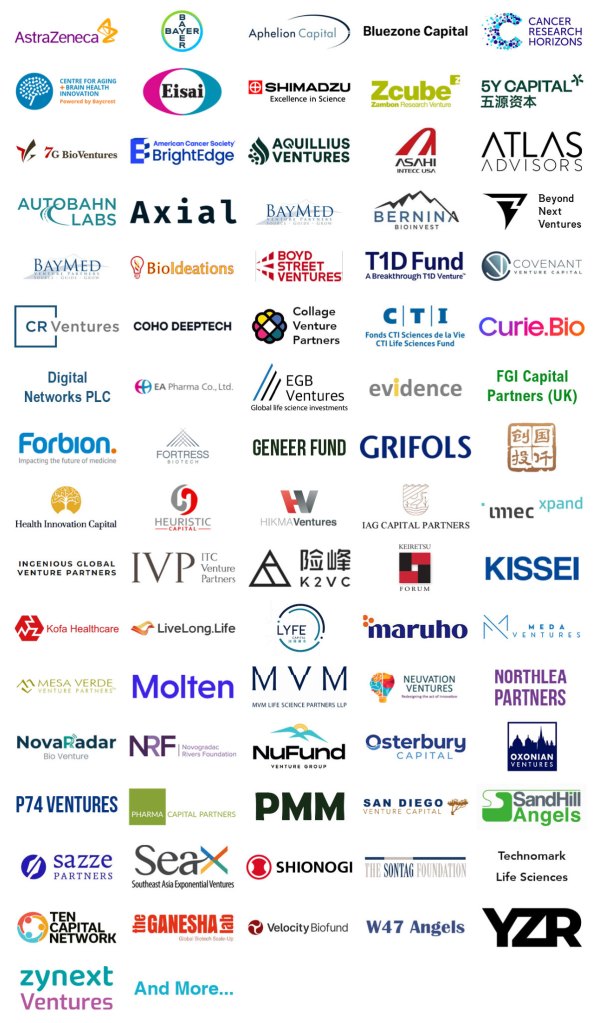
With an expanding group of investors already registered and more joining every day, partnering launch gives attendees the opportunity to begin reviewing profiles, identifying targets, and requesting meetings before schedules begin to fill. The accompanying investor logo splash highlights the breadth of investor participation already confirmed for RESI San Diego and reinforces the value of acting early.

At RESI San Diego, partnering takes place across a five-day hybrid format. Attendees can begin conversations in person on June 22 at the Julep Event Venue in San Diego and continue those discussions during the virtual partnering days on June 23–24 and June 29–30. This structure gives companies more opportunities to connect, follow up, and keep momentum moving after the initial introduction.

For startups, emerging companies, service providers, and investors alike, early access to the partnering platform creates a significant advantage. Companies can strengthen profiles, build targeted outreach lists, and secure meetings with investors, strategic partners, CROs, service providers, and ecosystem organizations before the busiest weeks leading up to the conference.

Beyond partnering, RESI San Diego offers additional opportunities to build visibility and reinforce conversations started through the platform. Attendees can participate in investor panels, workshops, networking receptions, the exhibition hall, and the Innovator’s Pitch Challenge, where companies present directly to investors and receive live feedback.

To help attendees make the most of the platform, LSN will host a partnering tutorial webinar on Tuesday, April 28. The session will provide an overview of the RESI partnering system, share best practices for creating an effective profile, and offer tips for maximizing meeting opportunities before and during RESI San Diego.

Register for the partnering tutorial here: https://us02web.zoom.us/webinar/register/WN_BgTWGwKKS4mATlTZVhyoHA

Register for RESI San Diego

From Plan to Progress: Execution Risk 

21 Apr

By Dennis Ford, Founder & CEO, Life Science Nation (LSN)

DF-News-09142022

As part of Life Science Nation’s series on converting scientific innovation into investable signal, the focus now moves to execution risk. Once a company has established market needs, demonstrated technical feasibility, and defined a regulatory path, the next question becomes whether the team can actually deliver.

Execution risks are about the company’s ability to move from strategy to progress. It includes leadership, operational discipline, hiring, partnerships, timelines, and the ability to consistently hit milestones. Even strong science and a compelling opportunity can lose credibility if a company cannot execute against its plan.

This article examines how companies build confidence through clear priorities, realistic timelines, strong teams, and the operational structure needed to keep momentum moving forward.

Execution Risk

From Plan to Progress

With market, technical, and regulatory clarity in place, the question shifts from possibility to delivery: can this actually be executed?

Execution risk reflects whether the company can translate its strategy into measurable progress. Strong science and a well-articulated plan are not enough. Investors are funding the ability to execute under real constraints.

Many companies struggle here not because they lack vision, but because they lack operational discipline. Plans remain high-level, milestones are vague, and capital is deployed without direct linkage to risk reduction.

Execution begins with the team. You need the right mix of scientific, clinical, regulatory, and operational experience for the stage you are in, and leadership that can make decisions under uncertainty. Capability matters, but so does judgment.

Milestone discipline provides structure. Progress must be broken into clear, achievable steps, where each milestone reduces a specific element of risk and moves the company toward a defined value inflection point. A 12-, 24-, and 36-month roadmap ties these milestones together and forces trade-offs.

Operational planning, resource management, and partner oversight determine whether those milestones can be met. Most life science companies depend heavily on CROs, CMOs, and other external partners; selecting and managing them is a central part of execution, not a peripheral task.

Speed and adaptability maintain momentum. Development rarely proceeds linearly. Data will force changes. The ability to adjust direction without losing focus or burning through capital is a defining feature of strong execution.

Governance and structure close the loop. Board composition, information flow, and accountability mechanisms determine how quickly issues are surfaced and addressed. Without this, even high-quality teams drift.

Execution risk is resolved when plans reliably convert into measurable progress and capital consistently turns into risk reduction rather than motion.

Core Elements of Execution Risk

  • Team capability
  • Leadership and decision making
  • Milestone discipline
  • Milestone roadmap
  • Operational plan
  • Resource management
  • External partner management
  • Speed and adaptability
  • Governance and structure

Next in the series: Economic Risk — Defining the Value Creation Opportunity

Previous Articles:

  1. Technical Risk – From Belief to Evidence
  2. The Problem Is Not the Science: A Seven-Part Series on De-Risking, Signal, and Investability
  3. From Proof to Approval: Regulatory Risk

Reception & Event List for Convention Week in San Diego

21 Apr

By Sougato Das, President and COO, LSN

Sougato-DasConvention week in San Diego has become much more than a single conference. One of the major events taking place during the week is RESI San Diego 2026, hosted by Life Science Nation on June 22, followed by four virtual partnering days on June 23–24 and June 29–30. This is the best place to secure meetings with early stage investors.

Around RESI and the Convention, investors, founders, pharmas, service providers, and regional delegations host receptions, networking events, investor forums, pitch sessions, private meetings, and educational programs across the city.

For attendees, the week often becomes a full schedule of opportunities that extends well beyond the official conference agenda. A company may attend RESI or Convention during the day and continue conversations at networking receptions and evening events across San Diego.

That is why having a compiled list of convention week events can be so valuable. Life Science Nation has curated a list of convention week events taking place throughout San Diego to help attendees better navigate the week. Covering Sunday, June 21 through Friday, June 26, the list serves as a useful resource for attendees looking to plan their schedules and make the most of their time in San Diego.

The list includes events for a range of audiences and interests, from investor networking and startup showcases to regional receptions, educational panels, business development gatherings, and informal social events. Some events are designed specifically for early-stage companies looking to connect with investors, while others are focused on strategic partnerships, market trends, or geographic regions.

Convention week can also be an important opportunity for companies to make the most of their time in San Diego. Rather than relying on one conference alone, attendees often use the week to build a broader schedule of meetings and introductions.

Whether attendees are focused on fundraising, partnering, business development, or networking, convention week offers a wide range of ways to connect.

View the Compiled List of Convention Week Events

BioMetas and ZSHK Laboratories Announce Strategic Integration to Build a Full Preclinical CRO Platform

14 Apr

Life Science Nation (LSN) is pleased to highlight an important development from one of our long term partners. BioMetas, Title Sponsor of the RESI conferences in 2026, has announced a strategic integration with ZSHK Laboratories to build a comprehensive preclinical drug discovery and development CRO platform.

This move reflects a continued push toward greater integration across the early stages of drug development, an area where fragmentation has historically slowed progress for emerging companies.

On April 13, 2026, BioMetas Group and ZSHK Laboratories formally completed a strategic integration at BioMetas’ Shanghai headquarters. The signing ceremony included leadership from both organizations as well as representatives from key shareholders, including CFS Capital, Huagai Capital, Qiming Venture Partners, ACM Capital, and the AstraZeneca CICC Fund.

BioMetas has grown rapidly over the past four years as a globally oriented preclinical CRO, with approximately 85 percent of its revenue generated from international clients. The company has developed core capabilities across early research, including protein science, in vitro and in vivo efficacy evaluation, and DMPK, with particular strength in oncology and autoimmune disease programs.

ZSHK Laboratories brings a complementary set of capabilities centered on GLP toxicology services. The company operates internationally certified GLP facilities in Suzhou and Shenzhen and maintains dedicated animal research infrastructure, including non human primate and canine models. Its services span pharmacokinetics, toxicology, and safety evaluation, with a client base primarily concentrated in the domestic Chinese market.

Following the integration, the combined platform is designed to provide a continuous, end to end preclinical development pathway. The service model spans early research, including target validation, molecular screening, and efficacy studies; translational work, including DMPK and dose exploration; and regulatory support, including GLP safety evaluation, toxicology, and safety pharmacology. By consolidating these capabilities within a single platform, the integrated organization aims to reduce handoff between service providers, improve data consistency, and accelerate timelines toward IND.

The integration also strengthens access to experimental animal resources and expands model coverage across multiple species and disease areas, supporting more complex mechanism studies and advanced preclinical programs.

From a strategic standpoint, the companies have indicated a focus on building a broader service plus capital ecosystem, combining scientific capability, operational scale, and capital market alignment to enhance global competitiveness. The transaction reflects a broader trend within the CRO industry toward platform integration, moving beyond cost driven specialization toward more comprehensive, value oriented service models.

For early stage drug development companies, the implication is clear: an integrated preclinical pathway reduces friction, accelerates timelines, and creates a more coherent progression from discovery through IND enabling studies. With this integration, BioMetas strengthens its ability to deliver fast, cost-efficient, high-quality services within a comprehensive platform, positioning itself as a valuable partner for both domestic Chinese innovation and global programs. This combination of speed, efficiency, and execution quality highlights the growing role of leading platforms like BioMetas in moving China further into the forefront of the global early stage drug development landscape.

Kobe Biomedical Innovation Cluster, Title Sponsor of RESI San Diego 2026, to Host Japan Life Science Showcase

14 Apr

By Claire Jeong, Chief Conference Officer, Vice President of Investor Research, Asia BD, LSN

Life Science Nation (LSN) is pleased to announce Kobe Biomedical Innovation Cluster (KBIC) as a Title Sponsor of RESI San Diego 2026.

Earlier this year at RESI JPM 2026, LSN and KBIC successfully co-organized the Kansai Life Science Accelerator Program (KLSAP) Demo Day, a 2-hour session highlighting innovative companies from Japan and South Korea. Building on this successful collaboration, KBIC will host the Japan Life Science Showcase at RESI San Diego, featuring 8 emerging life sciences companies from Japan. This dedicated showcase aims to highlight cutting-edge technologies and connect Japanese innovators with global investors and strategic partners.

The impact of the KLSAP Demo Day and RESI was reflected in strong feedback from participating companies:

“Celaid Therapeutics Inc. participated in JPM RESI 2026 through the full RESI package, which included a RESI-organized pitch to U.S.-based investors, an exhibition booth, and one-on-one partnering meetings. The IPC investor pitch was particularly valuable. Following the presentation, we were contacted by one of the investor judges, which subsequently led to further meetings regarding a potential investment. For early-stage companies seeking investment from U.S. investors, this program is well worth considering.”

— Yusuke Inoue, Board Director, COO & CFO, Celaid Therapeutics Inc.

Japan is home to one of the world’s most advanced life sciences ecosystems, supported by strong academic research, a highly skilled talent base, and increasing government and institutional support for innovation. Within this landscape, Kobe has established itself as a leading hub for biomedical innovation, fostering collaboration across academia, industry, and clinical institutions. Through the Japan Life Science Showcase at RESI San Diego, KBIC seeks to further elevate Japan’s presence on the global stage and accelerate cross-border partnerships.

More information about the presenting companies will be announced shortly. Please feel free to contact us at c.jeong@lifesciencenation.com if you would like to stay updated on related developments.

RESI San Diego will take place on Monday, June 22, at the JULEP Venue in San Diego. Join us for a full day of one-on-one partnering meetings, engaging programming, and the opportunity to build meaningful connections within the global life sciences ecosystem.

About Kobe Biomedical Innovation Cluster (KBIC)

Located in the heart of Kobe, Japan, the Kobe Biomedical Innovation Cluster is one of the nation’s leading ecosystems dedicated to advancing biomedical research and commercialization. With more than 340 member organizations, including research institutes, hospitals, and life science companies, KBIC plays a central role in bridging academia, government, and industry to accelerate innovation and improve global health outcomes.

As a Title Sponsor of RESI San Diego 2026, KBIC aims to strengthen international collaboration and support Japanese startups in expanding their global networks and visibility. Through its continued partnership with LSN, KBIC is committed to helping founders access global capital and strategic resources to advance their technologies from concept to commercialization.

Register for RESI San Diego

From Proof to Approval: Regulatory Risk 

14 Apr

By Dennis Ford, Founder & CEO, Life Science Nation (LSN)

DF-News-09142022

As part of Life Science Nation’s series on converting scientific innovation into investable signal, the focus now moves to the next layer of the De-Risk Stack. In the previous article, technical risk addressed whether a product works and can be trusted. The next question is whether it can realistically be approved.

This article examines regulatory risk, where feasibility must become predictability. It outlines how companies define a clear path to approval—covering regulatory pathways, precedent, endpoint selection, trial design, and engagement with regulators.

From aligning with evidence requirements to understanding timelines and cost, this piece breaks down what it takes to move from promising data to an executable plan that investors can underwrite.

Regulatory Risk 

From Feasibility to Predictability

Once the product works, the next question is whether it can be approved.

Regulatory risk is often underestimated because it is treated as an after-the-fact compliance requirement instead of a primary design constraint. In reality, it defines timelines, capital requirements, and feasibility. Without a credible path, investment becomes difficult regardless of how strong the data may be.

The core issue is predictability. Investors need to understand not just that approval is possible, but how it will be achieved, how long it will take, and what it will cost.

This begins with pathway clarity. The regulatory route must be defined early—whether the asset is headed toward an IND and NDA/BLA, a 510(k), a PMA, or another pathway. Precedent provides context by showing how similar products, mechanisms, or indications have been evaluated. Without precedent, uncertainty and perceived risk rise sharply.

Endpoints and trial design then determine whether the plan is executable. Success must be measurable in a way regulators accept, and the required studies must be feasible in terms of recruitment, duration, complexity, and cost. A theoretically elegant trial that cannot be run in the real world is equivalent to having no trial plan at all.

Regulatory interaction further refines the path. Pre-IND or pre-submission meetings align expectations, clarify requirements, and reduce unnecessary iteration. Proceeding without this engagement increases risk and can lead to expensive rework.

Safety requirements, timeline expectations, and the cost of approval define the remaining boundaries. Each indication and modality carries a different tolerance for risk and a different evidence bar, and each pathway implies a specific capital profile.

Regulatory risk is resolved when the path to approval is defined, evidence requirements are understood, and the plan is both credible and executable within known time and capital constraints.

Core Elements of Regulatory Risk 

  • Pathway clarity
  • Precedent
  • Endpoint definition
  • Trial design feasibility
  • Regulatory interaction
  • Safety requirements
  • Timeline predictability
  • Cost of approval

Next in the series: Execution Risk — Turning Plan into Progress 

Previous Articles:

Technical Risk – From Belief to Evidence

The Problem Is Not the Science: A Seven-Part Series on De-Risking, Signal, and Investability

Technical Risk – From Belief to Evidence 

7 Apr

By Dennis Ford, Founder & CEO, Life Science Nation (LSN)

DF-News-09142022

In the first article, The Problem Is Not the Science, Life Science Nation established that investability begins with defining a real, urgent market need. But once that foundation is clear, the next question becomes unavoidable: does the product actually work, and can that be demonstrated in a way others trust?

The next focus is technical risk, where belief must become evidence. It outlines how companies move from early signals to reproducible, credible, and translatable results—covering mechanism of action, proof of concept, reproducibility, safety, and scalability.

Once market risk is clear, the next question becomes unavoidable: does the product work, and can that be demonstrated in a way that others trust?

This is where many companies overestimate their position. Early data, promising signals, or strong academic foundations often create internal confidence. But investors are not evaluating belief; they are evaluating evidence. The distance between those two states defines technical risk.

Technical risk is not simply about whether something works once. It is about whether it works consistently, whether the mechanism is credible, and whether the results can survive the transition from controlled environments into real-world use.

The first layer of clarity comes from the mechanism of action. There must be a coherent explanation of how the biology or technology produces the intended effect. This is not a description of experimental outcomes; it is a causal story. Without it, data is difficult to interpret and harder to trust.

Proof of concept establishes that the signal exists. This can take the form of in vitro data, animal models, early human data, or a working prototype, but it must be observable and measurable. Reproducibility then determines whether that signal can be relied upon. A single experiment is not enough. Results must hold across time, cohorts, and independent attempts.

Translatability introduces another layer of complexity. What works under ideal conditions does not always work in patients, clinics, or real-world settings. Understanding how findings extend beyond the initial model is critical, particularly in biologically complex indications.

Safety, performance, and durability define the product profile. Even if effective, a product must be safe enough for its intended use, deliver a meaningful effect, and sustain that effect over time. A transient or marginal benefit rarely justifies the cost and risk of development.

Finally, manufacturability, scalability, and data integrity complete the picture. A product that cannot be produced consistently and at scale cannot become a company. Data that is poorly designed, uncontrolled, or selectively presented undermines confidence, even when the underlying science is strong.

Technical risk is resolved when the product moves from an interesting idea to something that consistently works, can be trusted, and can be translated into real-world use.

Core Elements of Technical Risk

  • Mechanism of action
  • Proof of concept
  • Reproducibility
  • Translatability
  • Safety
  • Performance and durability
  • Manufacturability and scalability
  • Data quality and integrity

Next in the series: Regulatory Risk — Navigating the Path to Approval