Tag Archives: health

RESI Boston September 2025 Innovator’s Pitch Challenge Winners 

23 Sep

By Claire Jeong, Chief Conference Officer, Vice President of Investor Research, Asia BD, LSN

At RESI Boston September 2025, over 50 innovative companies participated in the Innovator’s Pitch Challenge (IPC), providing early-stage life science and healthcare companies with a unique platform to present their technologies and connect with potential investors.

The IPC finalists delivered 6-minute pitches followed by a 7-minute interactive Q&A session with a panel of investor judges. Each participating company also showcased its technology at a personalized table space in the RESI Exhibition Hall, creating additional opportunities for engagement.

A distinctive feature of the Innovator’s Pitch Challenge is its voting system. Registered RESI attendees—including startup executives, early-stage investors, and industry experts— “invested” in their favorite IPC companies using RESI cash provided at check-in. Attendees base their decisions on both the pitch presentations, the companies’ responses during Q&A, meeting with them in the exhibition hall at their table space, and during partnering or ad-hoc meetings at RESI.

Applications are now open for the next Innovator’s Pitch Challenge at RESI London 2025 and RESI JPM 2026, with spots filled on a rolling basis.

Life Science Nation is proud to announce the top three winners of RESI Boston September 2025:

1st Place: Isotech

IsoTech Ltd is developing a novel wearable therapeutic medical device that stabilises blood pressure on standing to help older adults avoid dizziness and falls from orthostatic hypotension. The device guides a 30–60-second, on-demand isometric muscle contraction via a discreet retractable tether with visual and haptic cues, turning an evidence-based counter-manoeuvre into a simple, repeatable action without drug side effects. A completed proof-of-concept clinical study demonstrated clinically meaningful blood-pressure stabilisation in a substantial subset of patients with high usability and no unwanted adverse effects. The next phase is straightforward but execution-critical: design-for-manufacture and verification, Class I UKCA/CE technical documentation and light-touch QMS, tooling and pilot build, and a KOL-led seeded launch while preparing reimbursement pilots and strategic licensing options. Protected by patents on mechanism and form factor, ISO-101 aims to become the category-defining, real-time therapy for OH, improving independence for ageing populations and reducing falls-related costs for health systems at scale.
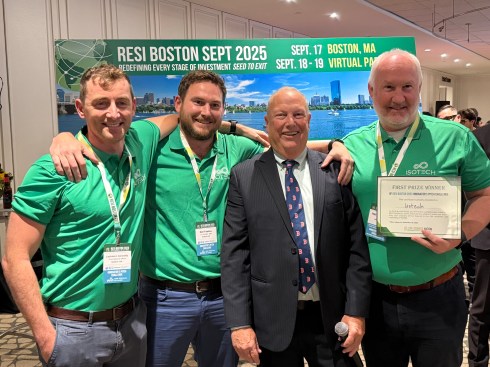
Dr Lochlainn Connolly, Founder – EVP Medical Affairs, Isotech | Dr Neil Fawkes, Founder / EVP R&D, Isotech | Dennis Ford, Founder and CEO, Life Science Nation | Iggy McGowan, Founder / CEO, Isotech


2nd Place: BILIX

Bilix, founded in Oct 2018, raised $21 million in investments and received $3 million in government grants to develop a new drug for various inflammatory and autoimmune diseases. Our first target is ischemia-reperfusion injury, where unmet medical needs are high and no drugs. Global companies (Novartis, Roche, AstraZeneca, Argenx) are in Phase 2 or 3 trials with single-modality drugs (likely to fail). Our Phase 2a clinical trial (our drug being multi-modality, likely to succeed) runs from 2025.09 to 2026.08. We generate royalty revenue from Classys (a $3B market cap laser medical device company) through exclusive LO in cosmeceutical products. We are currently raising Series B-3 of $6M, of which $ 3 M has been secured. With $25.7 million pre-money valuation, an ROI of >10 times is achievable within three years through IPO/M&A. We can flip to a US company with vetted Series C investments from US/Foreign VCs.
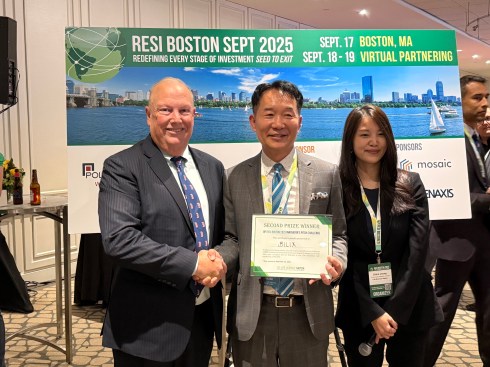
Dennis Ford, Founder and CEO, Life Science Nation | Myung L. Kim, Ph.D., MBA, Founder and Chief Executive Officer, Bilix | Claire Jeong, CCO, VP of Investor Research, Asia BD, Life Science Nation


3rd Place: M6P Therapeutics
M6P Therapeutics focuses on lysosomes (the natural recycling center for cells) and has the only technology that can deliver any protein to lysosomes – a feat deemed impossible for over 50 years. The company has a deep pipeline, 6 rare pediatric drug designations, and an IP portfolio comprised of 9 patent families, 8 issued patents, and 20 in progress. Our Gaucher Disease ERT is ready for the clinic and our Pompe Disease ERT – which can restore and normalize muscle function – will be ready in 18 months. We also created a platform that can take any antigen-antibody complex to the lysosomes of any cell in the body (instead of relying on Fc clearance by select immune cells) for degradation. Our “chimeric” anti-PD-L1 antibody removes virtually all PD-L1 from the surface of tumor cells while our chimeric version of Keytruda is twice as potent.
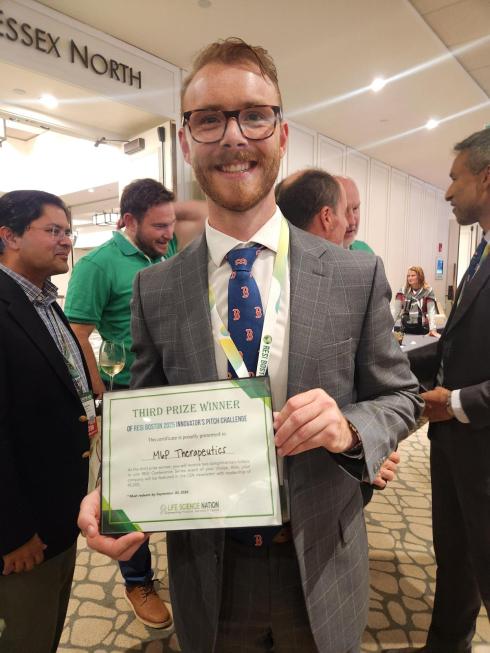
Cole Van Vuren, Business Development Manager, Life Science Nation


The participating companies were grouped into 14 sector-focused sessions, with four companies per session. Each session was evaluated by a panel of judges, and the top-scoring companies were recognized for their strong pitches, ability to answer questions effectively, and clear communication of their value propositions.

Judges Picks:
The Needle Issue #15

23 Sep
Juan-Carlos-Lopez
Juan Carlos Lopez
Andy-Marshall
Andy Marshall

On September 11, the Lasker Foundation awarded the 2025 Lasker~DeBakey Clinical Medical Research Award to Michael Welsh, Jesús González and Paul Negulescu for discoveries that led to the development of Trikafta, a triple combination of cystic fibrosis transmembrane conductance regulator (CFTR) potentiators and correctors to treat cystic fibrosis. This award recognizes the contribution of Trikafta to improving the quality of life of ~90% of the 40,000 people living with this condition in the United States, reducing infection-related hospitalizations and lung transplants, among other benefits.

But what about the other 10% of patients who don’t respond to Trikafta, many of whom carry so-called Class I alleles that cannot be rescued by this drug combination? Although a lot of progress has been made, several obstacles lie in the path of effective medicines for people who produce no, or negligible amounts of, CFTR protein.

It should come as no surprise that the main therapeutic strategies for Class I alleles aim to put missing CFTR back into lung cells. Among these strategies, mRNA delivery is the most advanced. VX-522, an RNA therapeutic program from Vertex and Moderna currently in Phase 2, is an inhaled drug that aims to deliver full-length CFTR mRNA to the lung using lipid nanoparticles (LNPs). Two related, competing mRNA delivery programs are at a similar stage of clinical development: ARCT-032 by Arcturus Therapeutics using their LUNAR LNPs; and RCT-2100 by ReCode Therapeutics, which uses a lung-targeted SORT (selective organ-targeting) LNP.

A key feature of RNA-based therapies is that any therapeutic benefit would likely be transient, requiring periodic administration of the medicine to achieve sustained effects. Gene therapy and gene editing have the potential to be a curative, “one and done” procedure. Thus far, however, only gene therapy programs have advanced far enough to be in human testing.

Of these, 4D Molecular Therapeutics’ 4D-710 and Spirovants’ SP-101 use different AAV subtypes designed to optimize delivery to airway basal epithelial cells of a CFTR minigene that lacks the regulatory domain. Both projects are in Phase 1/2 of clinical development.

As the large size (6.2 kb) of the CFTR transgene exceeds the packaging capacity of AAV vectors, Krystal Biotech and Boehringer Ingelheim have launched Phase 1/2 clinical programs using viral vectors with a greater payload capacity: KB407 is a re-dosable herpes simplex virus (HSV)-1 vector with a cargo capacity >30 kb that delivers two copies of the CFTR gene to lung epithelial cells using a nebulizer. BI 3720931 is Boehringer’s inhaled lentiviral vector pseudotyped with Sendai virus F and HN envelope proteins (rSIV.F/HN) engineered to deliver a single copy of the CFTR gene. Further behind in the pipeline, Carbon Biosciences’ CGT-001 is a nebulized non-AAV parvovirus-based vector capable of delivering full-length CFTR gene. Thus far, it has been tested in nonhuman primates and in human bronchial cells in culture.

Companies are also pursuing oligonucleotide therapies to modify disease-causing mutations at the RNA level. SPL84 is an inhaled antisense oligonucleotide (ASO) addressing a splicing defect (cryptic exon; class V mutation) in the ~1,600 CF patients who carry the 3849+10kb C→T mutation. SpliSense has advanced the ASO into phase 2 testing, but it also has in preclinical development an exon-skipping ASO against the class I mutant W1282X. By masking the mutant premature termination codon in exon 23, SP23 induces the splicing machinery to skip exon 23 and stitch together exon 22 and exon 24, forming a partially functional CFTRΔex23 protein.

Gene editing is also beginning to appear on the therapeutic horizon. In July, Prime Medicine announced it had received $25 million in funding to advance prime editors, with a lead program focusing on G542X. Last year, Intellia Therapeutics and ReCode Therapeutics also announced a strategic collaboration to combine the CRISPR pioneer’s Cas9 DNA ‘writing’/insertion technology with Recode’s SORT LNPs. Academic groups have now shown that G542X correction is possible using inhaled LNP- or virus–like particle-delivered adenine base editors. And for RNA editing, at this year’s American Society of Gene & Cell Therapy Wave Life Sciences reported their oligo-based ADAR editors could achieve 21% correction (EC50 = 376nM) of CFTR W1282X nonsense mutations. This is likely a sliver of all the therapeutic activity underway; other programs are targeting mucus itself, which is much thicker than in healthy individuals. If we missed any drug-discovery projects in this space, please let us know!

Despite the plethora of programs, developing genetic therapies against cystic fibrosis patients with class I CFTR mutations faces some stiff translational challenges. For starters, targeted delivery of drugs to lung tissue remains a work in progress. The optimal cell type to be targeted by gene therapy/editing remains an open question, especially as the community continues to identify new cell types in the lung; is it enough to target the more prevalent epithelial cells (alveolar type 2 cells), or will it be necessary to target rarer stem cells (alveolar type 1 cells) to see a long-lasting therapeutic effect? What about the contribution of genetic modifiers and other ion channels known to affect airway dysfunction in CF airway epithelial cells? Also, how to figure out the pharmacokinetics and pharmacodynamics of these disease-modifying therapies in lungs and measure delivery in patients? Specifically, establishing protein expression levels after inhaling a DNA- or RNA-based product would likely require a bronchial biopsy, which is impractical particularly in this fragile patient population.

Last, not unlike most pathologies, new animal and in vitro models with predictive value need to be developed. The use of human bronchial epithelium culture is not as predictive of the efficacy of genetic therapies as it has been for small molecules. At present, the ferret is the gold standard disease model. But it is a time-consuming, challenging animal model, which is only supported by a few groups. All of which slows the path to clinical translation.

Six years after the approval of Trikafta, patient foundations like the CF Foundation, Emily’s Entourage, and the Cystic Fibrosis Trust are devoting increasing resources to translational research to push forward treatments for patients with CFTR Class I mutations who do not respond to potentiators and correctors. The Lasker recognition of the science that led to Trikafta will surely inspire researchers working on those projects to overcome the remaining hurdles.

Hot Investor Mandate: China-Based PE Firm Invests in Various Life Science Sectors, Investing $5-50M from Series A through Pre-IPO in US, Europe, and China

9 Sep

 A China-based private equity firm affiliated with a global investment group has raised multiple funds to date and invests across multiple sectors, including healthcare. The firm is a full-spectrum investor, participating from Series A through pre-IPO and PIPE, and may also consider buyouts and add-on acquisitions for its portfolio. Typical investments range from $5-50M, with the capacity to commit up to $100M per company. While the firm is primarily focused on opportunities in China, it also invests in companies from the US and Europe that present a strong China angle. 

The firm invests opportunistically in the healthcare sector on a case-by-case basis. Areas of interest include biopharma, medical devices and equipment, diagnostics, healthcare IT, and R&D services with significant market potential. The firm is stage-agnostic and will consider products ranging from pre-clinical through market-approved. 

The firm invests in both private and public companies, targeting Chinese businesses as well as US- and Europe-based companies with strategic ties to the China market. 

If you are interested in more information about this investor and other investors tracked by LSN, please email salescore@lifesciencenation.com

Hot Investor Mandate: Corporate Venture Fund Seeks in Materials Science and Nutritional Health Companies Across the Globe

9 Sep

A corporate venture capital arm of a global science-based company invests in seed and venture stage companies, generally taking less than 25% ownership. While the firm has previously invested from seed through PIPE, the focus is on companies with products in development or early commercialization. Initial allocations typically range from a few hundred thousand dollars up to $5 million, with additional reserves for follow-on rounds. The firm is targeting approximately 5–10 investments in the next 6–9 months, and over 10 additional investments in the next 2 years. The investment scope is global, with a focus on the U.S., Europe, and Israel.

Within biomedical, the firm seeks materials science companies in orthopedics and soft tissue repair. In addition, the firm actively invests in human nutritional health, with a specific emphasis on personalized nutrition and companies developing nutritional products. This includes start-ups with digital or technology-driven models that enable personalization and precision.

The firm values experienced management teams and typically seeks a board seat, aiming to play an active role in portfolio companies. Strategic alignment with the parent company’s businesses is also an important consideration for investment.

If you are interested in more information about this investor and other investors tracked by LSN, please email salescore@lifesciencenation.com

Hot Investor Mandate: Europe-Based Investment Firm Seeks Therapeutics and Medical Device Companies, Investing Up to €20M Over Company Lifecycle

9 Sep

An institutional alternative investor dedicated to direct investments in the life sciences has offices in Europe. The firm manages total assets under management to over EUR 1 billion. The firm invests EUR 5–20 million per portfolio company and expects to back approximately 20 companies from the current fund. It typically acts as a lead investor, providing equity capital and assuming a 20-40% ownership stake. While the firm primarily targets companies in Europe, around 30% of its portfolio is allocated to global opportunities. 

The firm invests in Therapeutics and Medical Devices. For therapeutics, the focus is on companies with proof of principle demonstrated in late preclinical studies or those in Phase I and beyond. For medical devices, companies must already have some in-human data to be considered. 

The firm seeks active involvement in portfolio management and typically holds board positions. Investment horizons generally range from 2–6 years, with exits often achieved through sales to larger companies positioned to complete commercialization. 

If you are interested in more information about this investor and other investors tracked by LSN, please email salescore@lifesciencenation.com

Hot Investor Mandate: Global VC Firm Focuses on Backing Innovations in Therapeutics, Diagnostics, and Digital Health Addressing Aging and Longevity

9 Sep

An investment firm with offices in US, Europe, and Asia typically makes investments from $500K–1.5M, and the firm invests globally. The focus is on innovations aimed at preventing age-associated diseases, extending healthy lifespan, and improving human and animal performance. 
 

Within life sciences, the firm invests primarily in therapeutics and diagnostics, and also considers digital health opportunities. Traditional medical devices are generally out of scope. Areas of interest include gene therapy, telomere attrition, proteostasis, regenerative medicine, personalized diagnostics/biomarkers, preventative therapies, cognitive enhancement, and related fields. The firm is modality-agnostic and stage-opportunistic. 
 

The firm seeks companies with strong, protectable IP with clear ownership, supported by diverse management teams with proven track records, and technologies demonstrating validated proof of concept. Investments undergo a three-step diligence process: initial review, additional review focusing on differentiators such as IP and business model, and final review. The firm is open to leading, co-leading, or co-investing and leverages a strong syndication network of like-minded investors. 

If you are interested in more information about this investor and other investors tracked by LSN, please email salescore@lifesciencenation.com

Genaxis, Silver Sponsor of RESI Boston, Hosts Exclusive Startup Showcase

9 Sep

By Claire Jeong, Chief Conference Officer, Vice President of Investor Research, Asia BD, LSN

LSN is excited to announce Genaxis, a leading South Korea based accelerator and early-stage fund dedicated to deeptech and biotech innovation, as a Silver Sponsor of RESI Boston.

Genaxis is bringing five of Korea’s most innovative biotech and medtech startups to the global stage. These companies will be pitching at RESI Boston on September 17, 2025, where they will showcase breakthrough solutions spanning therapeutics, medical devices, digital health, and enabling technologies.

To provide an additional opportunity for investor engagement, Genaxis will also host an exclusive pre-RESI pitch session the day before the conference. The event will take place on Tuesday, September 16, 2025, 9:00 – 11:00am EST, at CIC Boston (50 Milk St, Boston, MA 02109).

At this session, 5 startups will each deliver a 6-minute pitch followed by a 7-minute Q&A, and active investors and strategic partners are invited to join. Please RSVP below if you are interested in meeting Genaxis and the pitching companies. Brief descriptions are provided below:

RSVP

Bilix, Inc. is a biotechnology company dedicated to developing innovative therapies for intractable diseases in inflammation and cancer, with the mission to improve human health one patient at a time for better and longer lives. Driven by courage and determination, Bilix takes on the challenge of finding cures for conditions long considered incurable. Our goal is to expedite drug development and provide therapeutic answers for patients in urgent need, while upholding a commitment to fairness and accessibility. By delivering cost-effective, equitable treatment solutions, Bilix strives to transform the lives of patients worldwide and bring hope where few options exist.


DeepsonBio is a company specialized in ultrasound devices for treating dementia. By utilizing a non-invasive method, we offer a safe and highly effective treatment for patients with Alzheimer’s dementia and normal pressure hydrocephalus dementia.

Our therapeutic ultrasound device is designed to improve cognitive function in patients with mild cognitive impairment (MCI) and early-stage Alzheimer’s disease, utilizing Multiple Low Intensity Pliant Ultrasound (M-LIPUS) for cerebrofluid stimulation.

Main Business Area:

  • Neurology
  • Neurodegenerative disease
  • Alzheimer’s disease
  • Normal pressure hydrocephalus

EXOSYSTEMS Inc. is a South Korea–based digital health company pioneering AI-driven neuromuscular biomarkers to transform how motor function is assessed, diagnosed, and monitored. Founded in 2017 as a spin-out from ETRI, EXOSYSTEMS develops integrated solutions that combine clinical-grade EMG/IMU sensors with advanced AI analytics to deliver objective, quantitative insights into muscle and motor performance.

Its flagship technologies include the Muscle Function Index (MFI), a digital biomarker platform designed to replace fragmented and subjective in-person motor assessments with standardized, high-resolution measures. These solutions serve both pharmaceutical companies, by providing validated digital endpoints for clinical trials, and hospitals and clinics, by enabling efficient point-of-care diagnostics and patient monitoring.

With $4M secured in VC funding, over $10M in national R&D grants, regulatory recognition from the Korean FDA, and validation studies with Roche Korea, EXOSYSTEMS is positioned to set a new global standard for neuromuscular digital health.


Laon Medi is a digital health company transforming orthodontics with software-driven workflows. Our flagship platform, Laon Ortho, solves the inefficiencies of clear aligner treatment planning, a process that traditionally requires hours of manual work and outsourced lab services. By automating case setup and integrating multimodal data such as CBCT and intraoral scans, Laon Ortho reduces planning time to minutes while allowing clinics to manage cases in-house. This shift improves margins, lowers patient costs, and accelerates adoption of clear aligner therapy. Laon Ortho is commercially deployed in dozens of clinics and labs across Korea, generating post-pilot revenues and validating scalability. The company is now expanding globally with a model that serves clinics, labs, and DSOs, positioning itself as a scalable digital dentistry platform with clear cost advantages and growing international demand.


RadaHaim, founded in 2022, is a biotechnology company pioneering standardized, scalable organoid platforms for drug discovery and toxicology testing. We have developed patient-derived and iPSC-derived liver organoids with consistent size and morphology, enabling reliable disease modeling and drug-induced liver injury (DILI) assays. Our preclinical service platform operates under GLP-inspired workflows, including batch-level QC, reference compound benchmarking, and high-content imaging analytics. By bridging the translational gap between animal studies and clinical outcomes, RadaHaim provides pharmaceutical and biotech partners with more predictive data to accelerate drug development and reduce failures in clinical trials. In addition to CRO services, our long-term goal is to commercialize assay kits that integrate standardized organoids with ready-to-use protocols. Based in Korea and now expanding into the U.S., RadaHaim aims to become a global leader in organoid-based NAMs (New Approach Methodologies) aligned with regulatory acceptance and the future of animal-free testing.

About Genaxis:

Genaxis is a leading accelerator dedicated to supporting deep-tech and biotech startups. We deliver customized acceleration programs, strategic mentoring, and global investor access to help companies grow beyond their local markets. With expertise in investment readiness, cross-border collaboration, and global market entry, Genaxis equips entrepreneurs with the tools and networks they need for sustainable growth. As a Silver Sponsor of RESI Boston 2025, we are committed to connecting innovative startups with global life science investors, fostering collaboration between Korea and the world. Our mission is to empower founders to achieve impactful innovation, create long-term value, and strengthen the global startup ecosystem.