By Greg Mannix, VP, EMEA Business Development, LSN
As RESI Europe 2026 approaches, one of the most important milestones is just ahead. On March 2, the partnering platform officially opens, giving registered attendees the opportunity to begin requesting and scheduling meetings with investors, strategic partners, and fellow innovators across the global life science ecosystem.
Below are two key updates to plan around.
Partnering Opens March 2: Secure Meetings Early
Partnering is the foundation of every RESI conference. From the moment the platform opens, companies can review attendee profiles, identify aligned investors and strategic partners, and begin building a focused meeting schedule.
The earlier you register and enter the platform, the more time you can:
Refine your profile and messaging
Target investors who match your stage and sector
Send thoughtful, customized meeting requests
Fill your calendar with high-value conversations
RESI Europe is structured to help early-stage companies connect efficiently with active investors. Through curated matchmaking and detailed attendee profiles, startups can prioritize fit over volume. Beyond pre-scheduled 1-to-1 meetings, the conference also creates opportunities for ad hoc introductions and follow-up discussions that often extend well beyond the event itself.
To help attendees prepare, Life Science Nation will host a dedicated RESI Europe Partnering Tutorial on Tuesday, March 3 at 10:00 AM Eastern Time (US and Canada). Understanding the RESI partnering system and using it to its maximum capabilities can make a significant difference in a company’s success at RESI Europe 2026. During this session, LSN staff will walk participants through how to navigate the platform, identify investors and strategic partners who are the best fit, manage outreach effectively, implement a strong follow-up strategy, and leverage the full range of conference content to strengthen their overall partnering experience. You can register for the webinar here.
Complimentary Second Attendee with 5-Day Registration
To help companies maximize their partnering coverage, RESI Europe 2026 is offering a complimentary second attendee pass with a standard 5-day registration.
Bringing a colleague allows your team to:
Cover more investor meetings
Attend concurrent sessions
Expand networking reach across the event
Ensure no key conversation is missed
This offer is not valid for Virtual or Audience Access passes. Attendees who registered for a 5-day ticket on or before February 22 may contact salescore@lifesciencenation.com to add a second attendee.
With partnering opening March 2 and expanded registration value now available, now is the time to secure your place. Enter the partnering system early, prepare strategically, and position your company to make the most of RESI Europe 2026.
X-ray crystallography has long been the go-to workhorse for providing atomic structures of drugs interacting with their protein targets. Increasingly, those static snapshots are being complemented by readouts from experimental analytical tools based on nucleic magnetic resonance (NMR) spectroscopy and cryoelectron microscopy (cryo-EM), offering drug developers a broader window into proteins as dynamic, breathing molecules. This is spurring a raft of new service provider startups, including AIffinity (Brno-Medlánky, Czech Republic), NexMR (Zürich, Switzlerand), CryoCloud (Utrecht), and Intellicule (West Lafayette, IN), all of which aim to supply drug-discovery teams with state-of-the-art platforms providing structural data with rapid turnaround times and low cost.
As many of the most compelling ‘undruggable’ targets are renowned shape shifters — aggregation-prone proteins like Tau, amyloid precursor protein (APP) or huntingtin in neurodegenerative diseases, or transcription factors like P53, KRAS and c-MYC in oncology — a lot of therapeutic startup activity has recently focused around so-called ‘intrinsically disordered proteins’ (IDPs). The ability to attain markedly different conformations under different conditions allows IDPs not only to play moonlighting roles or serve as hubs in signaling networks, but also to localize into liquid- phase condensates (or membrane-less organelles — attributes that make them acutely sensitive to mutations that can compromise specificity and lead to nonspecific binding, resulting in toxicity and disease.
An important postscript to the startup activity targeting undruggable IDPs is that more conventional ‘druggable’ target classes, like tyrosine kinases, may also represent a fruitful hunting ground for dynamic conformational states that may have been missed by traditional crystallographic approaches. Given that conventional drug targets have relatively well-trodden clinical and commercial development paths, they may also represent simpler starting points and testing grounds for commercial programs aiming to apply the new analytical approaches to support medicinal chemistry programs around validated targets.
In a paper recently published in Science, the team of Charalampos (Babis) Kalodimos at St. Jude Children’s Research Hospital use high-resolution NMR spectroscopy to gain structural insight into how SRC family tyrosine kinases (Src, Hck, and Lck) achieve processive phosphorylation of multisite substrates.
NMR spectroscopy offers direct access to (~1–2 Å) resolution atomic information to identify non-covalent interactions between a drug and a protein target. Starting from 13C-labeled amino acids/precursors (left), a backbone and side-chain amino acids in a protein of interest (up to 80 kDa in size) can be selectively labeled for NMR structure determination. Substantial chemical shift changes of protein signals induced by aromatic ligand ring-systems can be directly incorporated into 3D structural calculations of protein–drug complexes. Source: Communications Chemistry
The SRC enzyme family is essential for rapid and coordinated signaling in processes such as cell migration and T-cell activation. In addition, SRC family kinases are frequently overexpressed in tumors, contributing to the activation not only of multiple scaffold or signaling proteins, such as receptor tyrosine kinases (e.g., EGFR, FGFR, PDGFR or IGF1R), but also of downstream effectors (e.g., MAPKs, FAK, paxillin, p130Cas, ELMO1 and RAC1). Although there are approved drugs like the multikinase inhibitor Sprycel (dasatinib) that bind the SRC active site, these drugs have such extensive off-target and adverse side effects that there is a pressing need for new paths to more-selective SRC inhibitors.
SRC enzymes share a conserved domain organization, with a disordered N-tail, a tandem SH3–SH2 module, a kinase domain, and a disordered C-tail. All can carry out processive phosphorylation — a phenomenon where the enzyme phosphorylates multiple residues in a substrate during a single encounter. Each of these catalytic cycles typically requires ATP binding, phosphate transfer and ADP release, and ADP release is often the rate-limiting step. So, a question that has long puzzled structural biologists is how ADP-release–constrained kinases achieve sufficiently rapid turnover to successfully perform their function.
Using NMR spectroscopy with cryogenic probes — which reduce electronic/thermal noise and increase sensitivity up to five-fold compared with room-temperature probes — the St. Jude team characterized the conformational ensemble of the Src kinase domain and identified three interconverting states: a predominant active state, a previously described inactive Src/CDK-like state, and a hitherto unknown low-populated intermediate state positioned linearly between the other two. Structural determination revealed that this intermediate state displays features that are distinct from the active and inactive states. Its activation loop is partially folded, the P-loop is displaced inward, and the αC helix is shifted upward. This conformation binds ADP poorly relative to the active and inactive states, suggesting that it facilitates nucleotide release.
(A) Schematic representation of processive phosphorylation by an SFK. Substrate binding through the SH3 domain prolongs the residence time of the complex, allowing the kinase to phosphorylate multiple sites in a single binding event. Each catalytic cycle involves ATP binding and hydrolysis, transfer of the γ-phosphate to the substrate and ADP release, followed by a new cycle without dissociation of the complex. To sustain processive phosphorylation, the catalytic turnover — limited by ADP release — must be sufficiently fast to complete multiple phosphorylation events before dissociation of the SH3–substrate complex. (B) Energy landscape of the ground (G) and excited (E1 and E2) states of Src KD determined by NMR. Populations and kinetics of interconversion determined by fitting the relaxation data are shown. Structures of the (C) active state, (D) intermediate state and (E) inactive state. Source: Science
Using mutational analyses, the researchers then confirmed the functional importance of this intermediate state. Variants that eliminated this intermediate state while stabilizing the active state showed slower ADP dissociation, reduced catalytic turnover and impaired processive phosphorylation of the multisite Src substrate p130Cas. Instead of generating a fully phosphorylated substrate in a single binding event, these mutants accumulated partially phosphorylated intermediates. Equivalent mutations in other kinases of the SRC family, Lck and Hck, similarly reduced catalytic efficiency and impaired multisite phosphorylation of their respective physiological substrates CD3ζ and ELMO1 in Jurkat cells. Furthermore, these mutations compromised cellular functions measured via in vitro assays, including T-cell activation using Lck-deficient Jurkat cells and migration of mouse embryo fibroblasts lacking Src, Yes and Fyn in the presence of fibronectin. These molecular and functional findings indicate that the intermediate state is evolutionarily conserved and essential for processive activity across the SRC family.
Mechanistically, the work establishes that rapid ADP release, enabled by transient sampling of a structurally constrained intermediate, is critical for sustaining catalytic turnover rates that exceed the speed of substrate dissociation. More broadly, it shows that kinase conformational landscapes are tuned not only for switching between active and inactive states, but also for optimizing specific kinetic steps within the catalytic cycle.
From a drug developer’s standpoint, because Sprycel and other inhibitors target the active or inactive conformations of the SRC active site, the identification of a low-populated, functionally indispensable intermediate suggests a completely new strategy to target tyrosine kinases: selectively stabilize or destabilize the intermediate state to fine-tune catalytic turnover and processivity rather than simply blocking activity. Targeting such transient conformations could enable more precise modulation of signaling output, potentially improving selectivity and reducing off-target effects in kinase-directed therapies.
We look forward to seeing how many more of these intermediate states are uncovered in other kinase targets and whether pharmacological inhibitors targeting this state have advantages over orthosteric or allosteric chemotypes that conventionally have been used to inhibit the kinase active site or lock it in an inactive conformation. What is clear is that ultrafast NMR measurements of binding and state behavior are a powerful differentiating tool for understanding kinase activity where static structures aren’t enough.
The firm is the corporate venture capital arm of a diversified industrial group and invests globally from Seed through Series A. The firm typically deploys between USD $250K and $4M per investment. The firm focuses on equity investments and strategic partnerships that complement the parent organization’s healthcare and consumer health activities. The firm invests on a geographically agnostic basis and has recently increased its focus on opportunities in the United States.
Approximately half of the firm’s investments are allocated to healthcare, centered on three primary pillars: medical devices, therapeutic technologies, and digital health. The firm invests in technology-driven solutions aligned with the broader healthcare ecosystem, including innovations in wound care, diagnostics, telehealth, and other patient-facing or clinical-efficiency solutions. The firm also leverages an in-house teleconsultation platform to support digital health innovation and partnership development.
From a company and management team perspective, the firm invests in early-stage businesses with strong technological differentiation, clear clinical or operational value propositions, and the ability to scale globally. The firm seeks founders with demonstrated domain expertise and the capacity to execute product development and commercialization strategies within regulated environments. The firm participates flexibly across rounds, acting as a lead, co-lead, or co-investor, and engages with teams that can benefit from the parent organization’s healthcare infrastructure, commercial networks, and international expansion capabilities.
If you are interested in more information about this investor and other investors tracked by LSN, please email salescore@lifesciencenation.com.
The firm is a private investment vehicle established in 2023 and is headquartered in Asia. The firm is focused on global healthcare opportunities. The firm co-invests in Pre-Seed through Series A rounds and currently maintains a small but diversified portfolio across biotech, digital health, and medical devices. Initial check sizes are flexible, with the firm typically allocating up to approximately USD $400K in Seed rounds and USD $1–2M in Series A financings.
The firm is open to investing across biotech, first-in-class therapeutics, medical devices, digital health, and diagnostics. The firm is indication- and technology-agnostic but prioritizes next-generation and highly innovative technologies with strong differentiation.
The firm does not impose strict requirements on companies or management teams.
If you are interested in more information about this investor and other investors tracked by LSN, please email salescore@lifesciencenation.com.
A venture capital firm is focused exclusively on digital technologies for advanced bioprocessing. The firm targets growth-stage, revenue-generating companies, typically at the Series A stage. The firm evaluates opportunities in North America and Europe. The firm generally leads investment rounds and often takes board seats. With deep expertise in life science tools, the firm actively supports portfolio companies beyond capital.
The firm concentrates on life science tools supporting drug development, laboratory automation, bioprocessing, and advanced therapy manufacturing that incorporate meaningful digital components. The firm is highly specialized in this niche and only considers opportunities that align directly with this mandate. The firm invests in companies that are already generating revenue.
The firm does not impose specific requirements on company structure or management team composition.
If you are interested in more information about this investor and other investors tracked by LSN, please email salescore@lifesciencenation.com.
A venture capital firm is focused on early-stage ventures and has raised multiple funds since inception. The firm primarily makes equity investments, with total capital deployed per company typically ranging from $250K to $5M over the life of the investment and initial checks generally between $100K and $500K. The firm prefers to invest in companies located on the U.S. West Coast but remains open to opportunities across North America. The firm maintains long-standing relationships with several Japanese medical technology corporations and seeks opportunities that may be introduced into the Japanese market.
The firm targets Seed and early-stage medical device companies, with particular interest in single-use therapeutic devices. The firm prefers opportunities with a 510(k) regulatory pathway but will also consider PMA applications. Areas of strongest interest include interventional cardiovascular and neurovascular devices, minimally invasive surgical instrumentation, and novel therapeutic medical device technologies. The firm remains open to evaluating other device categories and indications on a case-by-case basis.
From a company and management team perspective, the firm values professionalism and is willing to work with companies that do not yet have a fully built-out management team. The firm does not always require a board seat but seeks to add strategic value, particularly by facilitating corporate partnerships in Japan when appropriate.
If you are interested in more information about this investor and other investors tracked by LSN, please email salescore@lifesciencenation.com.
By Claire Jeong, Chief Conference Officer, Vice President of Investor Research, Asia BD, LSN
Life Science Nation (LSN) is pleased to welcome investors from across the globe to RESI Europe 2026, taking place March 23 in Lisbon, Portugal, with virtual partnering scheduled for March 24–25 and 30–31. This premier event is designed to connect active early-stage investors with innovative life science companies and foster the partnerships that move promising science toward commercialization.
Early Bird rates expire this Friday, and those who register now will save €200. With partnering open March 2, this is the ideal time to secure your place and ensure access to the full RESI Europe experience.
RESI Europe convenes a highly engaged community of venture investors, corporate venture arms, family offices, strategic partners, and non-dilutive funding organizations, all actively evaluating new opportunities across therapeutics, diagnostics, medical devices, and digital health. The event is structured to maximize meaningful interactions, offering curated partnering, targeted networking, and direct visibility into emerging companies seeking capital and strategic collaboration.
For investors focused on sourcing new opportunities, building syndicates, and staying ahead of early-stage innovation trends, RESI Europe provides a concentrated and efficient environment to connect with founders, fellow investors, and ecosystem leaders from Europe, North America, and beyond. Conversations initiated at RESI frequently lead to follow-on diligence, partnerships, and investments that extend well beyond the event itself.
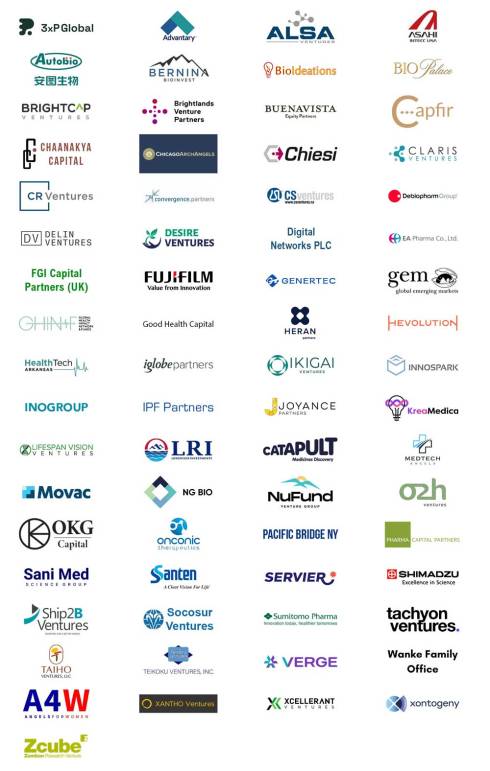
Confirmed RESI Europe Investors
Register before the Early Bird deadline this Friday to secure €200 in savings and confirm your participation alongside a growing global investor community.
The firm is focused on therapeutics companies and does not invest in medical devices, diagnostics, or digital health. The firm is open to considering assets of very early stages, even those as early as lead optimization phase. The firm considers various modalities, including antibodies, small molecules, and cell therapy. Currently, the firm is not interested in gene therapy. Indication-wise, the firm is most interested in oncology and autoimmune diseases but has recently looked at fibrotic diseases and certain rare diseases as well.
The firm is opportunistic across all subsectors of healthcare. Within MedTech, the firm is most interested in medical devices, artificial intelligence, robotics, and mobile health. The firm is seeking post-prototype innovations that are FDA cleared or are close to receiving clearance. Within therapeutics, the firm is interested in therapeutics for large disease markets such as oncology, neurology, and metabolic diseases. The firm is open to all modalities with a special interest in immunotherapy and cell therapy.
A strategic investment firm of a large global pharmaceutical makes investments ranging from $5 million to $30 million, acting either as a sole investor or within a syndicate. The firm is open to considering therapeutic opportunities globally, but only if the company is pursuing a market opportunity in the USA and is in dialogue with the US FDA.
The firm is currently looking for new investment opportunities in enterprise software, medical devices, and the healthcare IT space. The firm will invest in 510k devices and healthcare IT companies, and it is very opportunistic in terms of indications. In the past, the firm was active in medical device companies developing dental devices, endovascular innovation devices, and women’s health devices.
A venture capital firm founded in 2005 has multiple offices throughout Asia, New York, and San Diego. The firm has closed its fifth fund in 2017 and is currently raising a sixth fund, which the firm is targeting to be the largest fund to date. The firm continues to actively seek investment opportunities across a […]








 Next Phase Newsletter