A pre-Seed and Seed-stage venture capital firm is focused on AI and next-generation computing technologies applied to large industries. The firm prefers to invest in companies located in North America.
The firm partners with entrepreneurs addressing real-world problems through data and machine learning, with a focus on frontier technologies such as AI, computational biotech, connected sensors, AR/VR, and blockchain. Prior investment areas have included biomedical and genomics data analytics platforms, data and analysis tools for drug discovery, automated pathology solutions, and related technologies.
From a company and management team perspective, the firm seeks experienced teams with a strong long-term vision. The firm may take a board seat when the firm brings specific domain expertise relevant to the company. The firm does not have a fixed equity ownership target. The firm values strong technical teams with deep market understanding and is comfortable partnering with very early-stage companies, including those at the pre-product stage.
If you are interested in more information about this investor and other investors tracked by LSN, please email salescore@lifesciencenation.com.
A holding company manages an early-stage life sciences fund focused exclusively on private companies developing pharmaceutical products. The firm invests globally in early-stage programs, preferably with proof-of-concept validation, and supports companies from venture creation through Series A.
Investments are made in the form of straight equity, with capital deployed over the life of the company. The firm is science-driven, may lead or co-invest, seeks board representation, and takes an active role in guiding company development and strategy. The firm does not target a fixed number of investments per year.
In addition to the early-stage strategy, the firm also manages a late-stage vehicle focused on private pharmaceutical companies raising Series B through crossover or IPO rounds.
Across both strategies, the firm is open to preclinical and clinical-stage therapeutic companies and is agnostic to modality and indication. The firm invests exclusively in first-in-class, breakthrough assets and does not consider repurposed drugs, diagnostics, medical devices, or incremental technologies.
The firm prefers to invest early and support companies through major value inflection points. The firm does not impose specific requirements regarding management team composition.
If you are interested in more information about this investor and other investors tracked by LSN, please email salescore@lifesciencenation.com.
By Brenda Olmos, Business Development Manager, Global Tech Hub and Sponsorship, LSN
In preparation for RESI Europe, the global life-science investment community will gather in Barcelona for an exclusive Investor Fireside Chat designed to equip founders and innovators with practical fundraising insights ahead of the conference.
Event Details Date: February 18 Time: 15:00–19:00 Location: Hotel H10 Art Gallery, C/ Enric Granados 62, Barcelona
This focused pre-RESI event brings together leading investors and pioneering entrepreneurs for an afternoon of strategy, storytelling, and networking within Barcelona’s vibrant innovation ecosystem.
Attendees will hear directly from investor Luis Pareras of InVivo Partners, joined by two standout founders shaping the future of neurotechnology and drug delivery: Ana Maiques of Neuroelectrics and Meritxell Teixidó of Gate2Brain. Together, they will share candid perspectives on what investors look for, how founders can position their companies effectively, and the realities of raising capital in today’s life-science landscape.
Speakers
Luis ParerasFounder and Managing Partner InVivo Partners
Ana MaiquesCEO & CoFounder Neuroelectrics
Meritxell TeixidóCEO & CSO Gate2Brain
The program will open with a hands-on Fundraising Bootcamp led by author and serial entrepreneur Dennis Ford (Boston), offering practical guidance on refining your pitch, navigating investor conversations, and building a compelling funding strategy. The session is designed to provide actionable takeaways that participants can immediately apply as they prepare for RESI Europe and beyond.
The afternoon will conclude with networking drinks, giving attendees the opportunity to connect with peers, investors, and ecosystem leaders in an informal setting.
Whether you are actively raising capital or planning your next financing round, this event offers a valuable opportunity to gain insight, build relationships, and align your strategy ahead of RESI Europe.
By Greg Mannix, VP, EMEA Business Development, LSN
New collaboration strengthens access for European life science innovators to engage global capital investors and licensing partners
Cambridge, MA and Lisbon, Portugal
Life Science Nation (LSN)announced today a partnership with Dealflow.eu, naming the organization as a Title Sponsor of RESI Europe Lisbon. The collaboration supports the identification and preparation of high-potential European life science innovators and strengthens pathways for companies—where eligible—to leverage European Innovation Council (EIC) reimbursement mechanisms to participate in the RESI partnering ecosystem.
Dealflow.eu operates as a European innovation matchmaking and readiness platform, surfacing high-potential life sciences and deep-tech companies and supporting their engagement with global investors and strategic partners. Through this collaboration, Dealflow.eu will route a curated cohort of life science companies to RESI Europe Lisbon, positioning them in front of a global audience of investors and partners actively seeking early-stage opportunities.
RESI Europe Lisbon serves as the global activation layer of the Life Science Nation partnering ecosystem, connecting emerging technologies with investors and strategic partners through curated matchmaking, investor panels, and the Innovator’s Pitch Challenge. Unlike broad innovation showcases, RESI is purpose-built for early-stage life sciences partnering and capital formation, enabling qualified investors and partners to engage with technologies prepared for global scrutiny.
As part of this collaboration, Dealflow.eu will support eligible companies in accessing available reimbursement mechanisms—such as those offered through EIC programs, where applicable—to offset a portion of RESI Europe registration costs. This helps reduce participation barriers and expands access for promising European life sciences innovators to connect with global capital and strategic partner networks.
“This partnership strengthens the pathway from early innovation to global partnering,” said Dennis Ford, Founder and CEO of Life Science Nation. “Dealflow.eu operates upstream, identifying and preparing high-potential innovators for investor engagement. RESI operates downstream, providing the global activation environment where capital investors and strategic partners connect with emerging technologies. At the same time, programs such as those offered through the EIC can help support company participation and readiness along that journey.”
“We see RESI Europe as a highly complementary activation platform for the Dealflow.eu network,” said André Moraes Sarmento, Dealflow.eu. “Our mission is to connect high-potential innovators with investors, corporates, and strategic partners. This collaboration gives life science companies direct access to a global audience of qualified investors and licensing partners actively seeking early-stage technologies.”
The collaboration also includes coordinated programming at RESI Europe Lisbon, dedicated visibility opportunities for participating innovators, pre-conference preparation support, and continued alignment to strengthen pathways from European innovation to global market engagement.
RESI Europe Lisbon will take place in Lisbon, Portugal, bringing together global investors, strategic partners, and early-stage life sciences innovators across therapeutics, devices, diagnostics, digital health, and enabling technologies.
About Life Science Nation
Life Science Nation operates a global partnering and matching ecosystem that connects early-stage life sciences companies with qualified capital investors and licensing partners worldwide. Its platforms include the RESI Conference Series, LSN Labs entrepreneurial education and readiness programs, and global partnering campaign infrastructure.
About Dealflow.eu
Dealflow.eu is a European innovation matchmaking and readiness platform connecting high-potential innovators with investors, corporates, and strategic partners across Europe and globally.
Media Contact
Caitlin Dolegowski
Marketing Manager
Life Science Nation
c.dolegowski@lifesciencenatio.com
719-229-9290
By Dennis Ford, Founder & CEO, Life Science Nation (LSN)
Across Europe, early-stage life science innovation isn’t held back by a lack of capital. It’s held back by a lack of translation. Brilliant ideas emerge every day from universities, startups, and labs, but too few of them cross the chasm into fundable, scalable ventures. Not because investors are uninterested, but because the signal is still forming.
That is the gap RESI Europe is built to fill.
RESI Europe is intentionally focused on companies in the earliest stages of formation: seed, Series A, and Series B. In practical terms, that means seed financings up to $2M, Series A rounds up to $10M, and Series B rounds up to $50M. RESI is also cross-domain by design, connecting drugs, devices, diagnostics, and digital health under one roof so that cross-silo innovation can actually be seen and underwritten. These companies are not yet de-risked. They are still shaping their data, refining their narrative, and clarifying what kind of asset they are becoming.
Unlike broad partnering events that are optimized for finished stories, RESI Europe’s product is filtration, not exposure. The investors and partners who participate specialize in early risk and engage before all the questions are answered, because that is when the partnership has the greatest leverage. And RESI does this at a registration cost typically around half of what many large European partnering conferences charge, making serious early-stage partnering accessible rather than exclusive.
Partnering at this stage is not about acceleration.
It is about preparation.
Europe does not need more capital flowing into the same mature assets. It needs a mechanism to translate potential into signal and the clarity to underwrite early-stage opportunities. Without that translation, meetings happen but decisions do not. Not because the science is weak, but because the story is still illegible.
RESI Europe exists to make early innovation readable and to bring investors, strategics, and entrepreneurs together around the translational work that must happen before Phase II-level legibility is possible.
By Max Braht, Director of Business Development, LSN
Across Europe, early-stage life science innovation is not constrained by a lack of capital—it is constrained by a lack of translation. Breakthrough science continues to emerge from universities, hospitals, and startups across the continent, yet too few assets successfully transition from discovery into opportunities the global market can underwrite.
To address this gap, Life Science Nation is launching a new three-part seminar series tailored specifically for the European life science ecosystem. The program focuses on the critical space between discovery and investment decision-making—where promising science often stalls before capital ever has the chance to engage.
Designed for founders, investors, accelerators, universities, public agencies, and ecosystem leaders, the series centers on companies at the seed, Series A, and Series B stages—where signal is still forming and legibility matters more than exposure.
What the series will explore
Session I — Tuesday, February 17 | 10:00 AM ET / 4:00 PM CET –Sign Up
Why Solid Science Fails to Translate Before Capital Even Considers It
An exploration of how early-stage assets stall long before diligence begins—and why the issue is typically a failure to tell an investable story, not a lack of compelling science.
Session II — Tuesday, February 24 | 10:00 AM ET / 4:00 PM CET – Sign Up
Legibility, Signal, and the Real Work Between Seed and Series B
What European and global investors actually require to underwrite early-stage risk, and how signal is formed across scientific, regulatory, and commercial dimensions.
Session III — Wednesday, March 4 | 10:00 AM ET / 4:00 PM CET – Sign Up
Partnering Is Not Exposure. It Is Filtration
How different partnering environments serve different stages of development, and how European companies can avoid wasting time and momentum by engaging the wrong forum too early.
This is not a fundraising seminar and not a pitch workshop. It is a practical framework for understanding how early-stage European innovation becomes readable—to capital, to strategic partners, and to the global market.
In our past issue, we took a look at all the financing deals that The Needle has covered since our inaugural issue. This week we turn our attention to last year’s deal making in the preclinical biotech space.
In 2025, preclinical dealmaking didn’t just slow — it polarized. Capital clustered around AI-enabled discovery, China-sourced assets, and in vivo CAR-T cell therapies, while entire therapeutic categories effectively disappeared from licensing activity. Based on the 131 publicly disclosed preclinical transactions in our sample, we reveal where early-stage risk capital is still flowing — and where it has quietly retreated.
Similar to the data we reported in our past newsletter, our analysis captures only publicly disclosed deals (partnerships, research collaborations, licenses, joint ventures, reverse mergers, equity investments and options) on business wires, industry news sites, and venture-fund sources. In the preclinical space, many deals are carried out in stealth, and companies in some important regions (like China) don’t use business wires or news sources traditionally available in the West. For these reasons, our estimates underestimate the true level of early-stage preclinical dealmaking.
In total, we tracked 131 preclinical deals over the year, of which 42 were licensing deals, 64 were strategic partnerships/collaborations and 14 were mergers and acquisitions (M&As). In keeping with early stage’s exploratory nature, the importance of stealth, and the non-compensatory nature of much of the work done, over half of the publicly announced strategic partnerships (35 deals; 55%) had no terms disclosed. As one would expect, a smaller proportion of the licensing deals failed to provide terms, but even for this category, 8 of the 48 transactions (17%) didn’t give financial details. Four of the 14 M&As that we tracked also made no mention of deal terms.
Geographical distribution of preclinical biotechs involved in partnerships, licenses and M&As for Q2-Q4 2025. Source: Haystack Science
US-headquartered companies continue to dominate the dealmaking landscape, whether it is research collaborations, licensing or trade sales. One reason for the dominance of companies in the US — and the UK, which is second in deal activity — is likely simple math; a greater number of companies are financed and built in these countries compared with the rest of the globe (see The Needle Issue #22).
Types of therapeutic under development in preclinical biotechs that were partnered, licensed or acquired in Q2-Q4 2025. Source: Haystack Science
Strategic partnerships in 2025 favored platforms over products — and Western biotechs over Asian peers.
The 64 strategic partnerships we tracked had upfront payments that ranged from $5 million to $110 million, but the median ($35.5 million) underscores how concentrated value remains in a handful of outlier platform deals.
US companies accounted for 37 of the 64 deals (58%). Three notable partnering big-ticket deals involved biotechs splashing out large sums on preclinical collaborations, with the payers showing interest in branching out into new therapeutic modalities: last May, CRISPR Therapeutics (San Diego, CA) pivoted from gene editing to siRNA, paying $95 million to Sirius Therapeutics (Shanghai, China) to co-develop a long-acting siRNA designed to selectively inhibit Factor XI for thrombosis; in December, Regeneron Pharmaceuticals (Tarrytown, NY) spent $150 million (and made an equity investment) to jointly develop Tessera Therapeutics’ (Somerville, MA) target-primed reverse transcription therapy (TSRA-196), which uses lipid nanoparticles (LNPs) to deliver RNAs encoding an engineered reverse transcriptase (‘gene writer’), writer-recognition motifs, and a SERPINA1 template to correct a mutation in alpha 1 antitrypsin deficiency; and later the same month, peptide developer Zealand Pharma (Søborg, Denmark) announced a transaction with OTR Therapeutics (Shanghai, China), paying $20 million upfront for small-molecule programs centered around validated targets of Zealand’s franchise in cardio-metabolic disease.
Disease areas in which preclinical biotechs are developing therapeutics that were partnered, licensed or acquired in Q2-Q4 2025. Source: Haystack Science
For obvious reasons, target discovery and drug screening comprise about a third of collaborations and partnership agreements, but do not figure much in licensing and M&A. Mentions of machine learning in partnering deals (18.2% of 2025’s deals, with several in the top 10 grossing set) suggest large-language and other models are an increasingly established facet of preclinical development. Neurodegenerative disorders garnered the second largest number of partnering transactions in our 2025 sample. And, with all the noise around GLP-1s and other incretins, metabolic disease and obesity were the focus of 11% of deals.
Perhaps the most counterintuitive finding in the partnership data is the near-total absence of China-headquartered companies — despite their dominance in preclinical licensing. This may reflect geopolitical friction, IP risk tolerance or a Western preference for control in collaborations. Alternatively, the absence may reflect the limitations of Haystack’s methodology for collecting data. Certainly, the partnership data contrasts starkly with our licensing data, which show Chinese assets performing so well that they are biting at the heels of US companies and running far ahead of UK companies. In contrast, for strategic partnerships, it was UK-, and South Korea-based firms that were most prominent behind the US (15%, and 7% of dealmaking, respectively).
Top 10 partnering deals for preclinical biotech companies Q2-Q4 2025 ranked by size of upfront payment. Source: Haystack Science
For licensing, the shift to Asia seen in later parts of the biotech pipeline is also manifest in the preclinical space.
Chinese companies were involved in nearly a quarter of all the licensing deals made last year, clinching 11 out of the 48 deals we tracked. This interest in early-stage Chinese assets mirrors last year’s banner deals for later-stage assets, such as Pfizer’s ex-China rights acquisition of 3SBio’s (Shenyang, China) PD-1 x VEGF bispecific antibody for $1.25 billion, or GSK’s $1.10 billion acquisition of Jiangsu Hengrui’s (Lianyungang, China) phosphodiesterase 3/4 inhibitor and oncology portfolio. Overall, deals seeking access to assets from Asian biotechs (companies based in China, South Korea, Singapore and Taiwan) comprised 33% of all preclinical licensing transactions in our sample.
Looking at the preclinical licensing as a whole, upfront amounts ranged from $0.7 million to $700 million, with a median value of $35 million. Most deals centered around cancer, followed by autoimmune, neurodegenerative and metabolic diseases.
What was perhaps most surprising is that we didn’t see any licenses for preclinical assets in the cardiovascular space, suggesting that the interest of a few years ago has somewhat diminished (although assets for heart disease still made up 4% of partnering agreements). Notably absent from preclinical licensing in 2025: cardiovascular, pulmonary, skeletomuscular, hepatic, pain, psychiatry, women’s health, sleep, hearing, and stroke. This pattern perhaps reinforces the industry’s retrenchment toward genetically anchored, biologically de-risked indications. Together, these licensing gaps underscore a 10-year low in early-stage risk appetite outside traditional blockbuster categories.
The top 10 licensing deals from last year are listed in the Table below. Of this elite tier of top-grossing deals, cancer and autoimmune comprised the lion’s share (70%), with neurodegenerative, neurodevelopmental, metabolic, and ophthalmic disease all represented. Only two of the top 10 deals involved traditional small molecules (with one additional license for a molecular glue), whereas biologics accounted for seven. While small molecules still comprise the biggest chunk of licensing activity (18.9%), deals trended toward bispecific and multispecific antibodies for cancer immunology and autoimmune indications — and biopharma was prepared to pay: Of the 8 licensing transactions for multispecifics in our sample, IGI Therapeutics’ (New York, NY) deal with Abbvie, and CDR Life’s (Zurich, Switzerland) agreement with Boehringer Ingelheim, ended among the top 10 grossing deals of the year.
Top 10 licensing deals for preclinical biotech companies Q2-Q4 2025 ranked by size of upfront payment. Source: Haystack Science
Which leads us to mergers. Overall, we tracked 14 M&A deals last year in the preclinical space. According to Dealforma data presented at JP Morgan, private biopharma accounted for just over 55% of merger activity in 2025 on par with previous years. In the Haystack data, 12 of the 14 acquisitions for preclinical programs were for US-based private companies, reinforcing the historical trend of American biotechs outperforming those in the rest of the world in terms of negotiating successful exits for their investors.
M&A deals for the eight preclinical biotech companies in Q2-Q4 2025 where financial terms were disclosed ranked by deal size. Overall, Haystack tracked 14 preclinical M&As, six of which gave no financial terms. Source: Haystack Science
The biggest story in early-stage mergers from last year, though, was biopharma’s ravenous appetite for in vivo CAR-T cell therapy, with Capstan, Orbital and Interius comprising 3 of the 14 acquisitions recorded by Haystack, all of which ranked among the top 5 highest upfront payments. As our sampling commenced in April 2025, we missed another deal: AstraZeneca’s acquisition of lentiviral in vivo CAR-T therapy developer Esobiotec, originally announced in March 2025 with an upfront of $425 million. All in all, in vivo CAR-T therapies claimed 4 of the top 5 acquisitions last year.
In sum, the preclinical dealscape in 2025 reveals an industry willing to fund innovation — but only when paired with platform leverage, delivery, or late-stage optionality. As Haystack tracks dealmaking through 2026, the key question will not be whether capital returns to early-stage biotech, but whether it broadens beyond today’s narrow set of ‘acceptable’ risks. We look forward to tracking deals throughout 2026 and identifying new emerging trends in biotech deals.
The firm is focused on therapeutics companies and does not invest in medical devices, diagnostics, or digital health. The firm is open to considering assets of very early stages, even those as early as lead optimization phase. The firm considers various modalities, including antibodies, small molecules, and cell therapy. Currently, the firm is not interested in gene therapy. Indication-wise, the firm is most interested in oncology and autoimmune diseases but has recently looked at fibrotic diseases and certain rare diseases as well.
The firm is opportunistic across all subsectors of healthcare. Within MedTech, the firm is most interested in medical devices, artificial intelligence, robotics, and mobile health. The firm is seeking post-prototype innovations that are FDA cleared or are close to receiving clearance. Within therapeutics, the firm is interested in therapeutics for large disease markets such as oncology, neurology, and metabolic diseases. The firm is open to all modalities with a special interest in immunotherapy and cell therapy.
A strategic investment firm of a large global pharmaceutical makes investments ranging from $5 million to $30 million, acting either as a sole investor or within a syndicate. The firm is open to considering therapeutic opportunities globally, but only if the company is pursuing a market opportunity in the USA and is in dialogue with the US FDA.
The firm is currently looking for new investment opportunities in enterprise software, medical devices, and the healthcare IT space. The firm will invest in 510k devices and healthcare IT companies, and it is very opportunistic in terms of indications. In the past, the firm was active in medical device companies developing dental devices, endovascular innovation devices, and women’s health devices.
A venture capital firm founded in 2005 has multiple offices throughout Asia, New York, and San Diego. The firm has closed its fifth fund in 2017 and is currently raising a sixth fund, which the firm is targeting to be the largest fund to date. The firm continues to actively seek investment opportunities across a […]





 New collaboration strengthens access for European life science innovators to engage global capital investors and licensing partners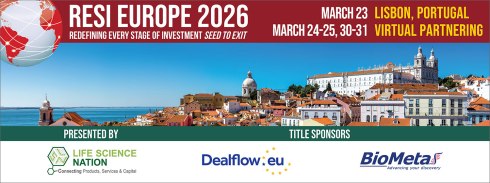








 Next Phase Newsletter