Archive | June, 2025

Hot Investor Mandate: Europe-Based VC Firm Invests up to $25–30M Over the Company Lifecycle for Those Addressing Oncology or Genetic Diseases Across the Globe 

24 Jun

A global investor, headquartered in Western Europe with no geographical restrictions, and is actively seeking new investment opportunities. The firm is a specialist biotech investor with an exclusive focus on therapeutics for oncology and genetic diseases. The firm makes selective investments in newly founded or early-stage companies that apply novel science and innovative technologies to bring first-in-class drug candidates to patients. Typically, the firm invests in incorporated companies from seed stage onwards, and it can invest $25-30M over the lifetime of the companies. The firm’s current fund has a core strategy to invest in early stage companies, but the funds will also be used to invest in late stage financings, cross-over financings, IPO’s, and listed stock. These companies can either be portfolio companies or external companies. 
 
In the life sciences, the firm is currently seeking new investments targeting the development of oncology therapies and therapeutics targeting genetic diseases, and is open to all types of therapeutic modalities and all indications relevant to those spaces, including platform technologies. The firm will typically not invest in medical devices or diagnostics, unless as companion to a therapeutic solution. Projects will be evaluated on solid preclinical proof-of-concept (late preclinical stage/pre-IND or early clinical), and will often fund the companies at least up to human proof-of-concept (clinical Phase Ib – Phase IIa). 
 
At its core, the firm only invests in private companies with experienced management teams and breakthrough potential. The firm most often takes the responsibility to be lead investor, alone or in syndicate as the opportunity demands, and wants to be actively involved in the successful development and growth of its portfolio companies. To this end, DROIA has several experts in oncology and genetic diseases, intellectual property, and drug development on the investment team which are available to the portfolio companies.

If you are interested in more information about this investor and other investors tracked by LSN, please email salescore@lifesciencenation.com

RESI Boston IPC Winners Announced – Now Accepting Applications for September 

24 Jun

By Max Braht, Director of Business Development, LSN

Max-Braht-HeadshotAt RESI Boston June 2025, 53 companies participated in the Innovator’s Pitch Challenge (IPC), presenting their technologies to panels of active investors and showcasing their work in the Exhibition Hall. RESI attendees — including early-stage investors, startup executives, and industry leaders — voted for the most impressive companies based on pitch presentations, Q&A performance, and networking in the exhibit hall.

Congratulations to the Top-Ranked IPC Companies from RESI Boston June

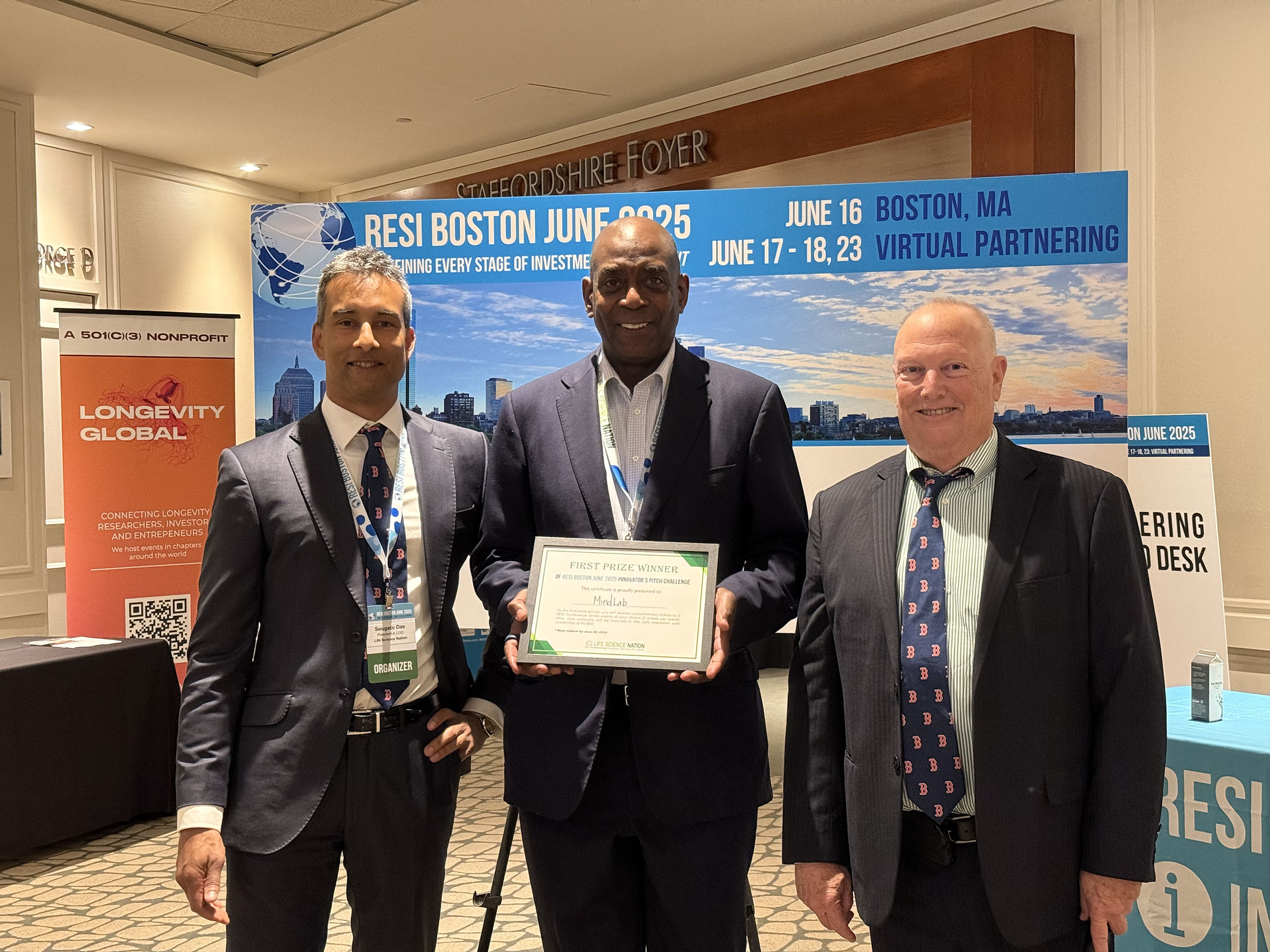
First Place: MindLab

Our lead product, MLB-001, is a first-in-class, combination drug designed to deliver powerful, life-changing pain relief using significantly lower morphine doses. MLB-001 achieves equal or superior analgesic effects compared to conventional morphine, while minimizing common side effects and reducing the development of drug tolerance. Importantly, MLB-001 is specifically engineered to lower the risk of addiction, a critical advancement given the ongoing opioid crisis. MindLab is committed to redefining pain care by introducing safer, more effective treatments that address unmet medical needs and promote better quality of life for patients worldwide.

Sougato Das, President and COO, Life Science Nation | Larry Raoul James JD, MBA, Founder, President, and CEO of MindLab | Dennis Ford, Founder & CEO, Life Science Nation


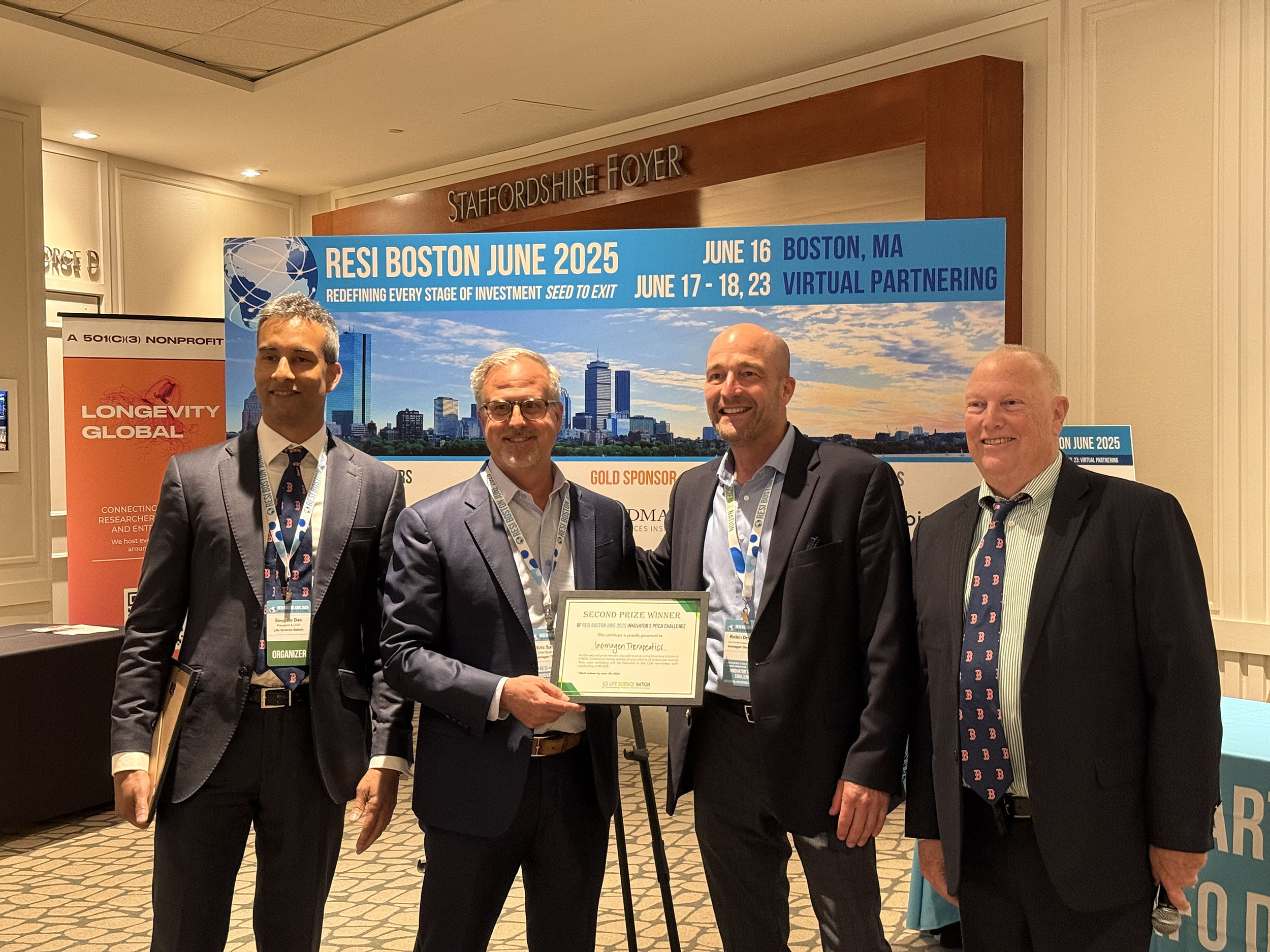
Second Place: Inomagen Therapeutics

Inomagen Therapeutics, Inc. is a private, preclinical stage biotechnology company pioneering a gene therapy to improve the treatment of atrial fibrillation. Inomagen has intellectual property and proof of concept data for both the gene and the gene delivery system. Inomagen has a strong and experienced team of industry veterans and key opinion leading cardiovascular physicians to engage in management and advisory roles, including those with extensive domain experience in gene therapy, cardiology, AF therapeutics, medical device, clinical studies, and venture capital. The market size for Inomagen’s gene therapy products is $10.2B.

Sougato Das, President and COO, Life Science Nation | Eric Sandberg, CBO, Inomagen Therapeutics | Robin Drassler, VP of Business Development, Inomagen Therapeutics | Dennis Ford, Founder & CEO, Life Science Nation


Third Place: MantaBio

MantaBio is a life sciences tools company building automated microbial detection systems specifically designed for biopharma manufacturing environments. Our platform offers rapid, high-sensitivity detection across all microbe categories: bacteria, fungi, viruses, and mycoplasma — delivering results in just 2 hours compared to the industry standard of 5 to 28 days. Built with the needs of biologics producers in mind, MantaBio’s technology is optimized for speed, accuracy, and ease of use. It requires less than one minute of hands-on time, no specialized training, and integrates seamlessly into GMP workflows. By enabling at-line or near-line testing with gold-standard sensitivity, MantaBio helps manufacturers reduce contamination risk, minimize batch loss, and accelerate product release timelines. Our system is the next generation in microbial quality control — replacing outdated manual culture methods and reliance on off-site reference labs with a modern, automated approach built to match the pace and complexity of today’s biopharma processes.
Sougato Das, President and COO, Life Science Nation | Max Braht, Director of Business Development, Life Science Nation | Carter Boisfontaine, Co-Founder and President, MantaBio | Dr. Jack Regan, Co-Founder, CEO, and CTO, MantaBio | Claire Jeong, CCO, Vice President of Investor Research, Asia BD, Life Science Nation | Dennis Ford, Founder & CEO, Life Science Nation


We applaud all IPC participants for sharing their innovative work and contributing to a dynamic, high-impact event.

Applications Now Open for the September IPC at RESI Boston

The Innovator’s Pitch Challenge at RESI Boston September offers life science startups the opportunity to present directly to a curated panel of active investors and receive real-time, constructive feedback. Each pitch includes a live Q&A with investor judges and extended exposure through participation in the IPC exhibition hall.

New for September, the IPC package now includes the option to add a second three-day standard ticket at no additional cost. This provides a teammate with full access to partnering and conference sessions.

Benefits include:

  • Investor feedback during live pitch sessions
  • Full access to one-on-one partnering
  • Exhibit table in the IPC Hall
  • Optional additional RESI pass included

Apply now to secure your spot and connect with global early-stage investors this September.

Apply to Pitch at RESI Boston Sept. 2025

Investor Panels at RESI Boston September

24 Jun

By Claire Jeong, Chief Conference Officer, Vice President of Investor Research, Asia BD, LSN

RESI Boston returns on September 17, 2025 at the Westin Copley Place, once again serving as a core event during Biotech Week Boston. Organized by Life Science Nation, RESI (Redefining Every Stage of Investment) brings together life science and healthcare companies with hundreds of investors and strategic partners for a day of partnering, networking, educational content, and exhibits.

A highlight of every RESI conference is the investor panel programming, where active investors and strategics speak directly to entrepreneurs about what they’re looking for, how they invest, and how startups can position themselves for success. The upcoming September event will feature deep dives into some of the most dynamic areas of healthcare innovation, featuring speakers from impact investors, corporate venture arms, Big Pharma, family offices, and more.

Impact Investors & Venture Philanthropy Panel

The Role of Impact Investing in the Healthcare Ecosystem

Impact investors and venture philanthropists are playing a growing role in backing early-stage healthcare ventures, especially those addressing health equity and underserved areas. In this panel, leaders in the field will discuss how they define and measure impact, what they look for in mission-driven ventures, and how they work with founders to align values with milestone-based progress. Attendees will gain insight into how this capital is deployed to catalyze innovations that go beyond traditional ROI.


Mental & Behavioral Health Panel

Investing in Solutions for Higher Quality of Life and Wellbeing

With 1 in 8 people globally affected by mental disorders, demand for novel solutions in behavioral health continues to grow. This panel features investors who are actively backing companies developing digital tools, neurotechnologies, care delivery innovations, and novel therapeutics. Panelists will explore challenges such as stigma, reimbursement, and regulation—along with what it takes for startups to stand out in this vital and rapidly evolving market.


Oncology Innovation Panel

Latest Scientific Breakthroughs and Future Outlook

Oncology continues to attract robust investor interest, yet the bar for scientific rigor and differentiation is high. This session gathers investors focused on oncology diagnostics, therapeutics, and platforms to discuss what excites them in the current landscape and what it takes to succeed. Topics include scientific novelty, clinical de-risking, commercial potential, and where the next wave of oncology innovation may arise.


Corporate VC Panel

Venture and Innovation Arms Making Strategic Investments

Corporate VCs offer much more than capital, they bring strategic alignment, deep expertise, and long-term partnership opportunities. In this session, leaders from CVC arms of major pharma, biotech, and medtech companies will discuss how they source and evaluate early-stage deals, what startups should expect post-investment, and how founders can navigate alignment with a corporate parent. This panel is essential for startups seeking strategic investors.


Diagnostics Panel

Investing in Innovations for Preventative and Personalized Care

As diagnostics become increasingly central to precision medicine and population health, investors are paying close attention. Panelists in this session will discuss how they evaluate new diagnostic technologies, from regulatory and reimbursement outlooks to commercial differentiation and unmet need. For entrepreneurs developing platforms in oncology, infectious disease, or chronic conditions, this discussion will provide actionable guidance on positioning and funding strategies.


Partnering with Big Pharma Panel

What Startups Need to Know to Get on Big Pharma’s Radar

Securing a partnership with Big Pharma can be a transformative milestone. This panel features business development and venture leaders from leading pharmaceutical companies who will share what they look for in early-stage collaborations. Learn how they assess risk, stage readiness, and strategic fit—plus how startups can build compelling cases for co-development, licensing, or investment.


Family Offices Panel

Perspectives on Early-Stage Investments

Family offices have become increasingly visible in early-stage healthcare deals, often offering patient capital and values-driven investment strategies. This panel will unpack how these investors approach opportunity evaluation, what sets them apart from traditional VCs, and how they support portfolio companies beyond capital. Attendees will also hear practical advice for engaging family offices and building meaningful relationships.


Whether you’re developing breakthrough diagnostics, therapeutics, platforms, or care delivery solutions, the RESI Boston investor panels offer a unique opportunity to hear directly from the funders shaping the future of healthcare.

Interested in sharing your insights at RESI? Reach out to join our speaker lineup!

Register by July 11 to lock in Super Early Bird Rates and save $300. Secure your spot today and join 400+ investors and strategic partners this September in Boston.

Introducing BD Assist: LSN Sets Up the Meetings For Your Global Investor Roadshow

24 Jun

By Dennis Ford, Founder & CEO, Life Science Nation (LSN)
DF-News-09142022Life Science Nation (LSN) pioneered investor engagement through its RESI Conferences, global investor database, and entrepreneurial education programs. LSN is taking a significant leap forward with the launch of BD Assist, a full-service investor outreach and meeting management product designed to augment and complement your in-house BD efforts.

With BD Assist, LSN aids in the tedious task of booking meetings with your partner targets:

  • LSN Labs AI Agent will optimize your messaging for outreach.
  • Identify and prioritize well-matched capital and licensing partners
  • Conduct coordinated outreach
  • Schedule and confirm investor meetings on your behalf

The product development, regulatory, and operational complexities of running a life science company are already challenging enough. BD Assist removes one of the most tedious but significant burdens: finding, securing, and managing investor meetings.

Why LSN Is Uniquely Positioned to Do This
LSN combines getting the right target list, a proven canvassing and follow-up methodology, and a dedicated outreach team to deliver results. LSN is a well-known, trusted, and credible entity in the partnering space. We know what life science investors are looking for and which meetings they’ll take. Over the past decade, we’ve taught hundreds of startups how to craft their story, manage outreach, and execute CRM-powered campaigns. The results are real; see our Australian accelerator cohort, where 90% of companies secured funding or strategic partnerships.

BD Assist takes on the daily work of driving your campaign forward. We handle the outreach, schedule your meetings, manage follow-up, and sync it all to your CRM in real time. You stay focused on the science, and we set up the business development meetings. If you’re raising capital or licensing in the next 12 months, BD Assist is your opportunity to launch a turnkey global campaign without hiring a whole BD team.

Ready to activate your global roadshow?
Contact us at salescore@lifesciencenation.com to get started.

The Needle Issue #8

24 Jun
Juan-Carlos-Lopez
Juan Carlos Lopez
Andy-Marshall
Andy Marshall

Around 1 in 5000 people live with a maternally inherited mitochondrial disease like MELASLeber’s Hereditary Optical Neuropathy (LHON) or MIDD, for which there are limited or no treatment options. Gene- and base-editing therapies for mitochondrial DNA (mtDNA) have lagged behind CRISPR–Cas9-based approaches targeting nuclear genes. Whereas there is already a CRISPR–Cas9-based product on the market and >150 different active trials of investigational therapies, the company closest to the clinic with an I-CreI (mitoARCUS) meganuclease targeting a mtDNA point mutation in MELAS/mitochondrial myopathy (Precision Biosciences) announced last month that it was pausing development for commercial reasons.

Despite this disparity, there is reason for optimism as a flurry of different types of optimized cytidine and adenine base editors for mtDNA are now available, with base conversion efficiencies of 50% now achievable, and some newer formats reaching efficiencies as high as 82%.

The development of mtDNA editors is not without challenges. First, editors must dispense with the targeting guide RNA, as mitochondria possess a double membrane that lacks any RNA transport system, effectively thwarting CRISPR-based gene or base editors (instead, a mitochondrial targeting sequence is used to ferry-in editor proteins). Second, unlike nuclear DNA with two copies of a gene, every human cell contains thousands of mitochondria — oocytes contain a whopping 193,000 mitochondria on average — and each organelle contains an average 10 mitochondrial genomes. Those ~10,000 genomes per cell may not all have the same sequence, with mutations existing in a state known as heteroplasmy, in which both mutant and wild-type genomes co-exist in the same organelle. Disease only occurs when the percentage of mutant mtDNA exceeds a particular threshold, typically between 70% and 95%.

Heteroplasmic mitochondrial diseases, like MELAS and MIDD, could be treated using I-Crel/FokI meganucleases or restriction enzymes linked to either transcription activator-like effector (TALE) domains or zinc fingers (which introduce double-strand DNA breaks into target sequences, leading to elimination of mutant mtDNA and repopulation of wild-type mtDNA); other conditions like LHON are predominantly mutant homoplasmic, which means they can only be treated using base editors or supplemental gene therapy.

One key concern with base-editing technology has been its propensity for off-target and bystander changes. This has led to various strategies to increase specificity, such as engineering the deaminases to narrow the editing window or use of nuclear exclusion sequences to stop nuclear sequence editing. Now, two papers in Nature Biotechnology represent important advances that could speed up translational studies of mitochondrial diseases.

Liang Chen, Dali Li and their colleagues of ShanghaiTech University, China report the engineering of highly efficient mitochondrial adenine base editors (eTd-mtABEs) by introducing mutations into the TALE TadA-8e deaminase for greater activity and specificity. These editors achieved up to 87% editing efficiency in human cells and over 50% in vivo, with reduced off-target effects compared to earlier tools.

In the first study, the researchers used eTd-mtABEs to introduce mutations in the human ND6 gene, encoding a subunit of the oxidative phosphorylation (OXPHOS) system linked to LHON and Leigh syndrome. They found reduced levels of ATP and more reactive oxygen species in the edited cells compared with controls, consistent with disease phenotypes. Next, the team used this adenine TALE base editor to introduce two pathogenic T-to-C mutations in the mitochondrial TRNS1 gene of rat zygotes, a gene linked to childhood-onset sensorineural hearing loss. The resulting offspring showed sensorineural hearing loss, which was transmitted to the F1 generation, providing proof of concept that eTd-mtABEs can be used to create animal models of disease.

In the companion paper, Chen, Li and their colleagues used the adenine TALE base editor to model Leigh disease in rats using a similar strategy. The resulting rats showed reduced motor coordination and muscle strength, defects that were obtained with editing efficiencies of only 54% on average. To test if the abnormalities could be reversed, the authors then used a cytosine TALE base editor in zygotes from the mutant rats. On average, the editing efficiency was only 53%, but this was enough to rescue the disease phenotypes.

This is the first report of direct correction of mtDNA mutations via a TALE base editor in an animal model. The next step will be to show feasibility in a model after disease onset (only the UK and Australia allow maternal spindle transfer therapy for mitochondrial diseases; no country has permitted mitochondrial base editing in human zygotes).

Achieving effective therapeutic mitochondrial base editing in affected target tissues will thus require efficient AAV delivery. For LHON, an already approved FDA AAV-2 product transduces the optic nerve and retinal ganglion cells, providing a translational path; GenSight Biologics also recently published 5-year outcome data for its AAV-2 therapy Lumevoq (lenadogene nolparvec) in LHON. But AAV delivery in other mitochondrial conditions will not be as simple: MELAS patients, for example, require efficient transduction of the CNS, kidney, skeletal muscle and cardiac muscle; MIDD patients need AAV delivery to the pancreas, inner ear, retina and kidney. Although a commercial AAV vector (AAVrh74) is available for muscle (Sarepta’s Elvidys), vectors that reach many of these other tissues have yet to be commercialized and may require next-generation AAV capsids and/or refinement of machine-guided design of cell type-specific synthetic promoters to reach target organs.

It is encouraging that the roughly 50% base conversion rate achieved in these new studies exceeded the heteroplasmy threshold required for disease manifestation and therapeutic rescue. At the same time, despite this remarkable success, concerns remain about off-target effects — both in mitochondrial and nuclear genomes — and narrow therapeutic windows. And with base editing approaches so far behind conventional gene therapies like Lumevoq in development, compelling commercial and clinical advantages benchmarked against best-in-class gene therapy will be needed to convince investors to back these approaches.

One parting thought: the past year has seen a noticeable uptick in publications on mitochondrial base editing technology from labs outside of the US. TALEN specialist Cellectis, headquartered in Paris, France, acquired 19% of equity in the mitochondrial base editing company Primera Therapeutics in 2022, ostensibly for its rapid TALE assembly platform (FusX System), which streamlines TALE repeat construction. In South Korea, Jin-Soo Kim at the Korea Advanced Institute of Science and Technology (KAIST) recently co-founded startup Edgene with Myriad Partners to develop mitochondrial base editors based on his seminal work on TALE-linked deaminases (TALEDs) enabling A to G conversion, which he has continued to optimize. According to Biocentury8 out of 13 base editing studies published in 27 translational journals over the past year came from labs in China. Wensheng Wei’s group at Peking University, a founder of Edigene in Beijing, continues to work on mitobase editors, with two recent patents on strand-selective mitochondrial editing. And Jia Chen of ShanghaiTech University, China, and his collaborators Li Yang and Bei Yang, are scientific advisors to Correctseq in Shanghai, which is developing transformer base editors for ex vivo and in vivo applications. It seems that mitochondrial base editing may be another area where US biotech may soon be finding itself chasing the dragon. David Liu and Beam Therapeutics may have something to say about that.

Hot Investor Mandate: Healthcare Focused VC Firm Invests in Promising Companies in North and South America, Across All Life Science Sectors

24 Jun

A healthcare technology-focused venture capital firm invests primarily in pre-Seed, Seed, Bridge, and Series A financing rounds and is currently investing from their second fund. Typical investment size ranges from $100-250k, with potential for follow on. The firm welcomes global opportunities, but will invest primarily in the “Americas” (North or South America). 
 
The firm is particularly interested in the areas of mental health, longevity, and chronic conditions, and technologies that can promote prevention, better access, and better quality of care. With their current fund, the firm seeks to invest into more biotech companies, and will consider all modalities. The firm will also continue to invest in medical devices, diagnostics, and digital health companies that address their key focus areas, with an open interest in various types of technologies within these main sectors. In terms of stage of development, the firm is open to pre-clinical, pre-revenue generating companies with demonstrated proof of concept. 
 
The firm does not have specific company or management team requirements. The firm can act as either a lead or co-investor, will typically seek board representation when leading.

If you are interested in more information about this investor and other investors tracked by LSN, please email salescore@lifesciencenation.com

Hot Investor Mandate: US and China-Based Cross Border VC Firm Seeks to Invest in Novel Therapeutics and Enabling Technologies Globally, from Seed to Growth

24 Jun

A life science venture capital firm with extensive global access and unique cross-border expertise. The firm discovers, incubates and grows next-generation life science companies in early and growth stage. Their portfolio companies pioneer differentiated therapies and enabling technologies to address major human diseases with high unmet medical needs. They operate offices in USA and China. 
 
The firm focuses mostly on novel therapeutics, like small molecule, cell therapy, gene therapy, etc, while the firm is also open to enabling technologies and high-end specialty services. The firm is looking to invest from seed, first institutional round, to growth stage. 
 
The firm has no specific requirement for the company & management team. 

If you are interested in more information about this investor and other investors tracked by LSN, please email salescore@lifesciencenation.com