Archive | Fundraising RSS feed for this section

LSN Conducts Entrepreneurial Master Class Workshop for 100 Fulbright Foreign Students

26 Apr

By Dennis Ford, Founder and CEO of Life Science Nation, Creator of the RESI Conference Series

LSN taught a 3-day entrepreneurial workshop entitled “Biomedical Innovations and Startups” for 100 Fulbright Foreign Students who are currently studying and conducting research at institutions across the United States. This seminar is part of the Fulbright Foreign Student Program, an academic and cultural exchange program, funded by the U.S. Department of State. The workshop took place in Boston over the weekend, and it was a great experience sharing LSN’s knowledge of the early-stage life science arena.

The purpose of the seminar was to provide the Fulbrighters with an opportunity to explore and examine the process of taking life-saving inventions from ideation and creation stages to the public market. The life science domain is unique in that a startup entity’s journey starts with academic tech transfer agreements, which lead to regional and national government non-dilutive funding followed by capital investors and licensing partners. LSN has a decade of expertise in the startup universe helping hundreds of companies raise billions of dollars through its products and services. LSN has developed a curriculum that it delivers as part of its Focus on Cures Accelerator which offers several master class workshops to global tech hubs and incubators. This particular workshop highlighted the core elements of launching an early-stage company’s branding and a messaging in conjunction with a global partnering campaign. The theme of the workshop was finding your entrepreneurial voice, developing a compelling narrative and then clearly tell the story of team, product, company milestones and partnering strategy. Topics covered included:

  • How to find your entrepreneurial voice and the importance of getting your story straight
  • How to generate a global target list of capital investors and licensing partners who could provide the funds and services necessary to grow your business
  • How to perform a thorough competitive landscape analysis
  • How to use multiple modalities (from tagline to executive summary to pitch deck) to cogently tell your company story

The 3-day entrepreneurial workshop concluded with a pitch competition that highlighted not only the talent and entrepreneurial agency that the Fulbrighters possessed, but that the key take-home messages of the master class had been well integrated and understood. We can expect many of these students to be industry leaders in the coming years and were honored to have been a part of their journey.
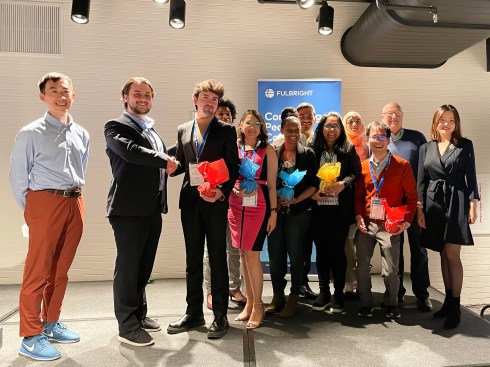
IMG_5788LSN Judge team, Dennis Ford, Candice He, and Alex Vassallo, with first place Fulbright Team of the Pitch Competition.

Who’s Getting Funded?

21 Apr

By Karen Deyo, Director of Investor Research, Israel BD, LSN

Life Science Nation (LSN) has built a funding superstructure over the past decade, but what is the true metric of success in the complex early-stage life science ecosystem? The number of companies funded, and the amount allocated are terrific metrics, but when consumed as comprehensive and independent of context, this data can be misleading and unhelpful. Let’s dive into LSN’s tracking of these companies and discuss the value this data holds and how it can work for you.

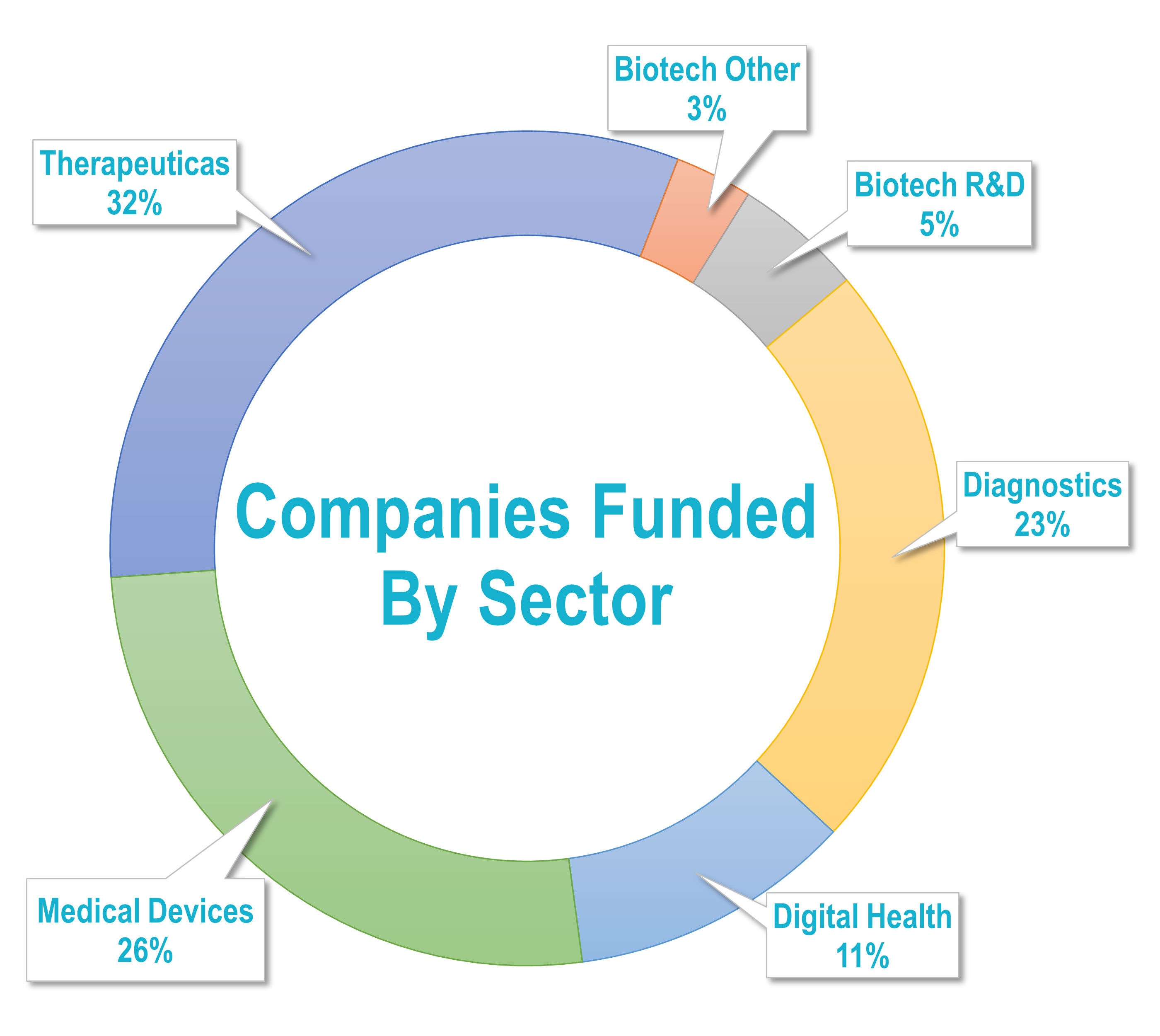
As previously mentioned, LSN tracks companies funded in part through participating at the Redefining Early Stage Investment (RESI) partnering conferences, subscribing to the LSN Investor Database, or using our Branding, Messaging and Matching services. The organic nature of partnering, along with its typical 9–18-month timeline, makes it challenging to track and verify, therefore, this data is typically self-reported by our partners and verified through public press releases. As such, we estimate this list makes up only about a third of these deals with LSN as part of the strategy, as many cannot be publicly disclosed. The funded partner list consists of nearly 85 startups across early-stage life science and healthcare with deals valuing more than $1.3B that have used LSN’s products and services as part of the campaign strategy. Check out the basic structure of these deals below:

Chart-1

From the data, we see that the 4Ds (Drugs, Devices, Diagnostics, and Digital Health) that LSN focuses on are broadly represented in the number of companies that receive funding, but they are not the only companies that investors are pursuing. Additionally, therapeutics leads the pack, despite the reputation that pre-clinical, early-stage therapeutics are too great a risk for investors to jump into. Learn more about that in our recent interviews with RESI Innovator’s Pitch Challenge winners: OncoXome CEO, Auriane Gamelin and Prolifagen CEO, Claudine Bruck.

Chart-2

We see that early-stage deal flow is alive and well in the life sciences, but not all capital is the same. Know what you want but keep an open mind when meeting with relevant and knowledgeable partners who are a fit for you. Early-stage fundraising is a critical point in a startup’s development and growth, but these partnerships will last beyond the round and will play a large part in bringing your company forward.

The tools LSN offers are powerful, but what these funded companies also have in common is leg work. LSN helps companies build their global target list of capital investors and licensing partners through services, data, and events, but it’s the founders and their stories that shine in those meetings. Every successful raise has dedicated, hard-working, creative, and resourceful founders and team members doing research, booking meetings, and pitching to investors who are a fit for their product and stage of development. LSN has long provided guidance and resources to help entrepreneurs, but it’s their own work that gets them over the finish line.

Has LSN played a role in your fundraising or investing? Tell us your story! We want to add your deal to our list and share what you have learned throughout the process. If you’re interested in learning more about what LSN can help you achieve in your own global fundraising campaign, connect with our business development team!

Want to learn more? The Business Development team at Life Science Nation is available to answer questions and share additional details to help you meet your partnership goals!
International
East Coast (USA) & China
Midwest (USA)
& Canada
West Coast  (USA)
Alex
Greg Mannix
Vice President International Business Development
Book a Meeting
Email Me
Candice He
VP, Business Development & Global Investment Strategist
Book a Meeting
Email Me
Antoinette Lowre
Manager of Business Development
Book a Meeting
Email Me
Alexander Vassallo
Manager of Business Development
Book a Meeting
Email Me

Know Your Competitive Landscape

14 Apr

By Greg Mannix, Vice President International Business Development, General Manager Europe, LSN

Do you know the players in your field that are developing similar technologies, or different technologies for the same application? Do you understand how your technology compares to those potential competitors? These are issues investors will want to see you have a grasp on, so having a clear vision of your Competitive Landscape will add a lot of value when you are pitching for investment.

Life Science Nation (LSN) offers valuable resources to early-stage companies as they seek funding and develop their strategies to grow and progress. To track your competitive landscape, LSN has a powerful business development database that tracks more than 60,000 companies across all the verticals of the life sciences and all stages of development. In just a few clicks, you can see your own competitive landscape.

Once you’ve seen the competitive landscape, it’s important to understand how to communicate your unique value. We can also help you understand and effectively communicate this, extracted in part from your better picture of the Competitive Landscape, through LSN’s Branding & Messaging consulting services. Experts will work with you to develop optimal marketing collateral for you to use in your communication with investors and partners, increasing your odds of success. Hear from Reglagene CEO Richard Austin on how he learned to tell his company story and how it impacted his early-stage fundraising.

Finally, you can put your enhanced market comprehension, communication skills and story to the test in the Innovator’s Pitch Challenge (IPC) at Digital RESI, June 7-9. The IPC is a fantastic showcase for founders who participate in a live Q&A from investors and strategic partners from different sectors in life science and healthcare. Investors frequently ask pitching founders about their unique value and market competition. A keen and well-communicated understanding of the competitive landscape shows investors that you don’t just function within an industry – you know it.

This knowledge can help you position yourself, not just accurately among competitors, but as someone who really knows their industry. To learn more about your competitive landscape or about any products or services mentioned, reach out to connect with LSN’s dedicated business development team.

Want to learn more? The Business Development team at Life Science Nation is available to answer questions and share additional details to help you meet your partnership goals!
International
East Coast (USA) & China
Midwest (USA)
& Canada
West Coast  (USA)
Alex
Greg Mannix
Vice President International Business Development
Book a Meeting
Email Me
Candice He
VP, Business Development & Global Investment Strategist
Book a Meeting
Email Me
Antoinette Lowre
Manager of Business Development
Book a Meeting
Email Me
Alexander Vassallo
Manager of Business Development
Book a Meeting
Email Me

Selling, Cold Calling, and Follow-Up Are Not Dirty Words

12 Apr

By Dennis Ford, Founder and CEO of Life Science Nation, Creator of the RESI Conference Series

The coaching and mentoring universe is divided between those who think that selling, cold calling, and follow-ups are dirty words. They’re likely to proselytize that if you do not have a warm referral, you are wasting your time. The other camp (where I live) supports finding partners based on the fit of product and stage of development and reaching out until you book that meeting or are told, “No.” Life Science Nation created the RESI conference to be a vehicle to make this happen, based on fit – the other “warm referral.”

Opportunity abounds in the golden age of life science with new tools and technologies adding to the dynamic, but we’re also seeing startups fail faster, and therefore pivot, restart, and draw a straighter line to viable targets and products. I hear frequently that the magic combination is being smart and lucky, but somewhere in the middle of being smart and lucky is determination, commitment to hard, tedious work, and navigating the path to a new product. This is the case for founders taking their companies from regional to global and finding investors and licensing partners that are a fit.

RESI is a conference designed for these entrepreneurs to flourish. It’s frustrating to see partnering events with little vetted investors or licensing partners, but rather services providers wanting to charge for their partnering services. These other partnering events are more of a social gathering for reconnecting business acquaintances, which makes it a challenge in choosing the right event for you. None of this is inherently wrong, but the current need is for real vetted partners who are looking to fulfil investment mandates and product pipelines.

The early-stage marketplace is heating up with growing buy-side players seeking these startups. Join us for Digital RESI, June 7-9 and mark your calendar for the first in-person RESI since 2020 – RESI Boston, September 21-22.

The Angel on Your Shoulder

7 Apr

By Megan Rychwa, Investor Research Analyst, LSN

Anyone embroiled in early-stage fundraising understands the need for solid advice and warm introductions, especially when approaching angel investors and family offices – your own shoulder angel to guide your progress. These investor groups are popular at Redefining Early Stage Investments (RESI) conferences because they offer insights to founders on how to connect and engage with these types of investors.

When it comes to approaching family offices and angels, your network is everything. Faz Bashi of Life Science Angels said at RESI June 2021 “BYNBYNI – build your network before you need it.” As a life science start-up, getting to know the members within an angel group or family office, connecting via LinkedIn, going to events hosted by the angel group or family office and conferences like RESI, and building your network before even asking for money is going to set you apart from other startups. When you are known within the networks, the angels will talk to one another and can provide referrals and deal flow, giving you a warm call to the investor you want to meet with. Cold calls are not an efficient way to connect with investors in general, but especially not with angels and family offices. The gatekeepers may turn you down before you can even pitch your company.

Many angels and family offices have a vast network, and Charles Cameron of Hub Angels Investment Group told his panel at RESI September 2021 that if you cannot get a referral through the network, you are not connected and you are not the right person for the job. Since COVID, your network is even more critical, and you want to be well-connected before even thinking about raising money. Charles explained, “Use the network, get a referral in, do it early, early, and often. I love when people keep me updated before they need the money… Here is an update on the company and I have watched them over time, and you suddenly are building a relationship with that person of trust and insight.” Find a contact and get into the network of angels and family offices you are targeting, and keep people informed on your company’s technology and successes and do it before you need money, so you are already well-known and trusted.

Another key factor in approaching angels and family offices is preparedness. The investors within these groups do a lot of due diligence and research on your company, they ask you to do the same. When approaching an investor, going on their website can make you as an entrepreneur stand out; know their investment criteria, know their portfolio companies, and keep up-to-date with the latest news on the group. Nadav Shimoni of Arkin Holdings said at RESI June 2021 that he expects entrepreneurs to go through their website and portfolio and come to the table saying, “I know this is the type of technologies that get you excited because you’ve invested in it, I really like this blog post you’ve shared, and we are doing something similar.” This shows that they are diligent in the process and will be diligent as a company.

Some angel and family office groups, such as MidAtlantic Bio Angels, have office hours where, before asking for any money at all, a startup can come in with an idea or the preliminary stages of their company and pitch to investors for feedback and advice, so they are ready for the future when they are pitching for money. Doing this builds a relationship within the group early on and if that relationship continues throughout the preliminary stages of the company, that trust has been built and maintained which helps get to the investment stage much easier through connections and networking.

Building your network is the key to success with connecting with angels and family offices, and events like RESI make doing that easier than ever before. When you have built a solid network, that foundation gives your company a lot more credibility and trustworthiness to investors who invest out of their own pockets. Let these principles guide your outreach like a shoulder angel so you can be ready when the real ones come knocking.

Top 10 Challenges for Startups Raising Capital and Seeking Licensing Deals

7 Apr

By Dennis Ford, Founder and CEO of Life Science Nation, Creator of the LSN Partnering Conference Series

Check out a recent list of the top challenges startups face when entering the early-stage fundraising arena. Each challenge is linked to an article tackling these and similar issues.

  1. Migrating from regional mindset to global partnering arena
  2. Understanding that deals take 9-18 months and identifying vehicles that can assist in partnering campaigns early
  3. Defining and understanding their competitive landscape
  4. Compiling a global target list (GTL) that is a fit for product and stage of development
  5. Understanding the cost of launching and executing a global partnering campaign ($60K-$90K)
  6. Developing branding and messaging that highlights unique company value that is clear, concise, and easy to understand
  7. Implementing a CRM to activate and organize global campaign, which includes ongoing curation of partner list, outreach initiatives, and tracks status and to-do list for all meetings
  8. Hitting the road with phone and email canvassing, as well as traveling to conferences to engage partners
  9. Learning the art of follow-up (99% of all startups fail here)
  10. Learning how to efficiently partner at a partnering conference

Life Science Nation is committed to facilitating well-fitting meetings between founders with innovative assets and the capital and channel partners who seek them. Join us for one of our free fundraising bootcamps to learn about the products and services we offer to the startup community in life science and healthcare.

Preparing to Pitch at RESI 
  • Alexander Vassallo, Manager, Business Development, Life Science Nation
The Innovator’s Pitch Challenge (IPC) is an opportunity for early-stage companies to gain additional exposure to conference attendees, pitch directly to a panel of relevant investors, and participate in a live Q&A session. This bootcamp will walk through the process of preparing your pitch materials and what to expect in a live pitch session, including frequently asked questions from investor judges.

Fundraising 101: Avoiding Pitfalls and Improving the Odds

  • Karen Deyo, Director, Investor Research, Israel Business Development, Life Science Nation
  • Candice He, Vice President, Business Development, Global Investment Strategist, Life Science Nation
This bootcamp is designed to help scientist-entrepreneurs navigate the world of fundraising. It starts out by debunking some commonly held misconceptions about early-stage startups and fundraising, followed by tips on how to improve your chances and increasing investor visibility.
Preparing to Pitch at RESI
  • Candice He, Vice President, Business Development, Global Investment Strategist, Life Science Nation
The Innovator’s Pitch Challenge (IPC) is an opportunity for early-stage companies to gain additional exposure to conference attendees, pitch directly to a panel of relevant investors, and participate in a live Q&A session. This bootcamp will walk through the process of preparing your pitch materials and what to expect in a live pitch session, including frequently asked questions from investor judges.
Strategies for Successful Partnering
  • Alexander Vassallo, Manager, Business Development, Life Science Nation
  • Joey Wong, Analyst, Investor Research, Hong Kong BD Life Science Nation
This bootcamp is a fan favorite with tried-and-true tips to make your partnering experience exceptional, letting your technology, product, and team take center-stage. Whether booking 1-on-1 meetings or pitching to a panel, these strategies will help you prioritize the details that make a difference in telling your story to potential investors and strategic partners.

Our Redefining Early Stage Investments (RESI) conference returns in a virtual format June 7-9. Register today and save $300 on super early bird rates by April 15!

Register-now-button-new

Top 10 Challenges for Startups Raising Capital and Seeking Licensing Deals

1 Apr

By Dennis Ford, Founder and CEO of Life Science Nation, Creator of the LSN Partnering Conference Series

Check out a recent list of the top challenges startups face when entering the early-stage fundraising arena. Each challenge is linked to an article tackling these and similar issues.

  1. Migrating from regional mindset to global partnering arena
  2. Understanding that deals take 9-18 months and identifying vehicles that can assist in partnering campaigns early
  3. Defining and understanding their competitive landscape
  4. Compiling a global target list (GTL) that is a fit for product and stage of development
  5. Understanding the cost of launching and executing a global partnering campaign ($60K-$90K)
  6. Developing branding and messaging that highlights unique company value that is clear, concise, and easy to understand
  7. Implementing a CRM to activate and organize global campaign, which includes ongoing curation of partner list, outreach initiatives, and tracks status and to-do list for all meetings
  8. Hitting the road with phone and email canvassing, as well as traveling to conferences to engage partners
  9. Learning the art of follow-up (99% of all startups fail here)
  10. Learning how to efficiently partner at a partnering conference

Life Science Nation is committed to facilitating well-fitting meetings between founders with innovative assets and the capital and channel partners who seek them. Our Redefining Early Stage Investments (RESI) conference returns in a virtual format June 7-9. Register today and save $300 on super early bird rates by April 15!