Archive | Redefining Every Stage Investments (RESI) RSS feed for this section

China’s Biotech Boom: Innovation, Influence, and Rising Tensions 

5 Aug

By Sougato Das, President and COO, LSN

Sougato-Das

As 2025 progresses, China’s biotech and pharmaceutical sectors are not just growing—they’re reshaping the global industry landscape. With skyrocketing innovation, bold regulatory reform, and a deepening rivalry with the U.S., Chinese biotech firms are asserting their global presence at unprecedented speed. The GSK / Hengrui Pharma deal, involving a major collaboration potentially worth up to $12.5 billion, is the latest example. The deal focuses on developing up to a dozen drug candidates, primarily in respiratory diseases, immunology, infection, and oncology. GSK will pay Hengrui an upfront fee of $500 million, with the potential for significant milestone payments and royalties if the collaboration is successful. China will continue to play a major role in the worldwide biopharma ecosystem as…

China Emerges as a Global Drug Development Powerhouse

  • Record Licensing Activity: China-to-West drug licensing hit a record $41.5 billion in 2024, a staggering 66% jump from the previous year. Nearly 30% of global innovative drug assets now trace their origin to China.
  • Biotech Licensing Leadership: In 2024, 42% of all global biotech licensing deals over $50 million involved Chinese firms—up from 22% in 2023.

Drug Discovery Is Going East

  • Rapid Shift in Molecule Sourcing: One in three externally sourced molecules by global biopharma firms now comes from China—a dramatic rise from virtually none in 2019. Chinese biotech firms are lauded for their speed, efficiency, and low-cost synthesis of new compounds, positioning them as preferred partners for drug discovery.

Clinical Trials and Regulatory Momentum increases in China

  • China’s Clinical Surge: In 2023, nearly 28% of global clinical trial sponsorships originated from China—up from just 4% a decade ago. Registrations alone rose by 26% last year.
  • Faster to Market: Thanks to reforms by China’s National Medical Products Administration (NMPA), investigational new drugs can now be approved for human testing in just 60 working days.
  • FDA Recognition: Chinese trials are increasingly qualifying for FDA priority pathways, challenging the traditional dominance of U.S.-based clinical development.

China is at the Cutting Edge of Gene Editing

  • CRISPR Leadership: Chinese startups like YolTech (in vivo CRISPR therapy) and Huidagene (brain-targeted CRISPR trials) are leading in next-gen gene editing.
  • Global Recognition: According to Goldman Sachs, China is at the forefront of CRISPR and CAR-T research.

Tensions and Regulatory Hurdles deepen with the US

  • Geopolitical Pressure: Proposed U.S. legislation—the BIOSECURE Act—would prohibit drugmakers with federal contracts from using Chinese firms like WuXi AppTec and WuXi Biologics after 2032. This could disrupt global supply chains and complicate R&D strategies for U.S. companies.
  • Scientific Chilling Effect: Fears of increased scrutiny are causing some Chinese and Chinese-American researchers to avoid applying for NIH grants, impacting U.S.-China scientific collaboration.
  • Investment Headwinds: Despite innovation, venture capital investment in Chinese biotech has declined due to geopolitical uncertainty.

Cross-Border Deals Multiply

  • Western Biopharma Engagement: U.S. and European firms are actively pursuing licensing and partnership deals with Chinese biotechs—particularly in ADC and bispecific antibody platforms, expanding beyond oncology.
  • Investor Sentiment Splits: Some U.S. investors advocate for protectionist strategies, while others see China’s rise as an opportunity for strategic alignment and access to novel therapies.

What Does All This Means for the Industry>

China is no longer simply a “fast follower” in biotech. It’s now an originator of breakthrough science, shaping the future of global drug development, even as geopolitical tensions threaten to redraw the map of international collaboration.

As global biopharma leaders and investors reassess their strategies, one thing is clear: ignoring China’s biotech ascent is no longer an option.

Partnering Launches August 11 for RESI Boston September 

5 Aug

By Max Braht, Director of Business Development, LSN

Max-Braht-Headshot

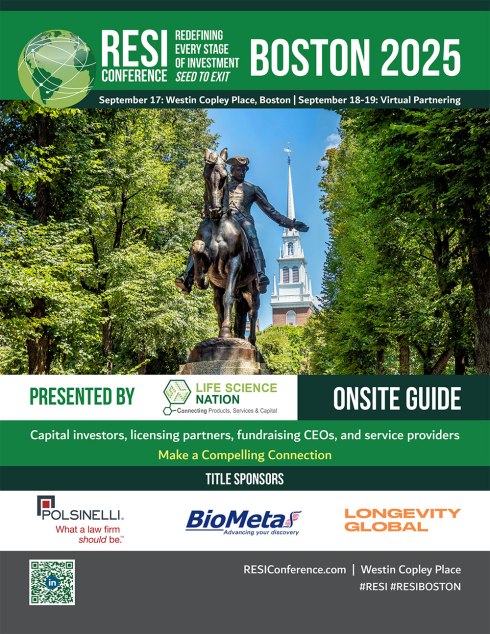
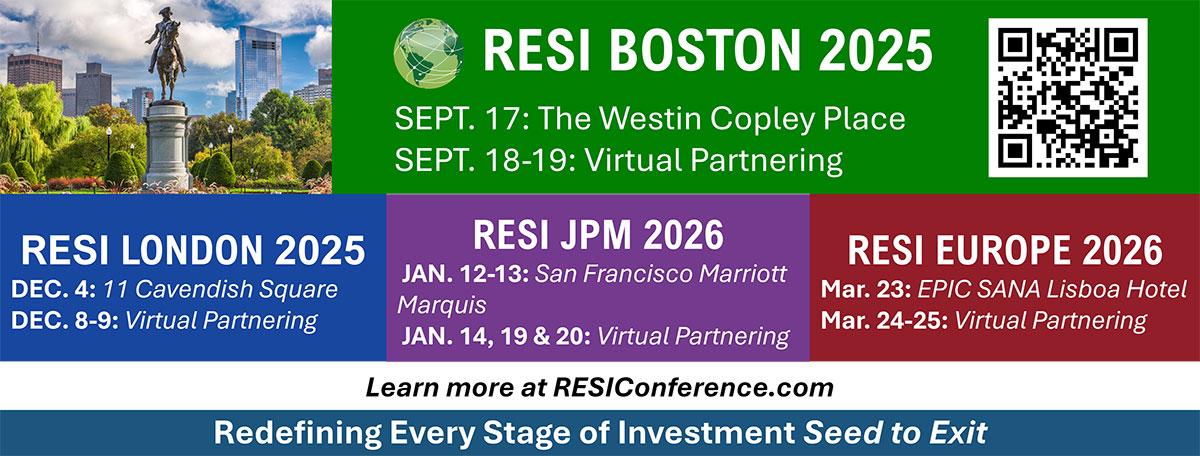
Partnering at RESI Boston 2025 is set to launch next Monday, August 11. The RESI series have consistently been the largest early-stage life science partnering events, in terms of investor attendance, and with 400+ investors/ strategic licensing partners expected to participate in September, RESI Boston September will be a turnkey event for entrepreneurs who are looking to raise capital.

With both in person and virtual registration options, as well as a handful of remaining spots open in our Innovator’s Pitch Challenge, companies can take advantage of Life Science Nation (LSN)’s unique partnering system to set meetings directly with global investors/ in-licensors who are a fit for their product’s sector, indication, stage of development and geographic region.

Companies looking to register can do so before this Friday, August 8th to take advantage of our Early Bird Pricing discounts. LSN will also be hosting a free partnering tutorial webinar on August 18th to help companies maximize the number of secured meetings.

JPM 2026: Partnering, Event/Reception Space Available at RESI JPM

29 Jul

Host your event. Launch your brand. Meet your partners.

By Sougato Das, President and COO, LSN

Sougato-Das

Life Science Nation (LSN) has secured a 20,000 square foot (1900 square meters) space at the Marriott Marquis in Union Square in the heart of JPM Week 2026. This premium venue will serve as the headquarters for the Redefining Every Stage of Investment (RESI) conference on Monday and Tuesday, January 12 and 13—but we’re opening the doors Sunday, January 11 for groups looking to host their own event in the center of the action.

We’re inviting economic development agencies, global trade organizations, venture groups, and industry associations to partner with LSN or book standalone time in this flagship location.

The Space

  • 20,000 square feet of meeting and activation space
  • 4 fully equipped conference rooms (2400 square feet/220 square meters), good for theater-style seating for presentations or a small networking event
  • 90+ RESI-style partnering tables
  • Full-service meeting logistics support available

This space is ideal for:

  • Networking receptions, investor briefings, and pitch showcases
  • Country or region-specific innovation days
  • Workshops, roundtables, or startup presentations
  • Private investor or industry partner meetings

Flexible Integration Options

  • January 11 (Sunday): Available for standalone programs, private events, or pre-RESI activities
  • January 12 and 13 (Monday and Tuesday): Integrate into the RESI JPM program, gain access to hundreds of global investors, and use the space to host partner meetings or specialized tracks within the RESI ecosystem

LSN is already in discussion with a range of organizations, including tech hubs, economic development agencies, service providers, and nonprofit patient groups who are seeking affordable options for hosting events and partnering at JPM.

Why Co-Locate with LSN During JPM?

  • Prime Union Square location just steps from the major hotel hubs and investor meetings
  • Built-in foot traffic and visibility from RESI attendees, investors, and partners
  • Flexible use of infrastructure and logistics support from the LSN team
  • Branding and signage opportunities throughout the venue
  • Streamlined meeting scheduling and visibility if integrated into the RESI partnering platform

Make It Yours

Whether you’re looking to host a private country reception, a thematic track inside RESI, or a custom event that aligns with your mission, the space is move-in ready and centrally located. We can help with meeting set-up, agenda development, signage, staffing, registration flow, and more.

Interested in booking or learning more?
Contact salescore@lifesciencenation.com to discuss options, availability, and pricing.

Let’s create a high-impact presence for your organization at the most important week in global life sciences.

Beyond the Pitch: Why Life Science Startups Fail and How BD Assist Closes the Execution Gap

29 Jul

A deeper dive into what really moves the needle for early-stage fundraising

By Dennis Ford, Founder & CEO, Life Science Nation (LSN)

DF-News-09142022A few weeks ago, we introduced BD Assist, Life Science Nation’s full-service global partnering campaign designed to take the burden of business development off the founder’s desk and get real investor meetings on the calendar. The response from experienced founders was immediate.

Here is the truth: BD Assist is not for first-time founders who are still learning the ropes. It is built for the second, third, or fourth time scientist-entrepreneur. The one who already knows how hard this game is, who is tired of chasing down investor meetings between running a company, and who understands the real value of having a professional team help run the global campaign infrastructure.

If you missed the original rollout, you can view the BD Assist overview deck here for a clear breakdown of how the system works.

Why Execution Still Kills Good Science
Even with scientific momentum and breakthrough data, more than 90 percent of early-stage life science companies still fail. Not because the science is not good, but because most founders never make it through the long middle: the grind of targeting, messaging, outreach, and follow-up. They do not reach enough of the right capital investors and licensing partners. They do not have a CRM that tracks investor touchpoints. They do not have time to build and run a campaign while also managing a preclinical program or preparing for the next financing round.

BD Assist exists to fill that gap. To build the campaign, manage the outreach, and hand the founder a pipeline of matched meetings so they can do what they do best. Show up, pitch hard, and close deals.

What BD Assist Actually Does
At its core, BD Assist is a global investor and partner matching engine, backed by a professional services team that handles the heavy lifting. It is not just coaching or strategy. It is a full campaign execution.

  • Matching 600 to 800 capital investors and licensing partners based on stage, product, and deal profile
  • Direct introductions, meeting scheduling, and post-meeting follow-up across LSN’s global network and the RESI conference series
  • CRM setup and outreach execution so you can track progress, engagement, and pipeline movement
  • Messaging and content coaching to sharpen your story across decks, summaries, and calls
  • Strategic support from executive coaches who have helped close hundreds of investor and licensing deals

Need to See the System
Watch our Investor Database demo to understand how we match based on fit, not just category.
Take our free campaign readiness assessment to see if you are ready to scale your outreach.
Or sign up for the next RESI Conference to meet matched investors and pitch in the Innovator’s Pitch Challenge.

This BD Assist Model Works
Our partnership with the Brisbane Economic Development Agency proved it. Over the course of two years, 90% of companies raised more than $ 110 million. Why? Because we did not just teach them how to pitch. We provided them with a comprehensive global campaign system and assisted in its implementation. Click here to read the case study article.

Who is BD Assist Really For
BD Assist is for scientist-entrepreneurs who are already in motion. Founders who have been through a raise know how time-consuming investor engagement really is and are ready to hand off the execution to a trusted team.

Your job is to show up to meetings and move the needle. Our job is to fill the calendar with the right meetings, every week, for the next 9 to 18 months.

Want to Get Started
Contact resi@lifesciencenation.com to learn more.

Because in life sciences, science gets you noticed. Execution gets you funded.

Why Impactful Storytelling Isn’t Optional in Life Sciences

29 Jul

By Tinotenda Chanakira, CEO of Revnuu | Life Sciences Commercialization Strategist (Special Guest Contributor)

In the life sciences, great science isn’t enough to make it out of the lab. Across biotech, medtech, and diagnostics, many teams are advancing transformative healthcare innovations—but still struggle to secure the funding, partnerships, or clinical traction they need. The culprit is rarely bad research, data or scientific innovation. More often, it’s an unclear or underdeveloped narrative.

Too often, life sciences companies present their breakthroughs in ways that prioritize technical complexity over clarity and resonance —visually and orally. Their decks are filled with mechanism-of-action diagrams, regulatory timelines, and patent claims—but little about real-world human impact. Meanwhile, capital markets are tightening, partner deal cycles are lengthening, and competition for attention has never been fiercer. In this environment, storytelling isn’t a marketing tactic. It’s a core business competency.

The challenge is that life sciences companies must communicate across very different audiences. Technical stakeholders—Key Opinion Leaders (KOLs), regulators, clinical advisors—require precision and depth. Commercial stakeholders—investors, distributors, potential acquirers—want proof of market potential and differentiation. And at the center of it all, patients and physicians seek hope, clarity, and relevance.

When a company’s narrative fractures across these touchpoints, the result is confusion, inconsistency, and distrust. Alignment stalls. Partnerships hesitate. Capital walks. To avoid this, founders and leadership teams must develop a coherent, multi-layered story that is not only technically sound but also emotionally and strategically compelling.

Over time, I’ve found that the most successful companies tend to master four core narratives. While the terms themselves have been shaped by broader industry dialogue—especially the work of Life Science Nation—this is how I’ve seen them come to life across real-world negotiations and commercialization journeys.

1. The Founder’s Core Motivation

Investors fund conviction as much as they fund IP. A founder’s story becomes the emotional and philosophical backbone of the venture. In life sciences, this often stems from a moment of deep personal or clinical proximity to the problem—a diagnostic delay, a therapeutic failure, or the loss of someone close.

The most resonant founder narratives don’t just showcase academic credentials. They surface the “why” behind the work. One oncology startup I advised pivoted its entire strategy when the founder lost a parent to late-stage metastasis. That story reshaped how partners viewed the company—not just as a platform, but as a mission-driven force.

2. From Lab to Life-Changing Impact

In science-based ventures, it’s easy to over-index on technical novelty. But partners don’t invest in “clever.” They invest in outcomes. The core question your technology story must answer is: What becomes possible now that wasn’t before?

In life sciences, this means anchoring your innovation in patient outcomes—not just mechanisms. “Our CRISPR-edited CAR-T therapy reduces relapse rates by 47% in refractory ALL” communicates far more than “novel lipid nanoparticle delivery system.” Precision and proof points win here. In fact, 83% of business development executives cite “clear patient impact language” as the single most missing element in pitch materials (LSN Survey, 2024).

3. When Treatment Becomes Transformation
Human outcomes are more compelling than preclinical data—always. This story focuses on transformation: how lives change because of what your product enables. Whether it’s earlier diagnosis, improved quality of life, or reduced healthcare burden, this is where the emotional gravity sits.

But emotion alone isn’t enough. The most effective patient stories also tie into economic logic. For example: “Maria’s Stage I diagnosis saved $218,000 in late-stage care costs.” That intersection of human and system-level impact is what resonates with both payers and partners.

4. From Validation to Velocity
Finally, partners want to see signals of commercial discipline. This doesn’t mean focusing solely on how much funding you’ve raised. Instead, highlight validation milestones that reduce perceived risk—real-world pilots, clinical endpoints, regulatory wins.

“CE Mark secured with 94% sensitivity in a real-world cohort” tells a far more powerful story than “Closed $20M Series B.” The emphasis should always be on de-risking through traction—not just hype.

These four stories don’t live in a pitch deck—they live across your organization. They must be practiced, refined, and embedded from leadership through to field teams. When aligned, they help companies accelerate partnership timelines, deepen investor conviction, and drive internal cohesion across functions.

If you’re unsure whether your narratives are aligned, ask yourself:

  • Can our team clearly articulate the founder’s “why” without defaulting to credentials?
  • Do our technology explanations compel clinicians to lean in?
  • Do our patient stories move decision-makers beyond the data?
  • Do our commercial milestones give partners confidence in our go-to-market plan?

If the answer to any of these is “no,” then it’s time to sharpen the story. Because in this industry, the science must speak—but the story must win.

About the Author
Tinotenda Chanakira is the founder and CEO of Revnuu, a commercialization strategy firm serving deep tech and life sciences ventures globally. With over 50 clients supported across Europe, North America, and the EMEA regions, Revnuu helps founders turn scientific breakthroughs into scalable, market-ready impact. The firm operates between Barcelona and Basel, guiding companies through the real-world complexities of product, capital, and growth.

200% Pharma Tariff Threat: Impacts on Biotech Venture Investment

22 Jul

By Sougato Das, President and COO, LSN

Sougato-Das

The newly proposed 200% pharma tariff threat (not a reality yet, but Trump has indicated they will go into effect on August 1) hasn’t delivered an immediate market shock; biopharma stocks have remained steady, albeit flat. The 12-18 month grace period included in the tariff proposal gives large pharma wiggle room to pivot to US manufacturing while stockpiling to ride out the remaining 2 – 3 years required to make the transition. Predictably, there are concerns that such tariffs could increase drug costs, lead to shortages, impact profit margins (dampening appetite for investment/BD) and disrupt the supply chain.

The tariff threat has, however, catalyzed a strategic pivot toward U.S. manufacturing, with major firms like Biogen, J&J, Eli Lilly, Roche, Sanofi, and Merck spending billions in U.S. facilities.

In the biotech investment and BD community, the question is: how will/has this affect/ed investment and BD activity?

  • Overall biotech investment may slow as cost inflation pressures biotech valuations and investment capital.
  • It has been theorized that the pharma tariff threat has contributed to the IPO dry-up in life sciences (nearly all biotech IPOs since 2023 are trading below their IPO price). A continued drought would obviously have a negative impact on biotech venture investment.
  • If large pharma funnels billions into new manufacturing plants, that money must come from somewhere (usually R&D), and may signal a further slowdown in pharma partnering and investment.
  • An unpredictable economic environment could deter biotech investment. Such investor caution could lead to more selective funding rounds and a decrease in overall venture capital flowing into the sector.
  • Finally, it’s well-understood that investors are becoming more selective, focusing on companies with de-risked assets, strong scientific data, and clear commercialization potential.

On the positive side, we see pharma biotech acquisitions up, simply due to how inexpensive small biotechs are to buy right now.

These factors make it far more critical this year than in 2024 or 2023, that you meet with elevated numbers of investment or strategic partners to overcome the above hurdles. Partnering events like RESI are the best way to have 10-20 investor meetings in a day. Using Life Science Nation’s BD Assist, where we set up investor meetings for you, is another option to supercharge your fundraise.

London Life Sciences Partnering & Venture Investment Week 

22 Jul

By Greg Mannix, VP, EMEA Business Development, LSN

The first week of December marks the largest life science partnering and venture week in the UK. If you’re raising pre-seed, seed, round A or round B, or are in phase 2 or earlier development, Life Science Nation’s (LSN) RESI London, One Nucleus’ Gensis, and ELRIG/SLAS events offer far better partnering, investment, learning, and procurement opportunities compared to the health care week in late November (concurrent with the Jefferies investment banking event), for a fraction of the cost. That week tends to focus on recent IPOs and companies that are close to IPO, along with phase 3 or more advanced companies looking for partnerships. If you’re not at that stage, save your critical conference and travel budgets for an event series that’s right for you.

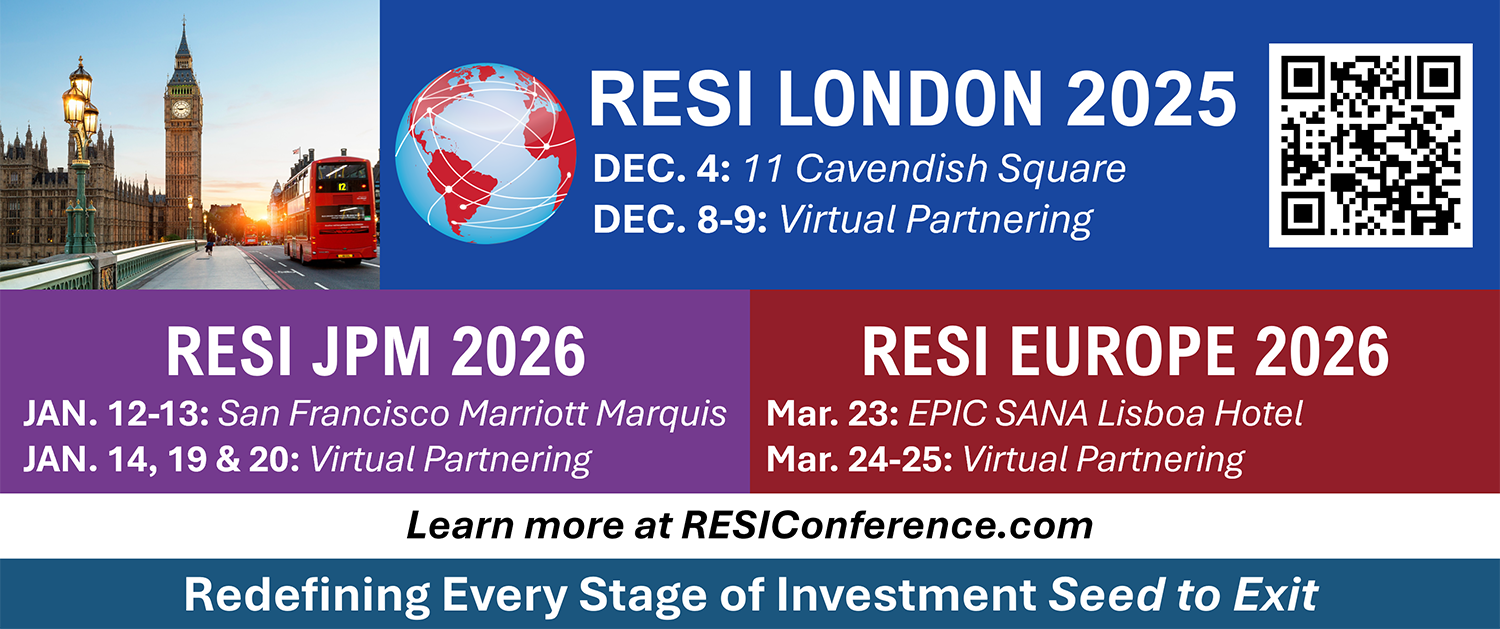
RESI London and Gensis are combining to offer a multi-day investment, partnering and thought leadership event for venture stage companies seeking funding and strategic alliances:

December 2nd

  • Free course on fundraising, including networking, offered by LSN
  • Free ELRIG / SLAS drug-discovery focused networking event
  • Genesis welcome reception for Genesis and RESI registrants

December 3rd

  • Genesis “Maximising Returns from Life Science Innovation” KOL & partnering event
  • Genesis evening reception

December 4th

  • RESI London fundraising & partnering event, featuring 200 investors & in-licensors
  • RESI London evening reception

During the entire week you are also welcome to attend the Genesis Fringe events for free including networking breakfasts, lunches and other events with topics similar to Building a World Class Life Science Ecosystem, Accessing US Investors and Exits, IP Strategies in Advanced Therapy Dealmaking, Top Talent Trends for Life Sciences in 2025 and Pay Transparency, R&D to Commercialization in Rare Diseases, and more.

Join us in the rich life science ecosystem in London during the first week of December. To learn more, contact us at RESI@lifesciencenation.com

Register for RESI London