Look Who’s Coming to RESI NYC

By Lucy Parkinson, Director of Research, LSN

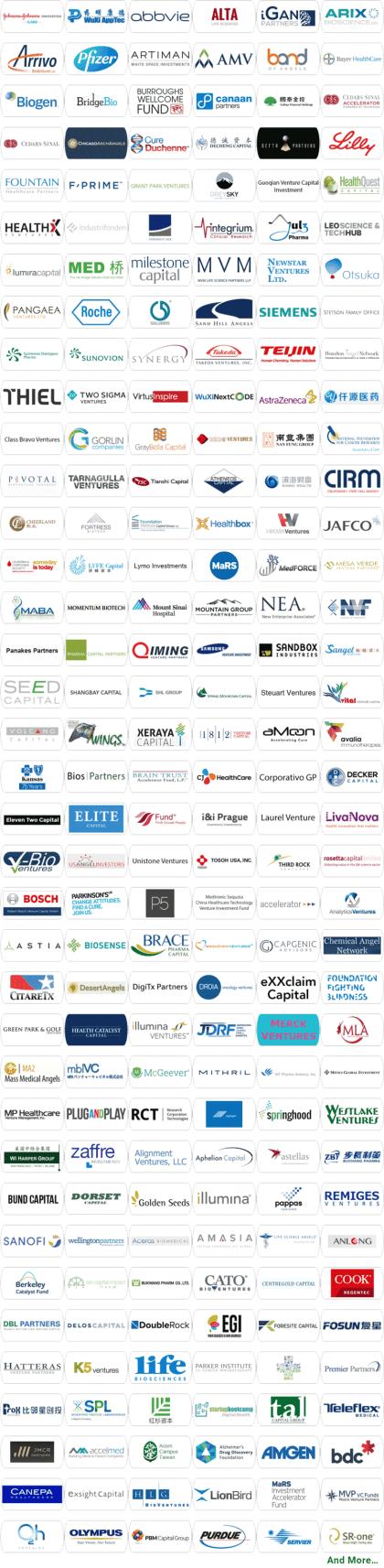
The first RESI NYC event has attracted a great diversity of constituents – from local startups to global investors, from New York-based foundations to major pharma and medtech firms from the Asia region. RESI always aims to draw investors beyond the well-trodden traditional funding tracks of venture capital funds, local angels and pharma; LSN is delighted to have those groups on board too, but at RESI you can also meet family offices, private equity and hedge funds, and the varied investment and strategic groups that participate in our Asia – North America track. Who would you like to meet at RESI NYC? Take a look below at some of the possibilities.

Confirmed Investors and Strategic Partners

As of October 19th, 2017

Global Investors Come to NYC in Search of New Technology Assets

By Dennis Ford, Founder & CEO, Life Science Nation; Creator of RESI Conference Series

Life Science Nation (LSN) and our title sponsors Johnson and Johnson Innovation JLABS, WuXi AppTec and McDermott Will & Emery are excited to bring RESI to NYC for the first time this November.The event has already caught the attention of a wide range of investors. From New York family offices and New Jersey-based pharma to Asia-Pacific funds and major global strategics, RESI will bring a diverse range of early stage life science investors to the rising NYC biotech and medtech hub.

By providing a venue for these global players in the heart of New York’s innovation scene, RESI will create dialogue and relationship building, with the goal of eventual capital allocations. If you’d like the opportunity to join these investors for networking, expert advice and one-on-one meetings, register for RESI now.

Confirmed Investors and Strategic Partners

As of October 12th, 2017

RESI NYC: Agenda Announced

By Lucy Parkinson, Director of Research, LSN

On November 15th, RESI will come to New York City for the first time ever. As New York’s biotech scene is on the cusp of becoming a major hub, LSN is excited to add RESI as a venue for the city’s emerging biotech and medtech companies to meet with hundreds of global investors.

LSN would now like to announce the agenda for RESI NYC. The event will include 24 investor panels and entrepreneur workshops, including new panels focused on New York biotech and Collaborative Virtual Pharma, and the very first RESI panel of Private Equity & Hedge Funds that invest directly in privately held life science companies. Additionally, a legal workshop will be led by our title sponsor, McDermott Will & Emery. RESI NYC will also feature an updated Asia-North America healthcare investment track, with focus sessions on China Pharma Partners and China Medtech Investors. Check out the full content below. If you want to take part, you can register now.

Could China’s CFDA Reforms Have a Positive Impact for US Entrepreneurs?

By James Huang, Research Analyst, LSN

james-wp

On Monday, the China Food and Drug Administration (CFDA) held a press conference to announce a reform to their regulatory review and approval process for medical devices and drugs. The major takeaways from for these policy changes are as follows:


  • Faster drug/device approval process
    • China has suggested that data from overseas clinical trials can be accepted for use in the drug/device approval process.
    • The guidelines also suggested that fast-track approval would be granted to drugs/devices targeting diseases without therapies, key projects identified by the government, and orphan drugs.

China’s pharmaceutical market is currently the second largest in the world with growth rates of around 9%. These changes should allow for foreign drug companies to enter that market more easily and as a result, warrants a second look for anyone currently developing new and innovative therapeutics. If China becomes an easier market in which to launch a drug, investors may become more interested in products with a strong potential market in China.

Of course, China’s device market also provides a great opportunity  and with the accelerated approval process applying to both drugs and devices, the Chinese market opportunity for new biotech and medtech products definitely deserves a second look.

The draft guidelines that were released also include a few more interesting suggestions such as:

  • Patent Protections
    • The government stated that it would explore a new system to link patent status with the drug approval process.
  • Innovation Incentives
    • Part of the draft suggested providing incentives to promote innovation of new drugs and devices within China.

The full draft can be found here (Chinese) and the CFDA press release can be found here (Chinese).

Biotech Week Boston – One Person’s Opinion

By Dennis Ford, Founder & CEO, Life Science Nation; Creator of RESI Conference Series

I am not saying that Biotech Week Boston was the week that wasn’t, but for the event’s second year, the city of Boston sure didn’t feel like it was on fire. Unless of course you went to LSN’s RESI Boston event, which was certainly a beehive of activity. It seems like the thesis of Biotech Week Boston is to create a JP Morgan-like annual multi-day event in Boston, the hub of global life sciences. This is a solid goal. The problem is, it’s hard to orchestrate and copy an organic phenomenon like San Francisco’s JP Morgan week when a handful of the life science stalwarts of Massachusetts partner with an out of town conference provider and they decide who is in and who is out of Biotech Week Boston.

Don’t get me wrong, there was plenty of compelling content and the event had a dynamic agenda. Unfortunately, there was more that could have been done; many other compelling players and topics were left on the sidelines. Boston is on the edge of the new drug development models; collaborative virtual pharmas abound. Where were all the incubators and accelerators who are grooming the next generation of game-changing drugs, devices, diagnostics and healthcare IT? Where were all the academic labs and research hospitals that are creating the new tech transfer paradigms and manifesting new business models? What about the other local conference providers like LSN’s RESI? LSN brought 300 global early stage investors with $3 billion in validated investor mandates to Boston last week!

My net/net on Biotech Week Boston is that it needs to be more inclusive and encourage ALL the players to get involved. If you don’t, you will have a staid and exclusionary event, and that is not how you replicate San Francisco’s annual JP Morgan week. In the meantime, I’ll be bringing RESI and my early stage investor network to NYC, November 15th at the Marriott Marquis, Times Sq, where oddly enough my Boston based company is welcomed…go figure.

China: Land of Opportunity for Medical Devices?

By James Huang, Research Analyst, LSN

james-wp

In my recent discussions with several investors located in China, I noticed a trend occurring in my conversations: many of them are considerably more interested in medical devices rather than therapeutics. As a result, I brought this trend up in conversation with a few of them and received a few illuminating responses:


  • An investor told me that the medical devices market had grown in China by 20% in the past year and they anticipated that this trend would continue over the next few years. The investor therefore hopes to take advantage of this trend.
  • The Chinese medical device market is currently much smaller than the therapeutics market, and an investor I spoke to said that they therefore believe that there is more potential growth in the medical device market.
  • China’s government is putting money into innovative medical device startups; investors can potentially secure additional non-dilutive funding to go with their investments in medical device companies.

Due to these factors, the investors I spoke with were all interested in investing in medical device companies based in the US with technology that they believe would be applicable to China.

I decided to investigate this trend further, and uncovered the following data points:

  • Medical Devices in China only account for 14% of the country’s local healthcare products market. In other developed nations, medical devices account for 42% of the overall healthcare products market. This suggests that China has considerable room to grow in the medical device side of the market, which reflects what I have heard from Chinese investors.
  • China’s medical device market from 2015 to 2016 increased by $53.62 billion USD (a 20.1% increase) and this growth rate is expected to be maintained into 2017 as well.

  • China’s healthcare industry growth from 2004-2014 was an astounding 492%, as compared to the global average healthcare industry growth of 60%. This growth is expected to continue as the government has put forward more initiatives to reform healthcare (13th Five Year Plan for Medical and Healthcare System Reform).
  • China only spends 5.5% of their GDFP on healthcare compared to the United States’ 17.1%
    • The total dollar amount of the discrepancy between healthcare spending in China and the US is $574 Billion in China vs. $3 Trillion in the US.
    • Given China’s large and aging population, China’s continuing development will cause this healthcare spending to increase, bringing a lot of potential growth in future years.
  • Additionally, the CFDA (China’s healthcare regulatory body) has recently released a “Guidelines for the Preparation of Special Reports on the Application of Innovative Medical Devices” to encourage medical device innovation.
    • This and other initiatives by the Chinese government really emphasize their focus on medical devices in China and suggests that the government is willing to invest money to make these changes happen.

Given all these data points, it makes sense that China-based investors are seeking new medical device investment opportunities. However, given the large opportunity presented here, it seems curious as to why these investors aren’t looking within China to fill these needs. According to the investors, it’s simply because there aren’t enough new innovations coming out of China to fit the need. In fact, domestically made products account for less than one percent of the market value of the Chinese medical device industry. As a result of the lack of domestic innovation, Chinese investors are forced to look overseas for innovative technologies.

It’s clear that China has a large opportunity for growth within the medical device space and Chinese investors are interested in sourcing technologies from the US in order to fill the gap.  On the LSN Investor Platform, LSN Research tracks 99 China-based investors that have an interest in medical devices.  If you are a medical device entrepreneur, these investors should be on your radar.

Sources:

https://www.medicalplasticsnews.com/news/china-highlights-medical-device-industry-as-a-breakthrough-a/

https://www.export.gov/article?id=China-Medical-Devices

https://www.emergogroup.com/resources/market-china

https://www.pwccn.com/en/pharmaceuticals/pharm-china-ma-jun2016.pdf

https://chinameddevice.com/cfda-fast-track-innovation-medical-device/

http://www.chinadaily.com.cn/china/2017-06/05/content_29627481.htm

Just Released: Redefining Early Stage Investments (RESI) Conference Program Guide See What Global Life Science Investors Are Up To

By Nono Hu, Director of Marketing, LSN

It’s 5 days to go until RESI Boston, and LSN would like to present the RESI Program Guide. If you’d like to check out RESI Boston’s full lineup of speakers, sponsors, exhibitors, and innovators, you can read the program guide online now. With nineteen panel discussions, five entrepreneur workshops, dozens of vendors and the largest RESI Innovation Challenge ever, RESI will offer an overwhelming amount of content for early stage life science startups and the investors and strategic partners that want to meet them. You can check out the details below.

Click here to register RESI Boston 2017