
Proposed Changes by China’s FDA Hold Major Implications for the Early Stage Life Science Space

By James Huang, Research Analyst, LSN

james-wpThe CFDA released a set of proposals on May 11th regarding major reforms in the Chinese regulatory and approval system. The series of proposals is designed to accomplish four major goals:

  1. Acceleration of Drug/Medical Device Review/Approval Process
  2. Reform of Clinical Trials Management
  3. Implementation of a drugs/medical devices lifecycle management system.
  4. Protect drug and medical devices innovators’ rights and interests.

From the many proposals presented, two key points stand out as potentially having a major impact on life science startups outside of China:

  • NHFPC will issue a rare diseases list and drugs/medical devices targeting these diseases will be eligible for a clinical trial waver and accelerated review. Drugs with orphan approval overseas will initially receive conditional approvals in China and only need minimal additional trials for full approval by the CFDA. Additionally, if investigational therapeutics or devices in the rare disease space show early clinical efficacy and predictable therapeutic benefit, they may receive conditional approval.
  • Applicants who submit CTA/INDs may proceed with clinical trials if the Chinese Centre for Drug Evaluation (CDE) does not send comments or a rejection notice within 60 working days.

The first proposal regards approval and use of orphan medications in China. The CFDA is currently proposing to establish an orphan and rare disease list and, additionally, therapeutics and devices that treat life-threatening conditions on this list can receive conditional approval if early or mid-stage data can predict clinical benefit for these therapeutics and devices. Furthermore, the CFDA also proposed that conditional approval be given to orphan therapeutics and devices that have already received approval in foreign countries, even if they have no clinical trial data in China. Instead, these therapeutics and devices would have to conduct confirmatory trials as directed by the CFDA to keep the conditional approval. Fierce Biotech delves a bit more into the implications of these changes here.

The implications of these changes for both investigational and marketed therapeutics and devices in the orphan space are huge since, if approved in their present form, these proposals would make it easier to access the Chinese market, a process which has been both time consuming and financially prohibitive historically.

The second proposal focuses on the review process.  A key highlight is the proposed change to allow Phase I clinical trials in China to begin if no comments or rejection has been received from the CFDA review committee 60 working days after the application has been submitted. This change combined with the orphan therapeutics change mentioned above means that orphan therapeutics can be sure to get on a fast track to testing and on the market very quickly.

However, whether all these proposals will be approved in their current state remains to be seen. Keep your eyes peeled for the CFDA’s announcement coming in June.

RESI San Diego: Venture Philanthropy Panel Announcement

By Christine A. Wu, Senior Research Analyst, LSN

chrsitine

Investors in venture philanthropy, such as foundations and specific family offices, have deep expertise that is often overlooked. Many venture philanthropic groups have a specific mission in a disease area that provides them enormous capacity to bring forward more than any entrepreneur can realize. Along with funding, venture philanthropic investors can provide patient access for underserved populations, specialize in assessing and tracking “positively impactful” technology in their particular field, and utilize their own relationships with traditional ventures in creative ways, among other initiatives.

LSN is pleased to announce a panel of five expert venture philanthropic investors for the RESI San Diego Conference on June 19th. The audience will have an exclusive opportunity to hear from:

Venture philanthropy investors maintain the genuine purpose of moving forward in the field of life science. Non-traditional investors such as these groups are great funding sources with incredible knowledge in their fields, while also taking inspirational strides to achieve their goals. Be sure not to lose track of the mission in life science, and not miss the opportunity of hearing how these panelists can help you with your philanthropic mission.

Register by Friday to save $200, be the first to request investor meetings on partnering, and hear from this fantastic panel!

A Winning Formula for Raising Capital

By Dennis Ford, Founder & CEO, Life Science Nation; Creator of RESI Conference Series

As LSN heads into its fifth year, we have seen what works and what doesn’t in the fundraising process. LSN has developed a fundraising platform consisting of an early stage life science investor database (the LSN Investor Platform), and the RESI conference series, which takes place every two and a half months at venues through out North America. These two vehicles allow fundraising executives the ability to be very efficient in finding investors and partners that are a fit for their stage of development and their product offering.

Providing an efficient vehicle for identifying and understanding global investors that are a fit for your company is very helpful, but quite frankly is just the ante into the game. The devil is in the details and this is where we see many scientist entrepreneurs fall short on their capital raising efforts. I have proclaimed time and time again that raising money is a numbers game, and that theme is ever present in the basic process of getting in front of investors. Not surprisingly, it’s all about the frontend, making that introductory calls and the backend, doing the all-important follow-up calls. These two pieces of the process always prove to be the most daunting because of the tedious and repetitive nature of this simple activity.

I have advised many of my fundraising clients that it is essential to find someone in their organization who enjoys scheduling meetings and following up regarding meetings. It sounds easy but is far from it. Everybody is busy and everybody is trying to prioritize their schedule around their to-do lists of important tasks. Therefore it takes someone who is genetically coded to handle the setting up and follow up, someone who doesn’t interpret a “no” just because they haven’t received an answer back. Someone who has a “can do” attitude of going after a meeting until they get it booked or get an emphatic, no thanks, and it’s off the table. It can take 3, 5, 10, or 20 attempts to book or follow up on a meeting so having the right personality for this mission is critical. I routinely suggest if no one in-house is available or capable of performing these tasks then hire an intern or recent college grad who is looking to get some exposure and training on the business side of the house. Having a CEO or a business development executive trying to arrange meetings is too time intensive and doesn’t work (there I said it).

In summary, if you have a current accurate database of global investors and an ongoing conference series to attend, the crucial next step is doing the hard work to get you and your story in front of the right investors. Don’t underestimate the tenacity needed to participate in the numbers game called fundraising.

Pitchbook vs. LSN Investor Platform

By Cole Bunn, Senior Research Analyst, LSN

cole-wpLife Science Nation’s investor platform and Pitchbook both offer various data on early-stage investors which get used by a variety of different stakeholders in the industry. Although there is some overlap in the data tracked by these platforms, there lies stark differences in how the data is sourced, updated, and the industry specific nature of the data. These core differences result in two different types of platforms that serve different purposes. Pitchbook’s utility lies mostly in providing a high-level overview of different markets/sectors whereas the value in the LSN platform is providing actionable, industry-specific data.
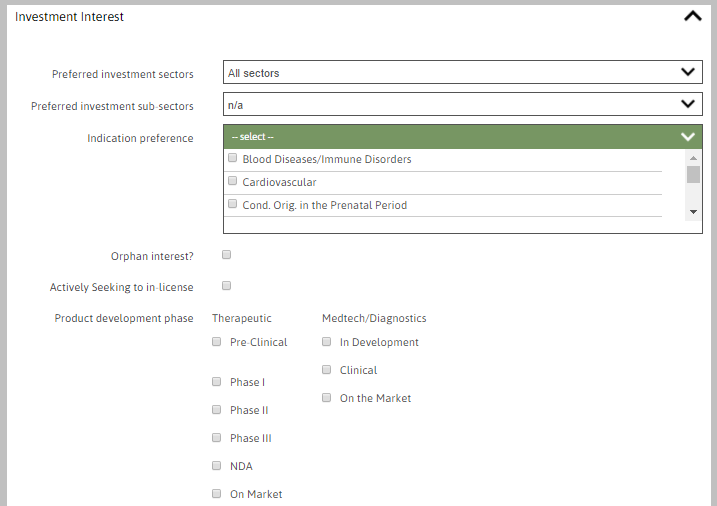

The LSN investor platform is focused solely on the early-stage life science space

While Pitchbook and other data providers focus on the overall private market’s landscape, LSN investor platform is specifically focused on seed and venture-stage (series A, B) companies in the life science space which we define as therapeutics, medical devices, diagnostics, research tools and healthcare IT. LSN’s highly-specific focus has allowed for the development of a platform that captures the most critical data points for entrepreneurs seeking compatible investors. In addition, LSN’s expertise has led to a highly efficient search ontology capable of searching the space on a more specific level. LSN’s investor profiles are tagged in terms of Sector, Subsector, Indication, Product Phase-of-Development, Geographical exposure, investment size and several other variables that are of importance to a fundraising entrepreneur.

LSN captures more than data

Pitchbook obtains their information through web-crawlers and surveys. These methods have two main problems 1) primarily historical data 2) no reliable method for keeping data up-to-date. While this does provide their database with a great volume of data, it falls behind LSN’s platform in terms of depth. The LSN platform achieves great depth by supplementing the publicly available information with interviews performed by a dedicated team of research analysts that identify new capital sources allocating to early-stage life science companies, to parse out investment preferences. In addition to the depth of data this allows LSN’s team to gather, maintaining a personal relationship through an ongoing dialogue and involvement in the RESI conference series provides a direct benefit to LSN’s fundraising clients. This personal connection between the LSN research team and an investment firm/group allows LSN to capture and utilize a unique flow of information and provides an unmatched tool for fundraising CEOs to understand the players in their space, their nuanced preferences/strategies and a way to begin a dialogue with them.

LSN team is a value add

Pitchbook data is a tool that provides its users a way to take the pulse of a certain industry. Along with a way for entrepreneurs to quickly survey the investment landscape and identify relevant groups, a subscription to the LSN investor platform grants licensees a comprehensive onboarding meeting with the LSN team that covers best practices for using the platform, light marketing/messaging consultation, as well as some assistance in finding a few highly-targeted leads. These meetings also inform the LSN research team of exactly what our clients are working on, allowing them to tailor their surveys to better understand the investors’ interest level in current clients. Finally, all investor accounts are tagged with both a date and the analyst responsible for the account. Any entrepreneurs with questions or concerns around the profile or firm are encouraged to contact the analyst on the profile.

LSN Platform + the RESI Conference

The biggest differentiator among the LSN investor platform, Pitchbook and other similar data providers, and the biggest value driver, is the intertwined relationship between the LSN and the RESI conference series. The RESI conference is an early-stage investment/partnering event that allows entrepreneurs to meet face-to-face with up to 16 relevant investors in one day, and is powered by the LSN investor platform and LSN’s relationships with these groups. All data on an investment firm’s preferences are used to populate the investor’s profile in the RESI partnering system, allowing for a more effective match-making process. Using the LSN platform and RESI conference in parallel allows fundraising CEOs to identify a variety of capital sources in their space, begin a dialogue with these groups and continue to strengthen these relationships through in-person meetings at RESI conferences.

Orphan Drug Investors Share Their Insights at RESI San Diego

By Lucy Parkinson, Director of Research, LSN

Orphan diseases present a unique opportunity for a biotech investor; faster development, market exclusivity and the possibility of delivering a cure to patients with no current treatment options. However, these small markets also present unique challenges in development and strategy.

At RESI San Diego, five experienced investors who specialize in rare disease opportunities will explain their strategies in the sector. These investors will explore how they identify potential in a rare disease therapeutic, and how they turn tiny markets into significant ROI.

Moderated by Ken Kengatharan, General Partner, Atheneos Capital, panelists include:

Finding, Vetting and Profiling Assets – LSN’s Unique Sourcing & Ranking Service (SRS)

By Dennis Ford, Founder & CEO, Life Science Nation; Creator of RESI Conference Series

Life Science Nation (LSN) has created a funding and partnering platform for early-stage life science companies in biotech, medtech, diagnostics and digital health that is unique to the industry. The platform consists of two databases, one tracks emerging life science companies and the other curates investors from around the world who are funding these entities. Augmenting these two platforms is the Redefining Early Stage Investments (RESI) Conference series and an I-Bank, Boston Innovation Capital (BIC) that help facilitate the matching up of buyers and sellers.

LSN’s unique position and range of capabilities has attracted interest from both domestic and foreign life science entities looking to leverage LSN’s global access to technology, specifically the plethora of technology assets in North America. This has resulted in various projects that utilize LSN’s infrastructure and reach into its partnering network. As a result LSN decided to offer a Sourcing and Ranking Service (SRS) that allows pharma and other buyer/licensees a way to quickly develop a complete picture of and gain access to the assets targeting a particular indication or specific technology type.

LSN’s Sourcing & Ranking Service (SRS) provides a three tier classification of assets, consisting of initial identification and aggregation of “Global Heat Maps” and “Global Target Lists” of the technologies/companies for a specific project.  We then deliver a deep-dive analysis of the select top assets that best fit the client’s objectives.  LSN has developed an expert system that powers this new capability to source, vet and stack-rank assets around virtually any life science sector. This service allows pharma groups and others looking for acquisitions or licensing deals to quickly scan the global landscape for a desired indication or technology type and dial in top contenders for investment and partnering objectives.

*   Level 1 Profile – LSN starts a client’s project by initially creating a “Global Heat Map” identifying where the assets are and then curating a ‘Global Target List” of all the companies and technologies and provide first level profile information on these companies. uncovered that are a potential fit. At the heart of LSN is a very strong and diverse research team that can efficiently gather and parse information using the LSN Company Database of 45,000 emerging biotech, medtech, diagnostic and healthcare IT companies. Which include data on financing rounds, management team and breakdown of pipeline (indication, stage of development, licensing status), the target company’s website and other informational resources are used to create a comprehensive list of relevant companies and their technologies.

*   Level 2 Profile – The Level 2 profile consists of our research team members calling all the core “global target list” entities and conducting one-on-one interviews. The researcher uses a survey that LSN has created and is the foundation of the LSN expert system. The survey conducted via a one on one phone interview which encompasses a dozen key topics that involve over 200 data elements that we accrue and enter into the expert system. The system then generates a score for each entity based on the weighted categories and the data elements within each category. The combination of the level 1 and 2 profiles provide an up-to-date, multi-layered, and actionable profile which now can be stack ranked. This stack ranking is based on the individual score generated through the expert system for each company. LSN delivers this information via reports and also allows the client access via a secure password protected content/data vault. LSN’s sourcing and ranking service allows clients to be highly selective and much more efficient from a time perspective delivering results within 90 days.

*   Level 3 Profile – LSN works with the client to select the top assets from the stack rank list that best fit the client’s objectives. Based on client’s input, LSN will conduct a more detailed assessment of these companies—building off of the initial phone conversations. LSN research will obtain all the available company collateral such as executive summaries, PowerPoint presentations, technical publications, as well as their most up to date white papers and business plan. At this point LSN collaborates with the client to design more elaborate interviews with additional one-on-one phone conversations and in-depth interviews as we build and enhance the Level 3 Profiles. The new profile allows LSN to create a new stack ranking order based on the additional data and generate a summary report for the client.

*   Data Vault – The client has access to a proprietary ‘Data Vault’ which will be hosted by LSN on a secure website to house info and portfolio of the assets discovered. The client has access to on-line ‘data vault’ with all asset information via a user name and password. The content, data and reports are never more the 90 days old.  Guaranteeing current and accurate information is critical in sourcing assets. The finalized stack-ranking report generated from LSN’s due diligence and top asset recommendations can provide a significant edge and make the client extremely efficient in evaluating technology. The Client will be able to download profiles and reports as needed.

LSN is uniquely positioned at the intersection between investors and early-stage companies. SRS is designed to provide our clients with a rapid, end-to-end research capability that will enable them to efficiently access the assets that are the right match for their new business initiatives and partnerships.

The Dynamic Landscape of Asia Outbound Dealmaking Comes to RESI

By Shaoyu Chang, MD, MPH, Director of Research & Asia Business Development Liaison, LSN

Shaoyu 10*10

The year 2016 saw strong outbound investments from Asia, with China leading the pack. However, the investment landscape is rapidly changing, influenced by regulatory pressure, political uncertainty, and market demand. For North American entrepreneurs seeking opportunities in Asia, it is critical to understand your counterpart’s strategy and incentives.  Therefore for RESI San Diego, LSN has introduced new panel sessions to the Asia-North America Track in order to highlight the current key players in the region.

China Healthcare Investors

China is clearly a frontrunner in outbound activities. China’s foreign direct investment (FDI) set a record of US$94.2 billion in 2016, up 189% in North America and 90% in Europe, compared to the prior year. Despite the strict currency restrictions implemented by the Chinese government by the end of 2016, this trend is generally expected to continue in the long run.

Among all sectors, healthcare will most likely see sustained growth in investments, fueled by a rapidly aging population and favorable national mandate to upgrade its healthcare industry. The Chinese healthcare sector received 18.3 billion Yuan (US$2.64 billion) in VC investment in 2016, only second to the internet sector. Healthcare VC/PE funds are mushrooming in China in recent years. With sufficient ‘dry powder’ in hand, many fund manager are looking overseas for high-quality, high-return investment targets.

China Strategic Investors

According to PwC, China’s outbound M&A value increased by 246% last year compared to 2015. An increasing number of Chinese pharmaceutical and medical device corporations are scouting around the world for valuable assets. To work with strategic investors, typically overseas partners will have to offer one or more of the following: assets fitting strategically with the Chinese partner’s existing pipeline; critical expertise such as technology platform, production knowhow, and regulatory experience; or access to key markets in the US or Europe.

Korea/Japan Investment Environment

While Chinese outbound deal making is likely to be slowed by tighter currency control, analysts expect Japan’s cash-rich firms to pick up the slack. Many Japanese pharmaceutical companies have already established multinational operations and have participated in overseas venture deals. A weak domestic consumer market and negative interest rates will further drive these corporations to expand businesses offshore.

Following years of government spending in R&D, Korea is experiencing a biotech boom. In 2016, VC investment in Korean biotech surpassed that in IT for the first time. Korean healthcare startups have attracted interest from foreign investment groups and multinational pharma companies. Fueled by the optimistic mood, Korean corporations are now actively engaged in outbound acquisition and expansion.

The week of the BIO event in San Diego sets the perfect stage for cross-border dialogues. The upcoming RESI San Diego conference will include three panels: China Healthcare Investors, China Strategic Partners, and Korea/Japan Investors. Highly experienced deal-makers are invited to share their first-hand experiences and help entrepreneurs understand the nuts and bolts of building a successful collaboration with Asia.