Archive | Redefining Every Stage Investments (RESI) RSS feed for this section

Learn Why Innovators Pitch at RESI Boston This June

29 Apr

Connect with top investors and hear how pitching at RESI Boston can move your company forward.

By Claire Jeong, Chief Conference Officer, Vice President of Investor Research, Asia BD, LSN

Each RESI conference, the Innovator’s Pitch Challenge (IPC) allows life science entrepreneurs to present their technologies to a panel of active investors and strategic partners. Companies pitch live to an audience of relevant investors, receive direct feedback, and make meaningful connections critical to their next stage of growth.

The Innovator’s Pitch Challenge (IPC) continues to demonstrate its impact as a key catalyst for fundraising and visibility. Success stories continue to emerge: at RESI JPM 2024, Convergence Medical, who won second place at the IPC and subsequently closed a $5 million Series A funding round led by Avicella Capital, a member of LSN’s Global Partnering Network.

Meet Some of Our Past Investor Judges
The Innovator’s Pitch Challenge is defined by the quality of its judging panel. Each session features active investors and strategic partners who bring deep expertise in early-stage life investment. Past IPC judges have included representatives from:

Brent-Ahrens
Brent Ahrens

Canaan Partners
Jeroen-Blokhuis
Jeroen Blokhuis

General Inception 
Chris-Church
Christopher Church

AstraZeneca
Tom-Gibbs
Tom Gibbs

Debiopharm Innovation Fund
Chris-Haskell
Christopher Haskell, Ph.D.

Johnson & Johnson Innovation
Claire-Leurent
Claire Leurent

AbbVie Ventures 
Fiona-Mack
Fiona Mack

Bayer 
Jeffrey-Moore
Jeffrey Moore

MP Healthcare Venture Management 
Stephanie-Rusinkiewicz
Stephanie Rusinkiewicz

Medtronic
Joachim-Scholpp
Joachim Scholpp

Boehringer Ingelheim
Christopher-Tan
Christopher Tan

Merck
Tad-Weems
Tad Weems

Agilent Technologies 

These seasoned judges provide live, interactive feedback, offering startups not just visibility but a chance to start lasting conversations with global early-stage investors.

Hear From Past IPC Winners
Past IPC participants have shared how the experience helped move their ventures forward:

Diana Caldwell, CEO and Co-Founder of Amplified Sciences, shared,
“Participating in the IPC was a pivotal moment for our company. The opportunity to present our technology to a room full of engaged investors and receive immediate feedback was invaluable. It not only validated our approach but also opened doors to partnerships we had not anticipated.”

John Qiao, Founder and CEO of RadioClash, said,
“RESI’s Innovator’s Pitch Challenge provided a rare chance to engage directly with investors in a dynamic setting. The interactive feedback helped sharpen our fundraising strategy, and the conference environment led to meaningful follow-up meetings.”

Michael Yu, Founder and CEO of EYWA Biotech, noted,
“The IPC experience was energizing and highly beneficial. It forced us to hone our pitch to its essentials, and the conversations we had during and after the event helped expand our investor network in ways that continue to pay off.”

Beyond the pitch session, IPC participants receive a dedicated exhibit space in the RESI Exhibition Hall, full access to one-on-one partnering, and the chance to win complimentary registration to a future RESI conference.

If you are an early-stage entrepreneur working in therapeutics, diagnostics, medical devices, or digital health, the Innovator’s Pitch Challenge at RESI Boston is your opportunity to stand out.

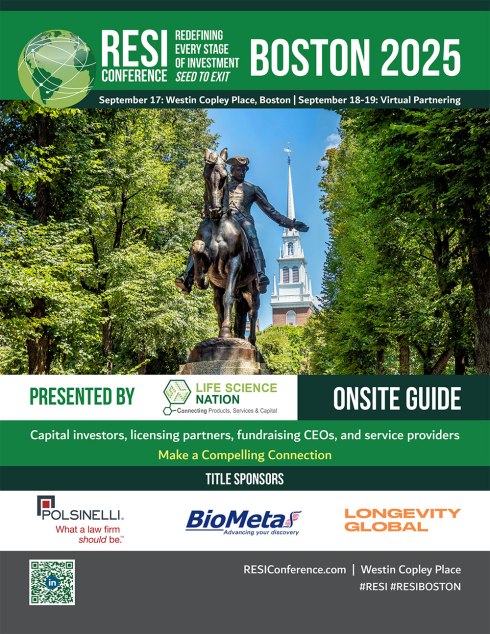
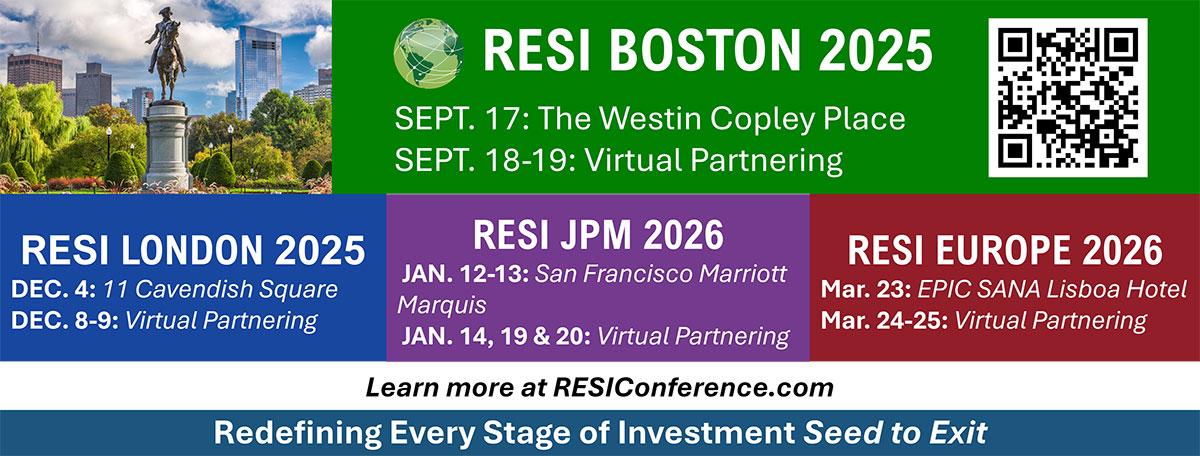
Apply today to pitch at RESI Boston, taking place June 16, 2025, and move your fundraising forward. Space in the Innovator’s Pitch Challenge is limited, and competition for spots is high. Now is the time to apply and secure your chance to be part of RESI Boston this June.

Seed Funding Hits Lows, Investor Pull Back, Sentiment Down — But Opportunities Remain for the Savvy

29 Apr

Sougato-DasAmid one of the toughest biotech markets in years, seed funding for young companies has fallen to its lowest level in a decade. According to Atlas Venture’s Bruce Booth, only about 55 biotech startups in the U.S. raised initial funding in the first quarter of 2025 — a nearly 70% drop compared to the peak in early 2021.

“It is getting tougher. When there’s no IPO market, there’s no B rounds, and then there’s no A rounds, and there’s no seed rounds. It all trickles down,” said Søren Møller, managing partner of seed investments at Novo Holdings. Søren also conveyed that due to the market confusion caused by tariffs and the shifting positions thereof, his $160B fund would slow investment until there is more certainty. With regards to IPOs, the CEO of the same fund advised that now is “probably” not a good time to IPO, unless you have to do so, due to the view on interest rates being unclear. Søren’s sentiments were echoed by both Roche and Merck & Co. on the deal-making front.

To add insult to injury, BioCentury’s biotech risk sentiment survey found “Biotech is reeling, fearful and furious about the fallout of tariffs, FDA and NIH policies.” BioCentury reported that the perfect storm, including market downturn, regulatory uncertainty, negative perception of scientific research, and the possible loss of the US as the leader in global biomedical innovation, could signal one of the worst times for the industry “in decades.”

But not everyone sees this contraction as a negative. As Booth wrote in his blog on biotech venture creation, “it’s a great time to start new biotech companies” precisely because of the scarcity. With fewer startups competing for capital, talent, and patients, the few companies that do form today could become tomorrow’s market leaders.

The “supply-demand” dynamics favor the brave: when new company creation slows, venture firms creating startups have a clearer runway. As Booth put it, “With scarce startup supply, when investor demand returns — which it will — founding and early equity holders will be rewarded.” He pointed to past examples like Alnylam (founded in 2002) and Nimbus (founded during the 2009 downturn) as proof that tough times can seed future giants.

Beyond the U.S., global funding opportunities could offer a lifeline for biotech founders. As domestic venture firms tighten their wallets, international investors — including Asian corporates, and Middle Eastern sovereign wealth groups — are increasingly active in scouting early-stage innovation. Seeking funding globally not only diversifies a startup’s investor base but also opens doors to broader partnership and commercialization strategies.

As Booth reminds early-stage entrepreneurs, “big doses of discipline are important medicine” — with startups needing to sharpen plans, tighten budgets, and be open to strategic partnerships. But for those who endure, today’s brutal market could create the “emerging stars of the 2030s.” At Life Science Nation, we’ve tracked hundreds of companies that have attended RESI, used our investor database, and attended our entrepreneurial education courses, and know one thing for sure: It is ultimately a numbers game. The more investors you meet, the higher your chances of getting funded or additional funding are. That’s why the RESI conferences feature hundreds of investors funding pre-seed to B rounds – to help life science companies in times like these fast-track their fundraise.

Sources:

  • Biotech seed rounds sink to lowest level in years as industry slump drags on by Kyle LaHucik, Endpoints News
  • Biotech Venture Creation: The Benefits of Scarcity by Bruce Booth, LifeSciVC blog
  • Biotech sees a new, hard era ahead, survey finds: BioCentury’s Risk Sentiment survey, BioCentury
  • Novo Holdings dials back investment as Trump stymies economic forecasters, Bloomberg, as reported by Fierce Biotech

Introducing Haystack Corner – Insights from Juan Carlos López and Andrew Marshall of Haystack Science

29 Apr

By Dennis Ford, Founder & CEO, Life Science Nation (LSN)

DF-News-09142022Life Science Nation is excited to introduce a new feature in the Next Phase newsletter: Haystack Corner, highlighting insights from The Needle, the weekly publication by Juan Carlos López and Andrew Marshall at Haystack Science.

The Needle delivers sharp, actionable updates focused on the earliest stages of biotech commercialization. From translational breakthroughs to the business strategies shaping tomorrow’s therapeutics, The Needle offers a unique perspective for entrepreneurs, researchers, and investors working to move discoveries from the lab to the market.

About the Contributors

  • Juan Carlos López, Ph.D. — Former Chief Editor of Nature Medicine, with deep expertise in neuroscience, academic collaborations, venture philanthropy, rare diseases, and translational research.
  • Andrew Marshall, Ph.D. — Former Chief Editor of Nature Biotechnology, a recognized leader in biotech venture creation and scientific commercialization.
Juan-Carlos-Lopez
Juan Carlos Lopez
Andy-Marshall
Andy Marshall

LSN is proud to bring Haystack Corner to Next Phase readers, starting with this issue. LSN encourages you to explore and share these curated insights with colleagues and peers who are passionate about advancing life science innovation.

The Needle. Issue #1

Why Do 90% of Life Science Startups Fail? Because the Science Never Gets Out of the Way 

22 Apr

By Dennis Ford, Founder & CEO, Life Science Nation (LSN)

DF-News-09142022The Core Challenge: Science Without Commercialization Fails

Despite strong science, most life science startups struggle to scale because their founders lack the commercial expertise and support to navigate the investor landscape. Traditional accelerators often fall short, offering generic mentorship rather than hands-on, market-facing guidance.

Life Science Nation (LSN) addresses this gap by preparing startups to succeed on the global stage. From seed to Series B, LSN equips companies with the narrative, materials, and investor access needed to execute targeted global roadshows. Startups don’t just get introductions—they get a playbook for matching with the right partners, at the right stage, for the right reasons.

A Two-Way Innovation Bridge

LSN’s platform operates in both directions. It helps startups leave their region to reach global capital and commercial partners and connects international investors and licensing firms with often overlooked emerging markets. LSN is the connective tissue linking regional science to global dealmaking from LATAM to China to Europe and North America.

Regions that succeed in commercialization align government, academia, and industry. LSN brings the final piece: a global engine that sources, vets, and connects startups with the right capital and channels to commercialize.

Most Regions Have Science. Few Have a Commercialization Engine.

Virtually every country boasts scientific talent and academic excellence, but most lack the infrastructure, regulatory flexibility, and partner networks to commercialize innovations globally. LSN fills that gap by preparing startups for the global market and helping international players tap into new regional pipelines. The result: cross-border dealmaking, accelerated product development, and a more connected global life sciences sector.

RESI & LSN Labs: Global Success Starts Here

LSN’s commercialization platform is anchored by RESI (Redefining Early Stage Investments), a global conference series that connects startups and investors through curated, stage-specific matchmaking. With over $5 billion raised by RESI alumni, the event has become a trusted launchpad for early-stage fundraising.

Startups also gain access to the Global Partnering Campaign (GPC) and LSN Labs—a standardized, education-driven accelerator that teaches narrative development, market fit mapping, and investor targeting. It’s a proven system that replaces chance with structure.

The Missing Capital Layer: Early-Stage Therapeutics Fund

To close the early-stage funding gap, LSN is co-launching a $50 million venture fund in partnership with a few strategic stakeholders (unannounced). The fund provides micro-investments, fractional executive support, milestone-based coaching, and access to a global CRO network, offering a de-risked, high-support runway from discovery to Series B. Fully integrated with LSN’s ecosystem, the fund provides capital, coaching, and commercialization support in one unified package, creating a new template for therapeutics’ sourcing, shaping, and scaling.

A Blueprint for the Future of Biotech Commercialization

LSN is rewriting the life science commercialization playbook. By integrating structured education, curated global networks, and early-stage capital, LSN is helping science finally get out of its own way. In doing so, it’s reducing the failure rate of life science startups and ensuring more breakthroughs reach patients worldwide. This is the new commercialization model—where science and business move forward, together.

Meet Meki Durakovic: The Hospitality Force Behind Boston’s Culinary Hotspots

22 Apr

Interview with Meki Durakovic, a Visionary Restaurant Owner by Caitlin Dolegowski, Marketing Manager, LSN

Meki Durakovic CaitiCaitlin Dolegowski

For life science professionals attending RESI and Bio in June, Boston offers more than innovation—it offers unforgettable hospitality. One of the city’s driving forces behind that experience is Meki Durakovic, a restaurateur whose journey from Europe to Boston has transformed the local dining scene.

Meki got his start running his family’s restaurant at 19 and quickly became known for hosting community events and building customer loyalty. After gaining global experience in Germany, he moved to Boston in 1996, working his way through every level of the hospitality business—from the kitchen to management—ultimately joining the influential Lyons Group.

Today, Meki is the co-owner of some of Boston’s most dynamic venues: Fin Point Oyster Bar & Grille, Tradesman Coffee, Lily’s, Amber Road, Urban Wild, One Beacon, and more. His venues mix warm hospitality, locally sourced menus, and inviting atmospheres perfect for both after-hours business gatherings and casual networking.

As the life sciences world converges on Boston this June, Meki’s restaurants offer more than just meals—they offer a taste of the city’s spirit. Make sure to experience his take on Boston hospitality while you’re in town.

Caitlin Dolegowski (CD): Could you tell us about your Restaurant Group and the several standout restaurants in Boston? Can you describe each one and what makes it unique?

 Meki Durakovic (MD):

  • Tradesman – Best Coffee Shop in Boston with unique pastries & specialty croissants, fresh sandwiches and more. We have Tradesman locations on Broad Street and Federal Street in the financial district as well as in Charlestown. (50 Hood Park Dr. Charlestown, MA )
  • Amber Road – Our newest venue which boasts an open-kitchen, open air concept and patio and serves refined global-inspired New England cuisine, craft cocktails, and an extensive wine list. We recommend this space for elevated full private buyouts for events up to 180 guests. (100 Federal St, Boston, MA)
  • Fin Point – The first restaurant opened by our group that has become the place to be in Boston’s downtown Financial District. Here we host everything from corporate lunches and impressive cocktail receptions to weddings, full corporate buyouts for 200 guests and more. The sophisticated dining space features a raw bar and high-end seafood dishes with global influences. (89 Broad St, Boston, MA)
  • Urban Wild – Boston’s newest entertainment destination features high-tech bowling like you’ve never seen, indoor and outdoor patios with games, and a giant beer garden covered in custom artwork for a true experience. The venue holds up to 600 guests and is located in Charlestown’s quickly growing Hood Park Neighborhood. (100 Hood Park Dr, Boston, MA)

CD: For visitors coming to Boston for RESI and the Bio convention in June, which of your restaurants would you recommend for a great dining experience?

MD: All of the above!

CD: Could you tell me what guests should know about making reservations at your restaurants? Do you recommend booking in advance, and how far out should they plan?

MD: Reservations can be made online on Open Table or by calling directly. Reservations for bowling at Urban Wild can be made 7 days in advance on our website. For events, email our Director of Events, Katie Lofstrom, at events@mnmrestaurantgroup.com

CD: For those looking to take a meeting over a meal, which of your restaurants provides the best setting for a business lunch or dinner?

MD: Fin Point has a fully private dining room perfect for those more private, important meetings and occasions. The room seats up to 20.

CD: What would you advise for those seeking an event where they book a space for a networking event, or want to book the whole bar or restaurant? Please describe your menus, cuisines, and creative dishes. What are some must-try items for first-time guests?

MD: Any of our venues are perfect for hosting full private buyouts. We make the planning process easy!

CD: If RESI attendees seek a spot to gather with colleagues after the conference, do any of your restaurants have bar seating, lounge areas, or late-night options?

MD: All of our venues have bar & lounges, perfect for late-night or mingling after work or after dinner!

MOWOOT Wins RESI EUROPE 2025 Innovator’s Pitch Challenge (IPC)

22 Apr

Interview with Dr. Markus Wilhelms, CEO & Co-founder by Greg Mannix, VP, EMEA Business Development, LSN

Dr. Markus Wilhelms Greg Mannix

Following their first-place win at the RESI Europe 2025 Innovator’s Pitch Challenge, Dr. Markus Wilhelms, CEO and Co-founder of MOWOOT, discusses their technology, fundraising plans, and what lies ahead for the company.

Greg Mannix (GM): What inspired the development of MOWOOT’s technology, and what unmet need are you addressing?

Markus Wilhelms (MW): Bowel dysfunctions and intestinal transit disorders like chronic constipation affect up to a quarter of the population, often caused by faulty colonic movement patterns. Current treatments are pharmaceutical or invasive and focus on managing symptoms, not addressing the root cause. Our ‘Intermittent Colonic Exoperistalsis’ technology, developed in collaboration with one of Europe’s leading neurorehabilitation hospitals, provides a non-invasive, wearable solution. The MOWOOT device acts as a pacemaker for the large intestine, mobilizing the feces and stimulating proper colonic movement in just 20 minutes a day. This easy-to-use and non-threatening approach offers high clinical response rates and strong patient adherence, without the side effects of conventional treatments.

GM: What stage of fundraising are you currently in, and what types of investors are you hoping to connect with?

MW: Our device is already available in several EU markets, with private & public case-by-case reimbursement secured. We aim for broad public healthcare reimbursement in the UK and Germany by 2025 and are currently raising €10M to support our EU expansion and US market entry in 2026. We are open to discussions with all types of investors, including business angels, family offices, VCs, and strategic corporate investors, as long as we align on deal terms, ticket size and vision.

GM: How has RESI Europe contributed to your fundraising or networking efforts?

MW: RESI Europe provided valuable networking opportunities with investors globally. We had productive meetings during the event as well as on the online platform and are now following up to deepen these conversations.

GM: What was the most valuable aspect of participating in the Innovator’s Pitch Challenge?

MW: Winning the IPC validated our investment opportunity and increased our visibility. It helped us reach investors who might have missed us due to packed schedules, creating additional endorsement and exposure.

GM: What kind of feedback did you receive from the judges or investors during the event?

MW: The feedback on our presentation was very positive, with the jury particularly highlighting the clarity of everything regarding technology, regulatory, and clinical evidence. Most of the questions focused on use of funds, market access strategy and details of reimbursement requirements across different regions, which we were able to address during the Q&A. Given the time constraints of the 6-minute pitch, the Q&A provided a valuable opportunity to fill in any gaps.

GM: How does your team plan to build on the momentum from RESI Europe?

MW: We are actively following up with all new contacts and continuing to receive investor inquiries, thanks to our IPC win. Our data room is prepared, and we expect to move into due diligence with several candidates soon.

GM: What’s next for MOWOOT in the coming 6–12 months?

MW: Over the next 6-12 months, our goal is to secure broad public healthcare reimbursement in the UK and Germany, and we anticipate that scaling in these markets will require robust marketing support. Additionally, we are preparing for a new clinical trial designed to meet the specific reimbursement requirements in France and the US, as confirmed in discussions with local authorities. It’s an exciting period ahead, marking the beginning of our scale-up phase!

How Family Offices Are Cracking the Code on Biotech Investing 

15 Apr

RESI Boston to Feature Global Family Office BioForum Luncheon, June 16, 2025

By Dennis Ford, Founder & CEO, Life Science Nation (LSN)

DF-News-09142022Life Science Nation (LSN) is pleased to announce the Global Family Office BioForum (GFOB) return at RESI Boston June, which will take place on Monday, June 16, 2025, at the Westin Copley Place in Boston’s Back Bay. This luncheon, held from 12:00 to 1:00 PM, brings together a curated group of family office investors focused on healthcare and life sciences.

The GFOB luncheon is part of the Redefining Every Stage of Investment (RESI) partnering conference, GFOB creates a private setting where family offices can share strategies, exchange deal flow insights, and explore potential co-investment opportunities in early-stage therapeutics. A public Family Office panel will also be held earlier in the day as part of the broader RESI agenda.

This year’s RESI Boston event will be particularly significant:

  • Over 400 life science investors and licensing partners will attend, each actively seeking new portfolio companies or co-development partners.
  • 50–75 family offices are expected to participate in the conference, creating a powerful opportunity for companies to connect directly with mission-driven capital.
  • A dedicated public Family Office panel will feature five active family office investors, each sharing how they source, vet, and evaluate early-stage biotech and medtech assets for their portfolios.

 Two Keynotes. Two Models. One Mission: Smarter Access to Biotech.

This year’s GFOB Luncheon features two complementary keynote speakers who will share actionable strategies for how family offices can participate in biotech investing without building internal venture teams or becoming scientific experts.

Chris GarabedianChris Garabedian
Founder & CEO, Xontogeny | Portfolio Manager, Perceptive Xontogeny Venture Fund

Chris Garabedian will offer a playbook for how family offices can confidently invest in early-stage therapeutics by partnering with seasoned operators. At Xontogeny, Chris has created a model that pairs hands-on operational support with strategic early capital, guiding startups from idea to clinical inflection points while minimizing founder dilution and maximizing value creation.

Backed by the Perceptive Xontogeny Venture Fund, Xontogeny supports biotech, medtech, and healthtech companies with both funding and execution—giving family offices a way to co-invest alongside industry-proven teams and access a pipeline of high-quality, professionally guided ventures.

Rick BerensonRick Berenson
Executive Committee Member, Mass Medical Angels (MA2)

Rick Berenson will present a practical approach for how family offices can assess early-stage biotech without building a whole internal diligence team. As a 15-year leader at Mass Medical Angels (MA2)—a Boston-based life science group made up entirely of industry veterans—Rick has helped refine a model that quantifies risk and potential return by leveraging the “wisdom of an expert crowd.”

He’ll explain how MA2 has used targeted micro-investments to derisk promising projects and turn them into investable biotech companies and how family offices can take advantage of this model to build a capital-efficient, scalable biotech investment pipeline.

RESI: A Smarter Way to Partner

RESI is unique because it enables matches based on stage of development and product type, making it one of the most efficient and results-driven partnering events in the life science industry. Companies come to RESI to be found. Investors and licensing partners come to source assets. The structure, scale, and precision of RESI’s partnering model make it the go-to forum for early-stage innovation and global dealmaking.