Archive | Redefining Every Stage Investments (RESI) RSS feed for this section

Five Reasons Why Family Offices Invest in Life Science Companies

4 Sep

By Lucy Parkinson, Senior Research Manager, LSN

lucy 10*10At LSN, we meet many life science entrepreneurs seeking capital, and they are generally aware of some of the options they have for funding. In fact, they may already be approaching venture capital firms, the licensing arms of pharmaceutical companies, or nonprofits that give grants in their field. Yet many entrepreneurs are surprised to learn that family offices are investing in the early stage life science space—and in significant numbers.

Why have so many family offices moved into this space? There are many motivations, but in talking to family offices, we’ve found that the following five reasons are the most common:

  • Sophisticated Investment Strategies. As institutional investors with significant assets under management, family offices use a variety of strategies to conserve and grow their wealth. The risks and rewards of early stage life science investments can contribute to a balanced, diversified portfolio of family assets. In some cases, these investors were formerly limited partners in venture capital funds but returned to managing their own investments because they received poor returns in spite of paying high management fees to VCs. These family offices typically have a similar buy low, sell high approach to private equity funds.
  • Impact Investing. Traditionally, family offices have a philanthropic mandate in addition to an investment mandate; wealthy families often care about having a positive social impact. But philanthropy has itself been evolving. In recent years, the concept of impact investing has become more popular; family offices can put their long-term investment capital towards goals they care about, such as improving public health or advancing science, and achieve something meaningful in addition to ROI.
  • A Personal Connection. This is a more close-to-home variant on the reason above. Some family investment funds are focused on investing in a specific indication area that has affected the family. Perhaps a family member has a serious disease, and the family hopes to get a new drug to market as fast as possible. Or, perhaps the family founder died of a certain disease and the rest of the family has decided to devote part of their wealth towards treating that disease. The family may also have come into contact with top researchers because of their personal interest and may have access to scientific advisors who can help them target their investments wisely.
  • Expertise and Resources. The founders of family offices made their wealth in many industries. In some cases, that wealth was earned from entrepreneurial success in the healthcare sector. Warren Buffett once said, “Never invest in a business you cannot understand.” These families agree. They have a great deal of expertise and many personal connections in the healthcare field and are confident that they can find the best opportunities. In some cases, these families still have ownership in a healthcare or life science business and are therefore also interested in strategic synergies with their existing holdings.
  • Truly Patient Capital. Investors often tell us how long they intend to remain invested in a company after making an initial commitment: 24 months is common; a forward-thinking venture fund may plan to stay invested for three to five years. Recently, a family office investor told me that he had been backing a life science company in his portfolio since 2003. Because a family office’s investment horizons can run into the decades, family offices have to be aware of long-term trends that are going to affect their wealth, including demographic and social changes.  It makes sense for them to place some long-term strategic bets on trends favorable to the healthcare industry, such as aging populations and rising rates of chronic disease.

For all these reasons and more, life science entrepreneurs may find that their interests align with family offices. Although these investors are typically more under the radar than others, building a relationship with them isn’t a hugely dissimilar process. If you have reason to believe you’re a good fit for the mandate of a family office, the process starts with you sending your pitch and following up with a phone call.


From the Road: LSN Fundraising Boot Camp

4 Sep

By Jack Fuller, Director of Business Development, LSN

Jack 2

LSN has developed the Life Science Fundraising Boot Camp, a training workshop that we present around the world. I recently had the opportunity to travel to a number of life science organizations throughout the southern and western U.S. to teach entrepreneurs about the changing investor landscape. After traveling to four cities in as many days, and presenting to companies with assets and technologies in various stages from discovery through clinical, I was struck by the deep need for information about tactical skills for fundraising. A VC can pontificate about the current regulatory environment and speak in broad terms about developing a strategic plan for a company; however, virtually no one is willing to tell the life science community that fundraising can require making up to 30 phone calls a day for 9 to 18 months.

If you’re looking at that number in disbelief, ask the most successful fundraising executive you know what it took to get funding. On every team there is a person, be it the CEO or an intern, who has to make the calls and send the emails to build the relationships that will eventually lead to allocations.

By demonstrating the power of a sophisticated outbound investor campaign to companies, LSN is working to bring a professional fundraising approach to a segment of the community comprised of mainly scientist-entrepreneurs. These folks are often new to the experience of raising financing or out of touch with current best practices and, therefore, unaware of the enormous power of outbound marketing and canvassing to build relationships with potential investors.

The Fundraising Boot Camp breaks the fundraising process into six major components:

  • Differentiating between the historic and the current investor landscape and players
  • Debunking the major myths around fundraising (see “The Top 10 Most Common Fundraising Misconceptions), understanding the difference between a “referral” and a “fit,” and realizing that fundraising is a numbers game
  • Breaking down the various types and components of investor mandates
  • Positioning and creating marketing collateral
  • Creating a global target list (GTL) of interested investors
  • Organizing and executing an outbound fundraising campaign

With additional material from LSN’s new book, The Life Science Executive’s Fundraising Manifesto, and from our CEO Dennis Ford’s graduate-level course at UMass Boston on Entrepreneurship Sales and Marketing, LSN’s Fundraising Boot Camp teaches life science entrepreneurs the tactical fundraising skills required to raise capital for early stage companies.

Live Investor Leads Sent to Your Mailbox

28 Aug

By Dennis Ford, Founder & CEO, LSN

Dennis bookAs the early stage life science landscape continues to shift and investors are raising new funds, altering their mandates or shifting into or out of the sector completely, it’s increasingly challenging to stay on top of what life science investors are looking for. If you read this newsletter you know that LSN’s philosophy is to find investors that are a fit for your technology and stage of development. This is much more efficient than reaching out blindly using a ‘shotgun approach’ to approach any investor that has ever been involved in life sciences. Raising capital is all about efficiencies. Remember, it’s a numbers game – an executive fundraiser will do infinitely better when reaching out to investors that you know are a fit for your firm. Vetting and regularly adding new investors to your target list is a necessary part of this process.

This is why the LSN Investor Platform added a new feature this week; Save Search, which allows users to save their global targeted lists of potential investors and receive email alerts daily, weekly, or monthly when LSN uncovers new investors that match these criteria, or if changes are made to the profiles or mandates on your list.

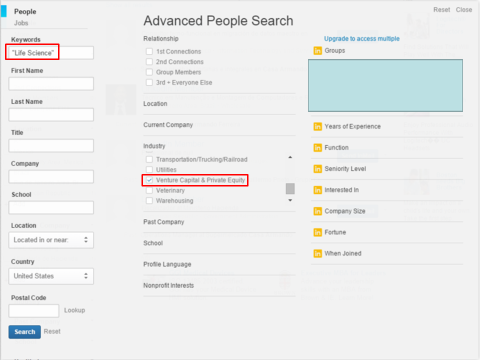
LSN’s profiling and matching technology allows you to filter for investors that are interested in your technology. You can search the LSN Investor Platform to find all the investors that have self-declared an interest in companies in your field through a one on one phone conversation with LSN’s researchers. You can now start the process of qualifying and contacting hundreds of potential investors, with live support from LSN’s Save Search feature to alert you to the newest investors in your field. You come into work on a Monday morning and new investor alerts are sitting in your email box.


Save Search and Set Email Alerts in LSN Investor Platform

Save Search and Set Email Alerts in LSN Investor Platform

When fundraising, it is critical to leave no stone unturned and to move quickly and efficiently. With this feature in place, entrepreneurs will be able to receive a constant flow of information on relevant investors, and can use these updates to get their technology in front of every potential partner LSN identifies, quickly.  Considering that the research team has been bringing in 20+ new and updated mandates per week, this allows for users to be able to get the maximum value of the platform by assuring that no potential investor falls through the cracks.


Don’t Bet On That Public Pitch Session To Win You Investment

28 Aug

By Lucy Parkinson, Senior Research Manager, LSN

lucy 10*10If you’re a regular attendee of life science investment conferences, you’ll have found that most of these conferences offer 15-minute presentation slots as a means of attracting scientist-entrepreneurs to the event. An exclusive speaking spot in which to tell the whole crowd about the breakthrough technology your company is working on can certainly sound like an attractive offering. But in reality, LSN has found that the 15-minute model offers very poor value to entrepreneurs.

Many presenters arrive at the event anticipating this chance to speak about their technology to a large audience of interested investors; however, entrepreneurs will invariably find that these 15-minute presentations are only attended by other CEOs looking to garner IP and positioning, and vendors hoping to sell their services to the presenters, while the attending investors are busy networking or taking partnering meetings elsewhere. Investors have limited interest in watching these public pitches and therefore these presentation opportunities provide low value to an entrepreneur seeking investment. Rather, the best way to share your presentation with an investor is through one-on-one meetings where you will have the investor’s full attention and can engage in a back and forth discussion about your opportunity. Receiving an investment requires building a relationship with an investor; it’s much easier to begin that relationship with a personal meeting rather than a public pitch.­­

This is why, after experimenting with the 15-minute model at our first ever RESI event and discovering up close how flawed it is, LSN turned our back on the public pitch approach. Instead, we doubled the number of partnering slots available at RESI and created a new form of presentation that provides much more value; the RESI Innovation Challenge. Rather than limiting their presence to only 15 minutes, we showcase our innovators on the exhibition floor for the entire duration of the event. RESI Innovators are provided with an easel to display a poster board marketing presentation, and each attendee is given ‘RESI Cash’ to ‘invest’ in the innovators in a virtual challenge, with winners announced and prizes awarded at the end of the day. While our available slots for the Innovation Challenge have sold out, our partnering software is already live and there are still hundreds of meeting slots available.

The opportunity for both marketing and personal engagement provided by the RESI presentation and partnering model has been praised by both investors and innovators. If you’d like to see how it works for yourself, please join us at Fenway Park on September 17th.

RESI Double Panel Announcement: Point-of-Care Institution & Fundraising Partners

28 Aug

By Tom Crosby, RESI Conference Manager, LSN

Tom 2

Institutional Strategic Investors: Point-of-Care Institution Panel

The lack of capital available for early stage life science companies has brought many different groups with strategic interests to the table. This panel aims to shed light on the institutional strategic companies that are now funding early stage commercial research in the space, many of whom have a primary goal of lowering the cost of care. Moderated by Monique Yoakim-Turk, Partner at the Technology Development Fund of Boston Children’s Hospital, the audience will hear from:

Groups including hospitals and healthcare providers will discuss their differentiating investment models and structures, as well as what they can provide beyond just capital. What types of technological innovations are these groups most interested in? How do they go about sourcing new opportunities? At what stage of development do they tend to get involved, what do they look for in early communications, and what is their role with a company’s development following investment?

———————————————————

I-Banks, 3PMs & Consultants: Fundraising Partners Panel

As early stage fundraising has been challenged of late, many emerging companies elect to use a fundraising partner — such as an investment bank, independent advisor or consultant — to take the lead on capital raising activity. The question is, can an investment bank make a random process more efficient?

Moderated by Colin Widen, CEO of Boston Innovation Capital, the audience will hear from:

The core of the discussion will focus on weighing the pros and cons of outsourcing your fundraising efforts. Panelists will discuss the unique characteristics among new entrants to the life science investor pool, and more importantly, how to access these entrants. What changes with your approach depending on the type of investor you’re dealing with? What are the different levels of time to participate among these investors? How does the picture change when working with for-profit vs. philanthropic players? The role of data as a fundraising tool will also be highlighted throughout the session.

LSN Announces RESI Partnering Platform

21 Aug

By Alejandro Zamorano, VP of Business Development, LSN

Alejandro 10*10

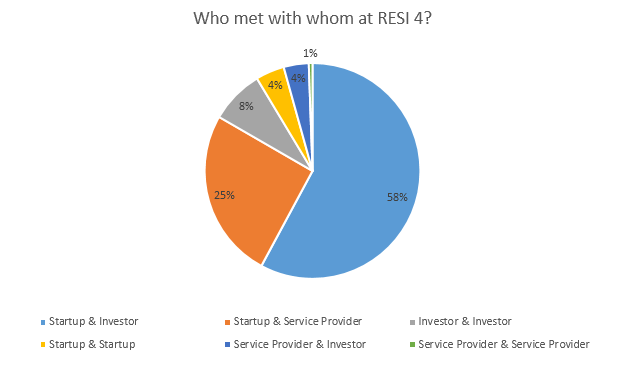
LSN is proud to announce the RESI Partnering Platform. The goal is to have a dynamic partnering platform to match biotech and medtech companies with the investors that are a fit and provide an opportunity to create a compelling dialogue that fosters a long-term relationship. LSN designed the RESI Partnering Platform from the ground up by leveraging an innovative partnering portal provider called Meeting Mojo. Click the video below to see how the RESI Partnering Platform can help your partnering efforts.

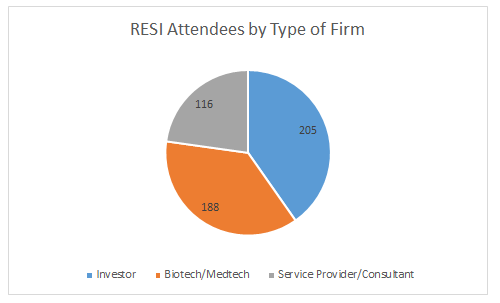
Considering the sheer quantity and diversity of investors attending RESI, paired with the power of the RESI Partnering Platform, the RESI conference is the right place for early stage life science companies to meet investors that are a fit. We hope to see you there.

Funding Gaps Continue to Spell Opportunity for Those with Capital

21 Aug

By Michael Quigley, Director of Research, LSN

mike-2Just over a year ago I published an article discussing how the growth rate of seed and startup stage life science financing rounds was substantially smaller than all other financing rounds. More recent data pulled from the LSN’s Company Platform further validates that claim. Exhibit 1 compares the number of seed and startup stage financing rounds to the total number of financings in the US life science space over the past 9 years.

Exhibit 1

Exhibit 1


Exhibit 1 demonstrates that, as said by Alexis Borisy (a partner with life science VC firm Third Rock Ventures), “In the overall numbers, early stage life science investment isn’t growing compared to later stage investments.” The disparity in growth between these two variables presents a serious threat to large pharma companies, and provides savvy investors with an opportunity for strong returns. If this trend continues over time, the demand for later stage and more developed technologies will grow to be significantly greater than the supply. Large pharma companies are constantly looking to in-license and acquire technologies for their pipelines in order to protect future revenue streams as patents expire and better treatments become available, threatening their market share. However if there are not enough of these early stage companies getting funded today, then down the road pipelines will go dry.

By investing in early stage research today, investors could position themselves to have great exit potential to large pharma companies who, if this gap goes unfilled, will be suffering from painfully dry pipelines. Interestingly enough, large pharma companies seem to be well aware of this threat and have become a major funding source for early stage companies through the establishment of corporate venture capital arms. Many of these companies are also now investing in entirely separate venture capital and private equity funds with hopes that they will yield financial returns as well as funding the development of strategically relevant technologies. Other types of investors are also gaining interest in early stage life science companies as well, though their motivations vary across the spectrum from philanthropic to financial.

As a life science entrepreneur, it is important to understand what the long-term strategic opportunities for your assets will look like. While the recent IPO window has shown significant exit potential via public market interest in the life science space, there is significant uncertainty surrounding how long it will remain a viable option. However, the seemingly insufficient investment in early stage rounds for life science companies today could make the future exit possibilities for your asset very attractive to potential investors.