Tag Archives: history

RESI Europe and European VC Coalition Seek to Boost EU Biotech Investment 

24 Feb

By Sougato Das, President and COO, LSN

Sougato-Das

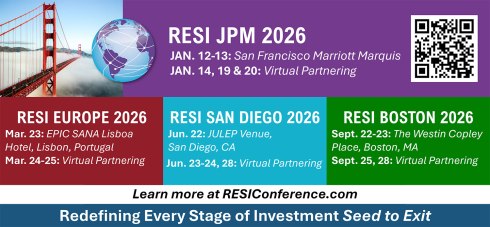
RESI Europe is one of the major pieces in the puzzle of how to stimulate biotech and life science investing in Europe. In addition to the largest investor partnering conference coming to Lisbon on March 23, the European Life Sciences Coalition (ELSC), a new alliance of major venture capital firms advocating for increased funding and policy support for Europe’s biotech sector, has launched. The coalition includes leading investors such as Novo Holdings, Sofinnova Partners, Forbion, and Omega Funds, representing a combined €24 billion in life sciences assets and involvement in more than 1,400 companies. It launched in association with Invest Europe, whose 650+ members manage 60% of European private equity and venture capital, totaling €1.25 trillion in assets. Alongside major initiatives like the European Innovation Council, whose funded companies enjoy 50% reimbursement for attending RESI Europe, the ELSC hopes to bring new energy to the entrepreneurial sector of life sciences. 

Despite Europe’s strong pharmaceutical presence—five of the world’s top 10 pharma companies by revenue are European—and the industry supporting 29 million EU jobs, the region struggles to scale and retain biotech and life science innovation. The coalition highlights several challenges: 

  • Fragmented capital markets 
  • Declining numbers of specialized VC firms 
  • Regulatory hurdles 
  • Limited access to growth capital 

Europe accounts for only 7% of global venture capital, compared to 63% for the U.S. and 14% for China. Fortunately, events like RESI Europe create a forum where nearly all of the firms representing the 7% are available for partnering, acting as a facilitator to stimulate European life science investment. The dire need for this is underscored by the fact that nearly all EU-based biotechs that went public last year chose to list outside the EU, highlighting concerns about capital flight. 

ELSC members joined the coalition to help reverse these trends, emphasizing the need for sustained funding from both public and private sources across all stages of life sciences development. Industry leaders argue that Europe must increase investment in innovative medicines and treatments, and create supportive policy frameworks and forums, like RESI Europe, or risk losing access to cutting-edge therapies. The ELSC aims to work with policymakers and leverage Invest Europe’s network to strengthen Europe’s ability to fund and scale biotech innovation domestically.

Register for RESI Europe

What are Best Practices for Cap Table Management? Investors & Banks Weigh In

6 Jan

By Sougato Das, President and COO, LSN

Sougato-Das

After moderating innumerable virtual and in-person investor panels like those that will light up the stage at RESI Europe, one question comes from the audience repeatedly: What do investors like to see in a cap table? How can you ensure that the ownership of your company is structured so

  1. There is enough to own for follow-on investors
  2. It attractive to investors
  3. You don’t get diluted too much
  4. Shares, rights and vesting schedules that your shareholders have make sense for who they are
  5. Underwriting and doing an IPO is easy when it’s time?

The answers to these questions are the bread and butter of investment bankers and investors.

LSN assembled panelists from J.P. Morgan and Mid Atlantic Bio Angels for a practical, founder-focused virtual session on Best Practices for Cap Table Management. This webinar will walk through the fundamentals every early-stage company needs to understand to make informed equity decisions and avoid costly mistakes down the road. Attendees will learn how to approach founder equity splits, navigate dilution, and confidently interpret SAFE notes. We’ll also explore how cap table structure directly impacts fundraising outcomes and why a well-designed stock option pool is critical for attracting and retaining top talent. This session is especially relevant for founders, CEOs, and CFOs who want to strengthen their financial strategy, prepare future rounds, and build a company that scales responsibly.

We’ve all heard the horror stories of founders who were diluted so much that they hardly made money after exiting. We’ve heard about non-investable companies that have great technology but are simply not financially attractive. We’ve heard about the difficult board member who had too many voting rights and slowed the company strategy. This webinar on cap table management will cover various use cases and explain why they do or do not work. There will be written Q&A during the webinar, so you can get all your questions answered.

Sign Up the Webinar

Sunday Space + Two Full Days of RESI JPM

16 Dec

By Sougato Das, President and COO, LSN

Sougato-Das

RESI JPM 2026 expands the opportunity to connect by adding Sunday partnering and event space, giving attendees an early start to JPM Week. With RESI JPM running Monday–Tuesday, Sunday provides a strategic window to schedule investor meetings, host receptions, or bring teams together while momentum is already building across San Francisco.

RESI JPM is the only JPM conference where 700+ investors actively providing seed to Series B funding attend, alongside in-licensors seeking preclinical through Phase 2 assets. For preclinical and clinical-stage biotech, medtech, diagnostic, digital health, and AI companies, RESI JPM remains the most efficient way to connect with aligned investors and strategic partners during JPM Week. Many companies schedule 10–20 meetings in a single day, making partnering the core of the RESI experience.

New Sunday Partnering Opportunities Added

Life Science Nation is announcing additional partnering slots on Sunday, January 11, hosted at the Marriott Marquis. These meetings take place ahead of the main conference and allow attendees to secure valuable investor conversations before calendars fill up.

The Sunday Partnering Slot sign-up form is available to RESI attendees, allowing registered participants to request meetings and plan their schedules in advance.

Start JPM Week with Purpose

This added day gives companies a head start to:

  • Schedule investor or in-licensor meetings
  • Connect with fellow RESI attendees
  • Host private meetings or team gatherings

Located in the center of the JPM ecosystem, the Marriott Marquis offers a convenient and efficient setting to begin JPM Week with focused, high-value interactions.

With Sunday now in play, RESI JPM 2026 delivers more time, more access, and more opportunities to make meaningful connections before the week reaches full pace.

Register for RESI JPM 2026

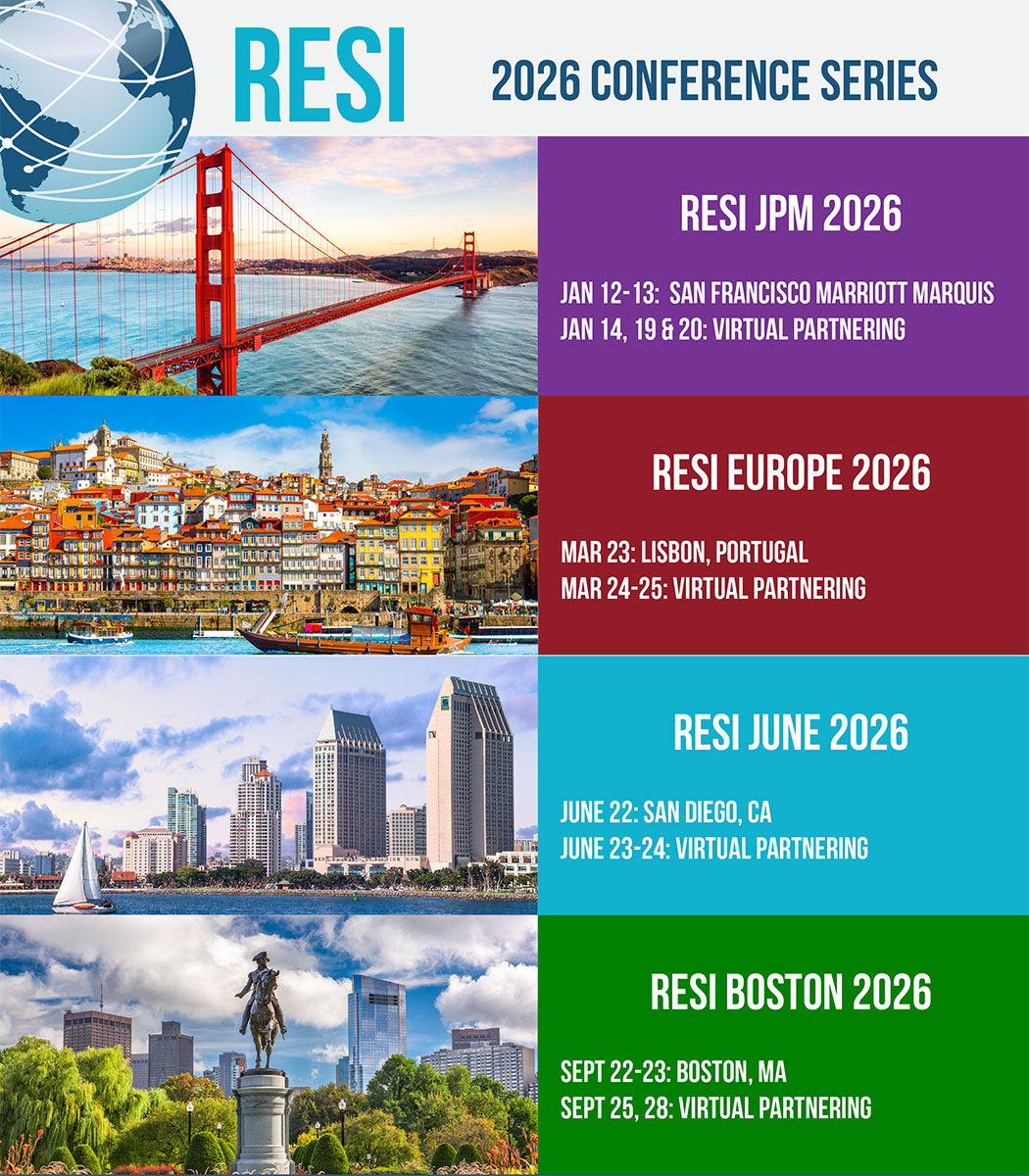
RESI 2026 Series: Connecting Life Science Innovators with Capital and Partners 

25 Nov

By Sougato Das, President and COO, LSN

Sougato-Das

The RESI 2026 Series continues Life Science Nation’s commitment to providing consistent, high-quality partnering opportunities for life science and healthcare innovators. Designed to connect startups with investors and strategic partners that align by sector, indication, and stage of development, each RESI conference offers a structured environment for founders navigating an increasingly competitive fundraising landscape.

Throughout the 2026 Series, attendees will find a familiar mix of investor panels, expert-led workshops, the Innovator’s Pitch Challenge, and a partnering system built to support targeted outreach and productive meetings. These elements work together to help companies strengthen their messaging, expand their networks, and identify capital sources that are the best fit for their technologies.

As scientific progress accelerates and capital deployment becomes more selective, the RESI 2026 Series serves as a reliable forum for global stakeholders to exchange insights, source opportunities, and build lasting relationships across the life science ecosystem.

Find registration information at RESIConference.com. If you are interested in RESI sponsorship, please contact us.

RESI London 2025: Dec 4! See feedback from previous attendees about the UK’s biggest investment conference!

21 Oct

By Sougato Das, President and COO, LSN

Sougato-Das

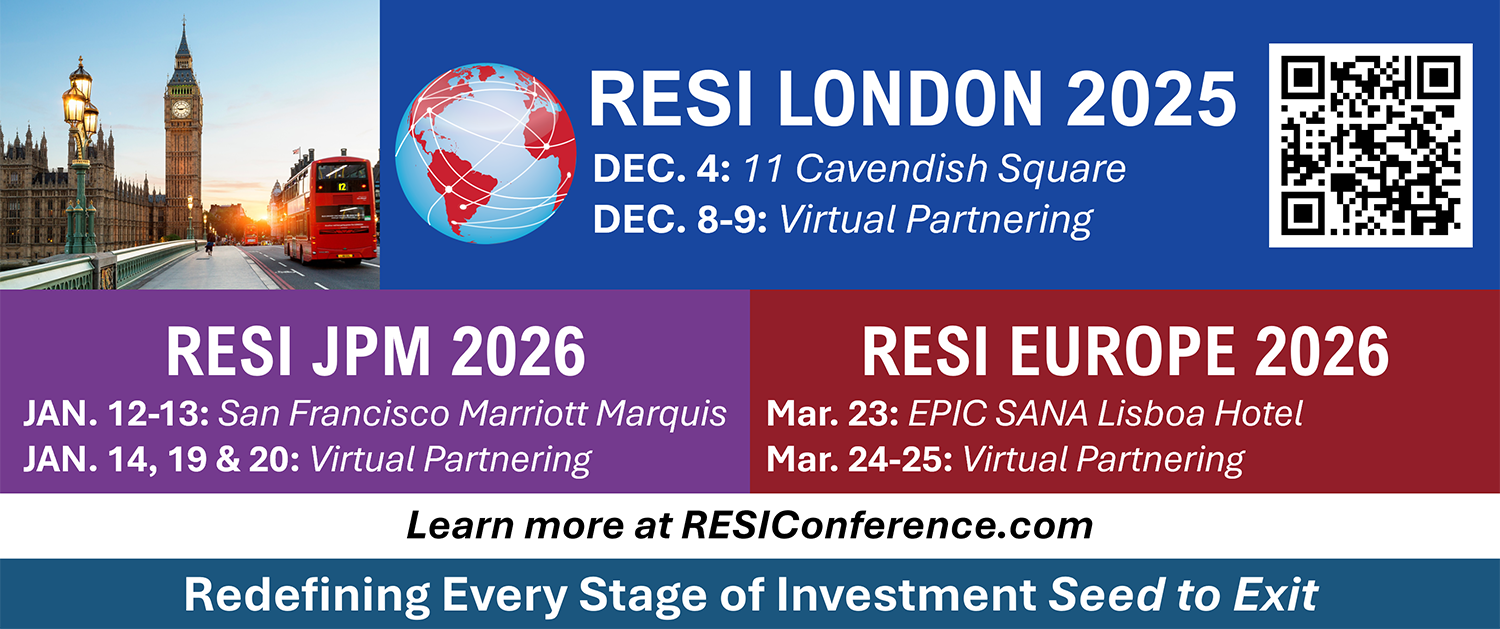
RESI London 2025 will be the second year of the UK’s biggest life science investor conference. We expect 250 investors, ready to finance your company. The RESI partnering system allows you to schedule face to face meetings with each investor. See what last year’s attendees are saying!

Testimonials

“RESI London was an extremely productive experience for my company, and the partnering system was so easy to use.”

– Nick Sireau, CEO, Serenatis Bio

“RESI is the go-to meeting for biotech CEOs’ seeking early stage capital. They have built an early stage platform educating founders and bringing capital to them. They are the only people serving this under loved sub sector with such passion.”

– Sunil Shah, CEO, O2h Ventures & Co-founder, O2h Group

“Attending RESI London for the first time was a refreshing and highly positive experience. The event exceeded my expectations in several ways. The atmosphere was welcoming and collaborative, which created a conducive environment for meaningful interactions. What stood out most was the exposure to a unique group of investors—those with a specific interest in early-stage, cutting-edge technologies. These are exactly the type of investors we aim to connect with at Rinri, so the conference provided an excellent platform to engage with individuals who understand the risks and rewards of innovative science-driven ventures.”

– Simon Chandler, CEO, Rinri Therapeutics

“My session was punctual and well-organized. The jury members were thoughtfully selected and provided insightful, constructive feedback that was highly valuable.”

– Christine Ruckenbauer, CBO, RIANA Therapeutics

“I highly value RESI and am grateful for the opportunity both to contribute as a pitch judge, company scouting and the networking opportunities. You have a dynamic network with easy, friendly, professional access. Thanks for all you are doing for the life science and tech development sector.”

– Jill Sorensen, MTEC (Investor)

“As One Nucleus seeks to enable our members to engage with the widest possible investor pool, partnering with RESI London creates a unique opportunity to bring our members into contact with new global early-stage investors to complement the known local investors they meet at all other early-stage pitching events in the UK.”

– Tony Jones, CEO, One Nucleus

“We started this as a grassroots meeting with One Nucleus, and it has been extremely gratifying and rewarding to see our international investors attending because the UK, we know, has some great science that needs to get to the global stage. We are expecting 250+ investors.”

– Dennis Ford, CEO, Life Science Nation

Register RESI London by Friday, October 24 to save £200 on early bird rates!

Register for RESI London Appy to Pitch at RESI London

Will PubMed be Shutdown? 

15 Oct

By Sougato Das, President and COO, LSN

Sougato-Das

Many in the life sciences research community were spooked when PubMed went down temporarily in March after the Trump administration cut $4 billion in “indirect costs” that supported medical research. More recently, an ominous message appeared on PubMed: “Because of a lapse in government funding, the information on this website may not be up to date, transactions submitted via the website may not be processed…” Many who use PubMed but not other government websites were probably panicked by this, but a quick look at clinicaltrials.gov, NIH Reporter and even NIH’s main site reveals the same message, while different versions of this message appear on the websites of HHS, CMS, etc.

Still, various EU governments have been quietly preparing for a PubMed shutdown by ensuring they will have a PubMed-alternative just in case. Of course, let’s be real: while they may be able to serve the existing content in PubMed, they will not be able to suddenly support the thousands of additional abstracts and articles added each day, along with MeSH tagging, journal selection, XML/JSON feeds, and other critical functions PubMed provides.

While PubMed is critical to nearly every life science researcher, even those with access to Web of Science, Embase, etc., it is especially critical to early-stage life science companies and investors. For basic research, competitive intelligence, due diligence and more, PubMed is indispensable for those without access to paid literature databases. PubMed is also an important source for pipeline database providers that investors and pharma use to find assets and perform CI.

The US government, for decades, has supplied a critical and reliable literature resource for worldwide audiences, both professional and non-professional alike. With the addition of the first and best clinical trial registry in 2000, continued funding for this resource is paramount for global biomedical research.

How 100% Pharma Tariffs Could Ripple Through Early-Stage Biotech Investment 

7 Oct

By Sougato Das, President and COO, LSN

Sougato-Das

We have all heard about the recent 100% pharma tariff announcement, applicable mainly to manufacturers or marketed drugs unless they are in the process of building manufacturing facilities in the US. We know that early stage biotechs are generally not counting on investment to take them through manufacturing, for which they will seek a pharma partner. Nevertheless, these tariffs may still have an effect on early-stage biotech investments. Investment in early-stage (seed, Series A/B) biotech is likely to face increased headwinds under a 100 % pharmaceutical tariff regime. The tariff risk exacerbates existing structural challenges in biotech investing.

Overall Expected Effect (Short to Medium Term) 

  • Slower fundraising pace 
    The number of deals may decline, particularly in the earlier stages. Biotech investors will likely become more selective, preferring de-risked assets, strong data, or compelling platforms with clear strategies to mitigate tariff exposure.
  • Higher effective cost of capital 
    Investors will demand more upside or stricter protections (e.g. liquidation preferences, anti-dilution) to compensate for the added risk.
  • Greater emphasis on capital efficiency / leaner burn models 
    Startups may need to conserve cash more, focus earlier on key inflection points, outsource less, and plan fallback strategies for supply chain risk.
  • Longer timelines / delayed exits 
    Because of the risk, uncertainty, and possible delays, the time to IPO, acquisition, or commercialization may stretch, further compressing IRR for investors.
  • Capital flow shift toward infrastructure and enabling technologies 
    Some portion of venture capital may redirect toward bioprocessing, domestic manufacturing, synthetic biology for local API production, supply-chain tools — companies that can help others evade tariff impact.
  • Public market investment in pharma may slow, leading to less IPOs 
    The tariffs could serve to further erode the attractiveness of the biopharma sector for public market investors, reducing the room for IPOs, and pressuring investment taking place more upstream.

In summary, while the recent 100% pharma tariffs certainly don’t have a direct effect on early-stage biotech investing, their dampening effects will nonetheless be felt.