By Claire Jeong, Chief Conference Officer, Vice President of Investor Research, Asia BD, LSN

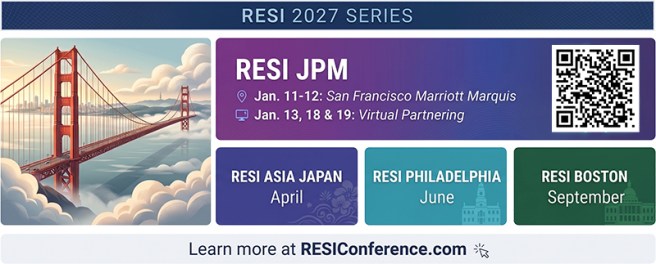
Life Science Nation is pleased to announce the finalized investor panel lineup for RESI JPM 2027, taking place January 11 and 12 at the San Francisco Marriott Marquis during J.P. Morgan Healthcare Week.
The two day program features 14 investor sessions across therapeutics, medtech, diagnostics, digital health, platform technologies, strategic partnerships, and alternative sources of capital.
Monday, January 11
9:00 AM | Follow the Money [2027 Outlook & Trends]
Where Life Science & Healthcare Investors See Opportunity in 2027
Every year at JPM, one question sets the tone for the week: where is the capital going? Investors from across therapeutics, medtech, diagnostics, digital health, and tools take the stage to share what they are seeing in fundraising, valuations, and exit windows. They will discuss which sectors are attracting conviction, which are being left behind, and how their own priorities have shifted since last year. Whether you are raising, investing, or building, this is the read on the market you need before the deals begin.
10:00 AM | What Is Fundable Now: Therapeutics [Early Stage Therapeutics]
What Earns a Term Sheet from Early Stage Biotech Investors
Early stage therapeutics investors must weigh scientific promise against the risks of translating it into a viable treatment. Seed through Series A investors get candid about what earns their conviction: differentiated biology, convincing translational evidence, and a credible clinical development strategy. The discussion explores how investors assess target validation, competitive positioning, safety, and the experiments needed to reduce key development risks. Expect frank talk about what makes them lean in, what makes them pass, and how founders can make a compelling scientific and investment case for a therapeutic program.
11:00 AM | Backing the Next Medical Breakthrough [Medical Devices]
How Investors Evaluate Early Stage Device Innovation
Medical device companies face distinct investment hurdles, from proving technical feasibility to establishing a path to clinical adoption. This panel brings together medtech investors to discuss how they evaluate early stage opportunities across surgical technologies, robotics, monitoring, wearables, and home care. The conversation examines clinical need, regulatory strategy, reimbursement, usability, and the evidence required to support adoption. Hear what makes a device differentiated, how investors assess development and commercial risk, and which milestones strengthen the case for investment.
1:00 PM | Strategics at the Table [Strategics]
How Corporate Partners Decide When to Invest, Partner & Acquire
Strategic partners are shaping which technologies reach patients, and they are increasingly involved long before a company is ready to sell. Business development leaders from pharma and medtech join corporate venture investors to explain when they engage, what they need to see, and how they think about partnering, investing, and acquiring. Learn how to get on a strategic partner’s radar, what makes a startup stand out in a crowded pipeline, and how to build a relationship that lasts beyond a single deal.
2:00 PM | The First Believers [First Check Investors]
How the Earliest Backers Turn Life Science Ideas into Fundable Companies
Every great company has someone who said yes first. This panel gathers the earliest backers in life sciences: angels, seed funds, venture studios, foundations, and accelerators. They explain how they evaluate opportunities before substantial scientific or commercial validation, what they look for in a founding team, and what gives them the conviction to write the first check. The conversation covers company formation, initial experiments, and how early capital and hands on support help founders establish a credible development path. For founders at the very start, it is a candid map of the road from initial concept to the first funded development milestones.
3:00 PM | The Brain Trust [CNS / Neuro]
Investing Across Neuroscience & Psychiatry
Few areas of medicine combine such enormous unmet need with such complex investment challenges. This panel brings together investors in therapeutics, neuromodulation devices, digital biomarkers, and diagnostics to discuss what draws capital into neuroscience and psychiatry. Together they explore how advances in biology, technology, and clinical trial design can reopen areas once considered too difficult, and how founders across modalities can position themselves to attract investment.
4:00 PM | Patient Capital [Family Offices]
How Family Offices Are Investing Directly in Life Sciences
Family offices offer a distinct route to life science capital through direct investing, syndication with peers, and investment structures that can support longer time horizons. This session explores what draws private capital to highly technical opportunities, how family offices diligence science and technology, and what founders should know before approaching them. Panelists discuss how they structure investments, work with specialist co-investors, and assess follow-on needs. It is a practical look at how to earn the confidence of this diverse investor community.
Tuesday, January 12
9:00 AM | Investing in Longer, Healthier Lives [Longevity]
The Science and Technologies Addressing Age Related Disease
Helping people live longer, healthier lives requires addressing the diseases and functional challenges that come with aging. This panel brings together therapeutics, medtech, diagnostics, and digital health investors to explore opportunities in cardiometabolic disease, musculoskeletal health, physical function, and maintaining independence. The discussion examines how investors evaluate treatments for specific age related conditions alongside technologies that address underlying aging biology, detect risk earlier, or help people remain active. Hear what constitutes meaningful clinical evidence, how companies define a viable path to market, and what makes an opportunity compelling for early stage investment.
10:00 AM | Digital Health After the Hype [Digital Health]
What Investors Want to See in Evidence, Adoption & Economics
The digital health market has been through a reset. Investors discuss what they are backing now: clinical grade AI, new models of care delivery, and businesses with evidence, engagement, and economics that hold up to scrutiny. Hear where value is being created, what has changed in how these companies are evaluated, and what separates durable businesses from those that struggle to convert adoption into sustainable growth.
11:00 AM | Enabling the Next Generation of Medicine [Platform Technologies]
Investing in Discovery Platforms, Delivery Technologies & Research Tools
Some of the most valuable companies in life sciences make new medicines possible. This panel brings together investors backing AI enabled discovery platforms, delivery technologies, synthetic biology, and the research tools that accelerate development. The conversation centers on how to separate a durable platform from a clever technology, how investors evaluate platform companies alongside tools and infrastructure businesses, and how business models differ from those of asset driven companies. Hear what makes these technologies investable and where founders can build lasting value.
1:00 PM | Capital Across Borders [Cross Border Investors]
How International Investors Evaluate and Finance Life Science Companies
Cross border investment can expand a company’s funding options, but attracting international capital requires understanding how investors evaluate opportunities beyond their home markets. This panel brings together investors from different regions to discuss geographic mandates, due diligence, syndication, and the local presence or development plans they expect from companies abroad. Hear what makes a company attractive to overseas investors, how investors work with local co-investors, and how founders can build relationships that lead to cross border financing.
2:00 PM | Runway Without the Round [Beyond Venture Capital]
Financing the Next Milestone Beyond Conventional Venture Equity
A conventional venture round is not the only way to fund a company. This panel explores non dilutive grants, foundation funding, venture debt, royalty financing, strategic agreements, and government backed programs. Capital providers explain who qualifies, what stage or evidence their funding requires, how long the process takes, and what obligations or tradeoffs founders should understand. The discussion examines which sources are suitable for early stage companies and how they can complement equity financing. Hear how to match funding to a development milestone and extend runway without relying solely on another conventional venture round.
3:00 PM | From Seed to Series A
Building the Evidence and Investor Confidence for the Next Round
Securing seed funding is only the beginning. This panel brings together seed investors and Series A investors to explore how life science companies turn initial funding into a financeable next round. The discussion covers setting achievable milestones, demonstrating progress against the original investment thesis, identifying a lead investor, and building a syndicate. Across therapeutics, medtech, and digital health, panelists discuss how founders should align development plans, capital needs, and fundraising timelines. Hear how existing investors assess follow-on support, what new investors need to see, and how to address gaps that can leave promising companies between rounds.
4:00 PM | The Investor Reverse Pitch
Meet the Investors and Discover What They Want to Fund
To close the conference, the roles flip. Investors from across therapeutics, medtech, diagnostics, digital health, and tools take the stage to pitch their mandates: what they invest in, at which stage, with what check size, and what gets their attention. Investors deliver short presentations, followed by audience Q&A. Founders leave with a clear list of who to follow up with and how to approach them. It is a practical, high energy finish to two days of conversations.
Speaker Submissions
Life Science Nation is currently seeking qualified investors, corporate business development leaders, family office representatives, and other capital providers for speaker consideration. Submit a speaker application.