Tag Archives: recipes

From RESI Boston to Global Growth: Bilix on Winning the Innovator’s Pitch Challenge

15 Oct
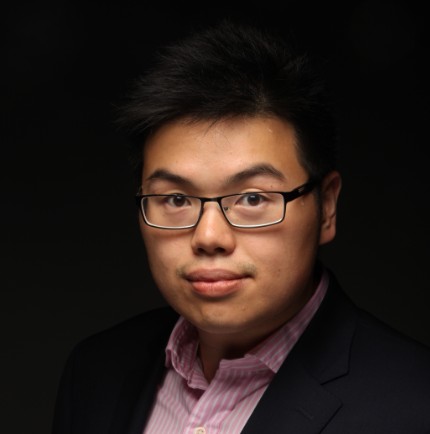
Myung Kim
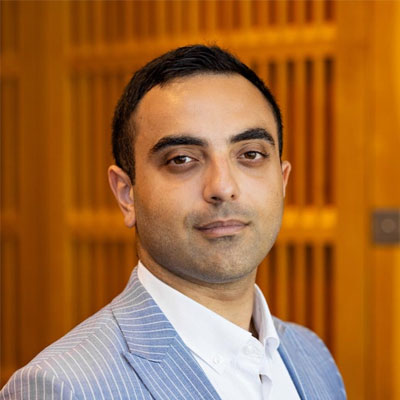
  CaitiCaitlin Dolegowski

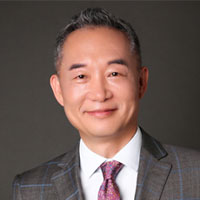
Bilix, recognized as a top Innovator’s Pitch Challenge winner at RESI Boston this past September, is making waves in the biotech space with its innovative multi-modality approach to inflammatory and autoimmune diseases. In this interview, Myung Kim, Founder and CEO, shares how participating in RESI Boston helped the company connect with key investors, refine its strategy, and advance its clinical milestones.

Hear firsthand how Bilix is driving progress in complex disease treatment and discover how your company can join the next generation of innovators pitching at RESI London and RESI JPM. Applications are now open.

Apply to Pitch at RESI London Apply to Pitch at RESI JPM

Finalist in the RESI Boston Innovator’s Pitch Challenge – Meet M6P Therapeutics

30 Sep

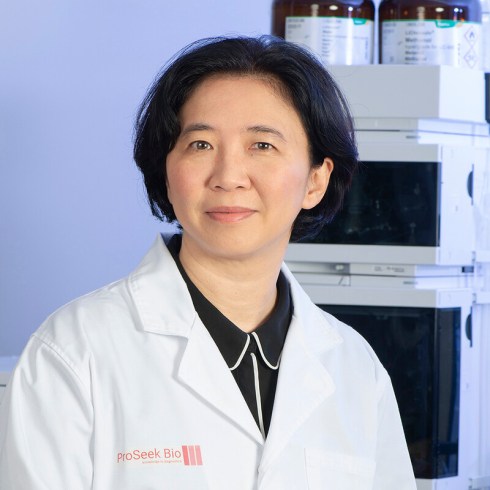
In this interview, Caitlin Dolegowski speaks with Cuong Do, Founder and Chairman of M6P Therapeutics, about the company’s groundbreaking lysosomal targeting platform, its applications in rare disease and oncology, and the experience of pitching at RESI Boston.

Cuong Do
CaitiCaitlin Dolegowski

Caitlin Dolegowski (CD): M6P Therapeutics has achieved what was long thought impossible, delivering proteins to lysosomes. Can you explain the significance of this breakthrough?

Cuong Do (DO): An enzyme called GlcNac-1-phosphotransferase (PTase) is responsible for adding mannose 6-phosphate to the surface of lysosomal enzymes. People have tried and failed for decades to increase the expression of M6P, and everybody gave up. Our co-founder Stuart Kornfeld never gave up. He and his post-doc were able to engineer a variant of PTase that turned out to be 20X more effective than PTase itself in adding M6P to lysosomal enzymes. We built upon this breakthrough to create a platform that is able to create enzyme replacement therapies that have very high M6P content. Furthermore, our gene therapies are the only ones that result in M6P-containing enzymes being produced by the transduced cells.

We expanded upon the innovation and created chimeric antibodies that contain M6P as well. This allows these antibodies (after they bind to the targeted antigens) to be brought to lysosomes in virtually all cells in our bodies for degradation. This is a significant advantage over traditional antibodies relying on Fc clearance by only select immune cells.

CD: You have multiple rare pediatric drug designations and two programs nearing the clinic. What are the most exciting upcoming milestones for your pipeline?

DO: We are preparing to start an Investigator Initiated Trial in Australia for our M021 ERT for Pompe Disease in hopes of obtaining early human data demonstrating M021’s superiority over the standard of care.

CD: How does your lysosomal targeting platform extend beyond rare diseases, particularly in oncology with your chimeric PD-L1 and PD-1 antibodies?

DO: We figured out a way to add M6P to any protein, including antibodies. Our chimeric antibodies can be cleared by virtually all cells in the body since virtually all cells have receptors for M6P. This is especially effective for clearing surface antigens from cell surfaces. Our chimeric PD-L1 antibody is able to clear virtually all PD-L1 from the surface of tumor cells and thus activate T-cells and drive T-cell mediated tumor killing. Our chimeric version of Keytruda is able to remove PD-1 from the surface of T-cells and has shown to be more effective in inhibiting tumor growth in vivo than Keytruda itself.

CD: Can you walk us through your IP position and how it supports your growth strategy?

DO: We have invested heavily in IP that has created a portfolio of 9 patent families, 9 issued patents, and ~20 still in prosecution.

CD: Where are you in your fundraising journey, and what types of investors or partners are you looking to engage with?

DO: We have raised ~$40 million in our Seed and A rounds, which we invested to get our programs to where they are today. We are trying to raise a $5 million bridge now in anticipation of a $50+ million Series B next year. In addition to investors, we want to engage with potential partners who might be interested in our molecules.

CD: How did participating in the Innovator’s Pitch Challenge at RESI Boston help advance your business development or investor connections?

DO: We met a few companies who might be interested in partnering on some of our molecules. We’re continuing the conversations.


IPC Applications are now open for the next Innovator’s Pitch Challenge at RESI London 2025 and RESI JPM 2026, with spots filled on a rolling basis.

Partnering for Growth: DLA Piper on Supporting Life Science Innovation at RESI Boston 

9 Sep

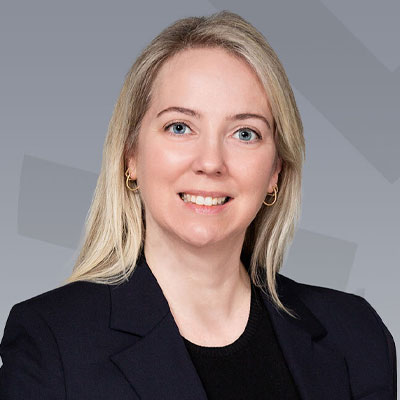
At RESI Boston, global law firm DLA Piper plays a key role in guiding early-stage innovators through the legal and commercial challenges of scaling in the life sciences. In this interview, Lauren Murdza, Co-Chair of Technology & Life Sciences Licensing & Commercial Transactions, shares why DLA Piper chose to sponsor RESI, what the firm looks for in collaborations, and the trends shaping licensing and commercial transactions today.

Lauren Murdza
CaitiCaitlin Dolegowski

Caitlin Dolegowski (CD): What motivated DLA Piper to sponsor RESI Boston, and why do you see value in supporting this conference?

Lauren Murdza (LM): DLA Piper is committed to supporting innovation in the life sciences sector, and RESI Boston offers a unique opportunity to engage directly with early-stage companies and investors. Sponsoring RESI aligns with our mission to be a strategic partner to emerging life science ventures, helping them navigate legal complexities while fostering meaningful connections that drive growth.

CD: From your perspective, what makes RESI a strong platform for connecting with early-stage life science innovators and investors?

LM: RESI creates a unique environment where entrepreneurs, investors, and advisors come together to solve real challenges. For DLA Piper, it’s an opportunity to listen and engage in conversations that matter—how to protect IP, manage data rights, and structure collaborations that attract capital. Those discussions allow us to show how DLA Piper’s integrated approach—combining legal, regulatory, and commercial insight—helps companies accelerate their next milestone.

CD: Can you share what types of companies, technologies, or partners DLA Piper is most interested in engaging with during RESI?

LM: We’re particularly interested in companies developing novel therapeutics, diagnostics, digital health platforms, and medical devices. Our team seeks to engage with founders and executives who are navigating the transition from concept to commercialization and who value strategic legal guidance in areas such as licensing, IP protection, and regulatory compliance.

CD: How does your team at DLA Piper support life science and healthcare companies as they move from early-stage development to commercialization?

LM: DLA Piper supports clients across the full lifecycle of a company—from corporate formation and IP strategy to licensing, financing, and M&A. We help clients identify the core aspects of their technology, assess patentability, and streamline initial filings to create contingent assets that support fundraising. What sets DLA Piper apart is our ability to deliver this seamlessly across jurisdictions, giving clients the confidence that their legal strategy scales with their business.

CD: Are there particular trends or challenges in licensing and commercial transactions that you think entrepreneurs at RESI should be especially mindful of?

LM: We’re seeing three big themes. First, clarity on data and AI rights is critical—investors want to know who owns what and how data can be used, especially across borders. Second, deal structures are evolving, with more options-to-license, milestone-based terms, and royalty monetization to help bridge funding gaps. Finally, regulatory and supply chain issues—from FDA expectations to manufacturing scale-up—are showing up earlier in negotiations. At DLA Piper, we help clients anticipate these challenges so they don’t slow down growth.

CD: What does DLA Piper hope to accomplish through its participation at RESI Boston this year?

LM: We aim to deepen our engagement with the life sciences community, share actionable insights through workshops and panels, and identify promising companies that could benefit from our legal and strategic expertise. RESI Boston is a chance to listen, learn, and contribute to the ecosystem that’s shaping the future of healthcare innovation.

CD: Looking ahead, what excites you most about the current life science innovation landscape, and how does DLA Piper plan to play a role in advancing it?

LM: We’re excited by the convergence of AI, data science, and biotechnology, which is accelerating discovery and personalization in medicine. DLA Piper plans to continue supporting innovators by offering forward-thinking legal solutions and fostering connections that help companies bring transformative technologies to the market.

Pullan’s Pieces #4 – January – A Corner on Market Sentiments – Seed to Series A

19 Aug

As the saying goes, “What’s in a name?  That which we call a Series A by any other name would smell as sweet.”  Er… something like that, right? Hmmm, maybe it went a little bit differently.

But whatever it be, or not to be😊, the Seed Round is the new Series A. Clearly. I think we’ve all felt it for sometime but the data is in and the good ‘ole Series A just don’t buy what it used to.  Nahhh… the Seed round does that, and it may buy more (equity) than it used to as a Series A (more data hunting and crunching required but one gets a sense that the venture capitalists are, well, capitalizing).

Labiotech does a really nice job collecting and summarizing a variety of topics related to financings and dealmaking in the biotech sector and the 2024 breakdown of funding offers the following approximations (roughly, with some rounding made by this author):

The internal breakdowns for amounts invested look like this:

Readers of this corner will know that we keep a close eye on the XBI

As usual, the outliers can skew the numbers (more on this in a moment) but the median amounts invested into these rounds puh-rihhhty much drive the nail in the coffin of the old thinking about Series dynamics. This data could be charted in another way in which an inverted bell curve would appear and a GAPING hole between $20M and $50M would stare back at you.  Think about that for a moment… if you can’t get to value inflection for ~$15-20M, you better be raising $60-75M and have multiple reasons to do so as a cursory view of the companies listed in the dataset further indicates that the lower outliers (sub-median) on the Series A were generally geared for “finding out” about a single asset in the clinic.

Back to that previously mentioned outlier that can skew the averages… it also happens to bring even more of a spotlight to those famed words from Shakespeare which began this Corner on Market Sentiments.  One of the companies in the 2024 data set raised a whopping $100,000,000 … as a Seed Round!!  Indeed, a rose by any other name…

Pullan’s Pieces #4 – China, Japan, Europe, Korea vs US- Collaborate or Compete?

5 Aug

As a deal maker, where should I go for a deal?  Where is my competition?

There is so much written about China, I thought I would try to put it in the context of other countries.

DEMOGRAPHICS:  China is Big but low GDP per capita, Japan has the oldest population.  Both Japan and China may have reached peak population, while the US has immigration to continue growth.  China and Japan have more big cities (making clinical trial recruitment easier).

The Medical Culture varies tremendously.  

The US, with the 3rd largest population and private insurance, has the biggest market

But there are even bigger differences in the magnitude of sales of new drugs. In the US, to be in the top 10 in 2031 means double digit billions.

The biggest company R&D budgets per company are in “Global companies”.

The biggest European and Japanese companies have become global companies. 

The biggest companies in the US have 45%-70% of their Rx sales in the US.

The biggest companies in Europe have 15%-30% of their Rx sales in Europe.

The biggest companies in Japan have <10% (Takeda) to 39% of their sales in Japan. (Smaller Japanese companies have most of their Rx sales in Japan)

The biggest Chinese companies have 80-95% of their sales in China.

2024 saw a surge in approvals: In 2024, China first-approved 93 innovative drugs, with 42% being domestically developed. But China is losing domestic market share to MNCs.

The biggest Korean companies with biologics (Samsung and Celltrion) have 10-20% of their sales in Korea.  The other big Korean companies have 70-90% of their Rx sales in Korea.

But China has almost as many drugs in Phase 1 thru 3 as the US, in almost as many companies as in the US.  

There are more companies getting series A in the US and in China but the dollar amount is smaller in China. 

The US leads in IPOs

But the Hong Kong Hang Seng Biotech Index was up 87% year to date (while the US XBI was down 6%).  

Europe is active in company acquisitions, but Asia is not.  

For companies with headquarters in the US, Europe, Japan and Korea:  most partnering deals are early and with more in-licensing than out-licensing. 

China does more out-licensing than in-licensing.  

So as a deal-maker, what do I think this data suggests?

1)  You need to capture value from the US, the biggest market and home of blockbusters.

2) US companies do the most in-licensing. US and Europe do the most M&A.

3) The most deals in 2024 and 1st Half of 2025 are still done at discovery and preclinical.

4) Japanese companies are increasingly global companies and do more in-licensing than out-licensing.

5)  China is a source of drugs to bring in, with many drugs in the pipeline and new series A companies needing partners to maximize their value. China does more out-licensing than in-licensing.  Presumably, the huge China vs China competition is pushing Chinese companies to innovate more to compete and to do deals.   And more exits (IPOs and M&A) encourages more VC funding of innovation.

6)  But the low cost and the high populations cities (for fast recruitment) means China should be considered for collaborations for your drug development.  (Just remember you need 20% of patients in the US for FDA approval).

7) Korea is a high-income market but small.  In-licensing deals are often early or at market stage.

Pullan’s Pieces #3 – January – A Corner on Market Sentiments – Seed to Series A

29 Jul

As the saying goes, “What’s in a name? That which we call a Series A by any other name would smell as sweet.” Er… something like that, right? Hmmm, maybe it went a little bit differently.

But whatever it be, or not to be😊, the Seed Round is the new Series A. Clearly. I think we’ve all felt it for sometime but the data is in and the good ‘ole Series A just don’t buy what it used to. Nahhh… the Seed round does that, and it may buy more (equity) than it used to as a Series A (more data hunting and crunching required but one gets a sense that the venture capitalists are, well, capitalizing).

Labiotech does a really nice job collecting and summarizing a variety of topics related to financings and dealmaking in the biotech sector and the 2024 breakdown of funding offers the following approximations (roughly, with some rounding made by this author):

The internal breakdowns for amounts invested look like this:


Readers of this corner will know that we keep a close eye on the XBI

As usual, the outliers can skew the numbers (more on this in a moment) but the median amounts invested into these rounds puh-rihhhty much drive the nail in the coffin of the old thinking about Series dynamics. This data could be charted in another way in which an inverted bell curve would appear and a GAPING hole between $20M and $50M would stare back at you. Think about that for a moment… if you can’t get to value inflection for ~$15-20M, you better be raising $60-75M and have multiple reasons to do so as a cursory view of the companies listed in the dataset further indicates that the lower outliers (sub-median) on the Series A were generally geared for “finding out” about a single asset in the clinic.

Back to that previously mentioned outlier that can skew the averages… it also happens to bring even more of a spotlight to those famed words from Shakespeare which began this Corner on Market Sentiments. One of the companies in the 2024 data set raised a whopping $100,000,000 … as a Seed Round!! Indeed, a rose by any other name…

Inomagen Therapeutics: RESI Boston June IPC Winner

15 Jul

Inomagen Therapeutics, led by Chief Business Officer Eric Sandberg, is working to redefine how atrial fibrillation is treated—starting at the molecular level. A recent winner in the Innovator’s Pitch Challenge at RESI Boston June. In this interview, Sandberg shares insights into the company’s novel approach, development progress, and how RESI helped build investor momentum.

Eric Sandberg
CaitiCaitlin Dolegowski

Caitlin Dolegowski (CD): Tell us about Inomagen Therapeutics, what is your core focus, and what inspired your approach to treating atrial fibrillation?

Eric Sandberg (ES): Inomagen Therapeutics is a preclinical-stage biotechnology company developing a non-viral gene therapy to improve the treatment of atrial fibrillation (AF), the most common sustained heart rhythm disorder affecting 10M people in the US alone.  Patients with AF do not feel well and have a 4-5x increased risk of stroke, 2x risk of having a heart attack, and AF is a major cause of heart failure.  Unfortunately, current therapies, including cardiac ablation, have proven ineffective for many patients because they do not address the underlying mechanisms of the disease.

Inomagen’s approach is based on research conducted by our Founder, CEO and practicing electrophysiologist, Dr. Rishi Arora.  In his research laboratory, Dr. Arora identified major molecular mechanisms that contribute to AF in a majority of patients with AF; identified major trans-genes to selectively target these mechanisms in the atrium; utilized low energy electroporation to achieve therapeutic gene transfer and expression; and decreased AF in clinically relevant, large animal models of AF.

CD: What differentiates your platform from other therapies available to treat atrial fibrillation?

ES: Ablation is the mainstay of AF treatment. However, ablation success rates are suboptimal in patients with persistent AF. This is thought to be in large part because ablation is an anatomic procedure that is not targeted to the molecular mechanisms underlying AF. Inomagen has developed a non-viral gene therapy that targets one or more major molecular mechanisms underlying AF.  Specifically, we have demonstrated preclinical success delivering NOX2 shRNA plasmids to atrial tissue to achieve gene knockdown, to silence upstream mechanisms of AF, in order to achieve a therapeutic effect.  To be clear, our gene therapy is not replacing genes or editing genes, we are knocking down the expression of genes that are causing AF.  Based on our preclinical results, we believe that our gene therapy can potentially surpass cardiac ablation as the therapy of choice for atrial fibrillation.

To achieve safe and effective targeted gene delivery, we have developed a novel transvenous gene delivery system that uses low energy reversible electroporation to achieve high levels of gene transfection into atrial tissue.   We believe that our physical gene delivery approach overcomes the known challenges of using viral vectors which include insufficient gene transfection and well publicized off-target effects.  As such, we believe our gene delivery approach can potentially serve as a platform technology for other companies developing cardiac gene therapies, including gene therapy in the ventricles for congestive heart failure.

CD: Where are you in terms of preclinical or clinical development, and what are your near-term goals?

ES: With our recent development of a proprietary NOX2 shRNA gene plasmid and a gene delivery catheter, we have now achieved program readiness to initiate IND-enabling studies to gain FDA approval for a Phase I/IIa clinical study.  In the near term, we will be conducting IND-enabling studies in the 2nd half of the year in preparation for a pre-IND meeting with the FDA early next year prior to conducting pivotal tox and filing an IND in late 2026.  We aim to initiate our Phase I/IIa clinical study in 2027.

CD: What are you seeking in your current fundraising round, and what kind of investors or strategic partners are you hoping to connect with?

ES: We are currently raising a $5M Series Seed round and will be initiating a larger Series A round later this year to support the program through a Phase I/IIa study.  In the near term, ideal investors for Inomagen include angel groups and individuals, while we anticipate our Series A to be led by venture capital investors. Additionally, given the potential of Inomagen’s gene therapy to markedly improve the treatment of atrial fibrillation, we have several potential strategic partners who are tracking our progress.

Inomagen has multiple gene targets in our pipeline and a robust IP portfolio that includes 18 issued patents protecting genes/biologics and gene delivery.  We have an experienced team committed to bringing our gene therapy to the clinic.

CD: How did your participation in the Innovator’s Pitch Challenge at RESI Boston contribute to your visibility or investor outreach efforts?

ES: Our participation provided the opportunity to continue to share the progress that we are making with the attendees at RESI.  And being recognized as a top company in the Pitch Challenge has certainly provided increased visibility for Inomagen through Life Science Nation’s extensive readership.  We have experienced a further increase of interest in Inomagen, including a significant increase in traffic to our  website.

CD: Can you share any valuable feedback or connections that came out of the pitch sessions or RESI partnering meetings?

ES: Following our presentation in the Pitch Challenge, we added several more partnering meetings with interested investors. Given our experience at the June RESI meeting, we registered to attend the September RESI meeting as well.

CD: What advice would you give to fellow early-stage biotech founders about preparing for and participating in a RESI pitch competition?

ES: The RESI pitch competition provided a good opportunity to make sure that we are communicating the Inomagen opportunity clearly to potential investors. We appreciated the opportunity to join the many impressive companies presenting at RESI who have a passion to improve health care for patients and providers.

Applications are now open for the Innovator’s Pitch Challenge at RESI Boston this September.
New! The IPC Pitch Package now includes an optional second full RESI pass at no additional cost—bring a teammate to support investor meetings, pitch preparation, and maximize your conference presence.

Apply to Pitch at RESI Boston Sept. 2025