Archive | July, 2014

Shaking the Tree: Experimenting with Outreach Methods to Get Investor Meetings

17 Jul

By Lucy Parkinson, Research Manager, LSN

lucy 10*10Scientists pursue many different approaches when doing lab research. However, when it comes to fundraising, they often repeat the same actions and expect different outcomes—which has been said to be the definition of insanity.

If your process for connecting with investors isn’t working, don’t continue to do what you’ve been doing. Try something different. At LSN, we use an approach we call “shaking the tree.” We find that by continuing to approach investors using various tactics, some fruit usually falls.

Some investors are easy to connect with; perhaps we happen to catch them at the right time, or the first thing we say happens to catch their interest. But success on a first attempt is more a matter of luck; gathering LSN’s comprehensive intelligence on life science investors requires a systematic approach.

Like most people, each investor has a preferred contact method. You probably know someone who never picks up the phone but always responds to your emails. Does the investor you’re trying to contact check their voicemail regularly? You can’t know until you leave them a message. Many professionals don’t make their email address or phone number available but have a public profile on LinkedIn. Use the service to send them a short introductory message; for some people, social media platforms are a better means of engagement than email. Some investment firms have a web form on their website; this seemingly impersonal means of contact may be the first source of incoming deal flow that the investor looks at every day. People communicate differently; you must determine the best way to connect if you want to reach them.

When you’re trying to get someone’s attention, you’re more likely to get it if you make the process as easy as possible for the other person. We’ve previously discussed how to craft a highly relevant, eye-catching pitch email(keep it brief and clear; don’t include irrelevant information) and a few methods for following up on your email target list (make it easy for the investor to respond). If an initial message that describes your opportunity in a few paragraphs doesn’t elicit a response, send something short and direct to follow up. Ask simple questions: Are you investing in life science right now? Is this opportunity of interest? Can we talk for 10 minutes? Don’t make connecting with you a chore. Be specific enough to make a response the easiest option; say what you want to discuss and suggest a time frame for the meeting. ( Similarly, your marketing materials should be streamlined. A PowerPoint deck that is more than 12 slides suggests an unfocused presentation and deters investors from reviewing it.)

Above all, be sure to make your relevance immediately obvious. Don’t be afraid to seem pushy; high-quality deal flow is the lifeblood of private investment firms. But you need to be clear about how much of the investor’s time you want and why you want it. Perhaps you relate to the investor’s mandate in a specific way, such as being located in a particular region or having a new approach to a field of medicine that the investor previously funded. If there’s a gatekeeper such as an executive assistant who filters all incoming phone calls and emails and controls the investor’s calendar, proving your relevance is doubly important but also easier; you can explain why you are trying to contact the investor, learn when he or she is most likely to take a call, and ask to schedule a meeting.

Although you may have to try many approaches, every shake of the tree will make more fruit fall; creativity and perseverance can get you in front of many investors, and that’s what it’s going to take to close your next round of funding.

Hot Life Science Investor Mandate 1: Family Office Seeking Life Science Investments Globally

17 Jul

A family office founded by a successful medical device entrepreneur can make investments ranging from approximately $500,000 to $100 million into companies and due to its funding structure has no requirements for holding period or capital structure. The firm makes investments in the forms of equity, controlling interest, in-licensing, MBO/LBO, growth capital and is also willing to co-invest. The firm is looking for companies located around the globe and makes around 5-15 investments in a given year.

The firm is looking for companies in sectors of Biotech Therapeutics and Diagnostics, Medtech, Heathcare IT, R&D Services, and Biotech Other. The firm is willing to consider all indications including orphan diseases, though they have some additional interest/experience in areas of Women’s Health, GI, Oncology, Cardiovascular, and Personalized Medicine including Proteomics and Genomics. The firm is most interested in companies that are in Phase II or later, nearing commercialization where the firm is capable of utilizing its operating company to scale up the company’s sales, marketing and distribution. That being said the firm has made earlier stage investments in the past and is open to considering highly innovative and compelling early stage companies. The firm is also interested in companies developing consumables/reagents, service providers, food and nutraceuticals.

The firm looks to work with management teams with experience and grit and generally looks to take a board seat although it is not a requirement. The firm looks to leverage the use of its operating company to assist the company’s sales marketing and distribution efforts as well as providing assistance in operations management.

If you are interested in more information about this investor and other investors tracked by LSN, please email mandates@lifesciencenation.com

Hot Life Science Investor Mandate 2: CVC of Large Pharma Looking Opportunistically for Life Science Investments

17 Jul

The Corporate Venture Capital arm of a Global Pharmaceutical company provides seed and venture capital to development stage companies within life science and biotechnology. The firm provides pre-seed grants and seed investments to early-stage life science projects in Scandinavia. The firm’s venture investment activities are structured as an open evergreen fund. The firm invests at any stage of development – seed, venture, and growth. The firm also makes late-stage investments in public/private companies with a positive cash flow. The firm can allocate up to $30M per company, but generally allocates between $5M to $20M. The firm seeks companies that are based in North America and Europe. The firm has no current mandate for the number of allocations it plans to make and will evaluate relevant opportunities as they surface.

The firm is opportunistic in the life sciences space. The firm specifically focuses on companies that specialize in the development of novel drugs, new procedures for diagnosis and control of diseases, development of medical devices and instruments, and industrial biotechnology.  The firm is open to all technology and indication areas within these sectors. 

The firm seeks company ownership in return for its seed investments and influential equity ownership for late-stage investments. The firm considers both pre-revenue and revenue generating private and public companies.  The firm is generally opportunistic with the management team, but highly prefers an experienced and qualified management team.

If you are interested in more information about this investor and other investors tracked by LSN, please email mandates@lifesciencenation.com

Hot Life Science Investor Mandate 3: Global VC Firm Seeking Investments for Multiple Funds

17 Jul

A Venture Capital firm, with offices in the Eastern US and Europe, currently manages three active funds, two focused on private equities and one focused on public equities. The firm is currently in the process of raising a private equity fund that it plans to have its first close in Sept/Oct 2014. The firm’s private equity funds make investments in the form of preferred equity; the public equity fund invests in the form of PIPEs and public market placements. The size of the firm’s investments is highly varied, as the firm pursues a great variety of opportunities with investments falling anywhere in the €2-€15 million range. The firm is actively seeking new investments in the life science sector, and will consider potential opportunities in Europe and North America.

The firm’s new fund plans to invest broadly in the life sciences across sectors of therapeutics, diagnostics, devices and healthcare IT. The fund is very open across stage, indication and technology types with a slight preference for companies working with platform technologies. The firm also manages a fund that focuses on medical devices, diagnostics and healthcare IT companies with products on the market or close to commercialization. With this fund the firm specifically looks for opportunities that are both increasing quality and reducing the cost of care.

The firm places a considerable focus on technology when vetting deals; the partners of the firm are MDs, PhDs or both. In addition to strong technology the firm prefers to invest in management teams with strong track records and deep domain expertise, preferably with prior experience of achieving success in a venture-backed life science company. The firm generally looks to take a board seat following investment.

If you are interested in more information about this investor and other investors tracked by LSN, please email mandates@lifesciencenation.com

Angel Syndicates & Early Stage Capital: RESI Conference Announces Angel Group Panel

10 Jul

By Tom Crosby, RESI Conference Manager, LSN

Tom 2Angels represent an extremely important pool of capital for a fundraising entrepreneur, especially now that they have begun syndicating and participating in larger financing rounds. To help RESI attendees better understand how to receive an allocation from an angel, LSN has assembled a world-class panel of accredited investors to sit on the September 17 Angel Group session.

Moderated by Barbara Nelsen, an active solo angel and member of Sofia Angel Fund (which invests in companies operated by or for women), the audience will hear from:

  •                 Bill Whitaker, Managing Director, Golden Seeds
  •                 Stephen Nagler, Executive Director, MedPro Investors LLC
  •                 Stephen Goodman, Co-Founder, Mid-Atlantic Bio Angels
  •                 Praveen Tailam, Managing Director, TiE Angels

This session will help scientist entrepreneurs understand the perspective of the angel. Angels will explain their investment preferences, and those of their respective syndicates (when angels band together). What sectors are most attractive to angels? How does an angel group filter, evaluate and parse the plethora of deals that surface?

Other topics of discussion will include their criteria for management team, stage of technology, and whether there is a preference for regional or global firms. What is the difference in presenting to an angel group versus a traditional one-on-one investor meeting — and how does the vetting process work? If you’re looking for angel capital to move your technology forward, don’t miss this session of expert insight at RESI.

RESI3

LSN Garners 56 New Investor Mandates in June 2014

10 Jul

By Michael Quigley, Director of Research, LSN

mike-2June was a fruitful month for LSN’s Research Team, yielding 56 new investment mandates from various life science investors around the globe. In order to grant our readership a better insight into the life science investment trends we are seeing real time, the LSN Research Team highlighted some interesting data points from the mandates we received throughout the month of June.

Diversification of Investor Types

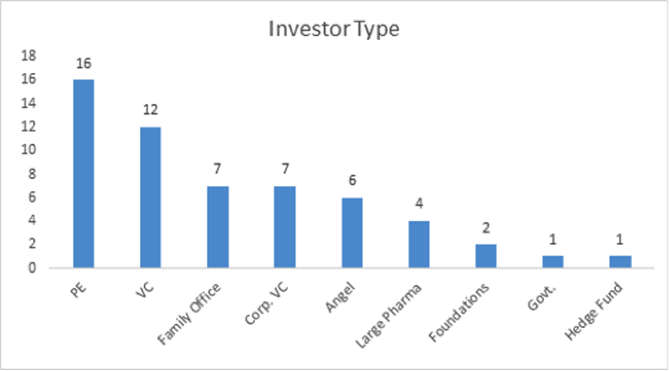
The month produced mandates from a diverse pool of investor types spread across the 9 categories seen below.

1

This chart represents the diversity of investors that LSN communicates with on a monthly basis. We frequently stress the importance of reaching out to different categories of investors that are a fit for your firm to produce greater odds of creating a dialogue, and this chart demonstrates why.

Growing Interest in Investing Globally

Another point we have discussed is the growing interest investors have in seeing deal flow on a global level and the mandates we have received last month further validate that claim.

2

As you can see, a large number of investors are looking globally, stating specifically that they are interested in reviewing and allocating to opportunities from around the world. Reaching out locally is a great way to start your campaign; however, limiting your entire campaign to investors based on geographic distance can be detrimental to success.

Medical Technology Edges out Therapeutics and Diagnostics

Sectors of Interest in mandates from the month of June also yielded what may be considered contrarian results by many in the industry.

Medical Technology actually demonstrated the strongest level of interest based on investors that we spoke to in the month of June. We have noticed however that these investors tend to have more interest in companies further along in product development as addressed by my colleague, Lucy Parkinson, in the following article.

As LSN Research continues to uncover and interview more life science investors certain trends increasingly stand out. The two largest, and arguably most important to a fundraising entrepreneur are the growing diversification of investor types with interest in the space and the increasing number of global investment mandates that these groups have.  We look forward to keeping our readership abreast to all we uncover while speaking with these groups, and plan on having more periodic reviews of our recently obtained mandates.

Investors Elucidate Medtech Preferences

10 Jul

By Lucy Parkinson, Research Manager, LSN

lucy 10*10

As highlighted in our look at the Medtech Fundraising Landscape for 2014, LSN Research contacted investors from across the medical device map.  The results show that there are more active investors in the medical device sector than in therapeutics, despite opinion to the contrary.  However, we have seen a marked difference between these two groups of investors – while therapeutic investors are more likely to be focused on early stage companies, medtech investors are distributed more evenly across a company’s lifespan.  The chart below shows the respective distributions of investors among LSN’s mandate data:

4

So when it comes to early stage companies, you may well find there is more interest in therapeutics than in devices.  However at the growth phase, you’ll find many investors taking an interest in more mature medical technology opportunities.  Many investors are only looking for companies with substantial revenues, but some we’ve spoken with also look at commercialization-stage opportunities; that is, devices that have regulatory approval and need investment to scale their manufacturing and marketing.

Here are some of the reasons that investors have given for their interest in later-stage medical device opportunities:

  • “We’ve had success investing in healthcare.”  These investors have previously invested in clinics and healthcare providers, and this familiarity with the marketplace gives them confidence that they can make the right bets in the medical device space.  Some of these investors may never have backed a device company before, but they’re receptive if the bottom line is right. LSN Research hears this perspective from family offices and from healthcare-focused PE funds. 
  • “We don’t have the capacity to invest in drug development.”  These investors are eager to invest in healthcare technologies and they’re prepared to put commercialization capital into a new product, but the capital requirements of late-stage therapeutics are beyond them. Smaller PE funds elucidate this approach.
  • “We know the business, but we don’t have a medical expert on staff.”  These investors have expertise in other relevant sectors (such as niche manufacturing or sales) but they do not feel they can accept scientific or regulatory risks.  They need assurance from a regulator that the product is scientifically sound, but with that taken care of they’re interested in applying their other skills to the early growth of a device company. Experienced generalist PE firms state this angle on the medical device sector.
  • “We’re industry agnostic, but here are our other requirements.”  These generalists are looking for companies that match fixed requirements such as a revenue figure, or a headquarters in the investor’s region.  While they might be willing to invest early, they will want to see evidence that your product has market traction.  They’re willing to consider any industry provided the company’s within their ballpark. Many debt funds that provide financing for medical device companies fit this description, as do many regional PE firms. 

LSN Research consistently found that many growth investors who, on the surface, don’t have a life science focus are in fact open to medical device opportunities.  If you’re looking for funding for a device, you never know who it might be worth speaking to, so cast your net wide.