Archive | Redefining Every Stage Investments (RESI) RSS feed for this section

RESI Double Angel Panel Announcement  

18 Dec

By Tom Crosby, RESI Conference Manager, LSN

Tom 2Angels represent an extremely important pool of capital for a fundraising entrepreneur, especially now that they have begun syndicating and participating in larger financing rounds. To help RESI attendees better understand how to receive an allocation from an angel, LSN has assembled two top panels of accredited investors — one session focused on biotech investments and the other on medical device opportunities.

The Biotech Angel Groups sessions will be moderated by Bill Whitaker, Managing Director, Co-Chair Life Science Section, Golden Seeds, and will hear from:

Brian Frenzel, Member, Band of Angels

Karl Handelsman, Member, Board of Directors, Life Science Angels

Bernie Rudnick, Managing Director, Mid Atlantic Bio Angels

Barbara Nelsen, Member, Sofia Angels

The Medtech Angel Groups sessions will be moderated by Allan May, Managing Director, Life Science Angels, and will hear from:

Karen Drexler, Founder, Astia

Randy Barko, Member, Hub Investment Management Group

Steven Pollitt, Board Member, Sand Hill Angels

Richard Koffler, Board of Directors, Tech Coast Angels

These sessions will help scientist entrepreneurs understand the perspective of the angel. Angels will explain their investment preferences, and those of their respective syndicates (when angels band together). What sectors are most attractive to angels? How does an angel group filter, evaluate and parse the plethora of deals that surface?

Other topics of discussion will include their criteria for management team, stage of technology, and whether there is a preference for regional or global firms. What is the difference in presenting to an angel group versus a traditional one-on-one investor meeting — and how does the vetting process work? If you’re looking for angel capital to move your technology forward, don’t miss this session of expert insight at RESI.

Diagnostic Landscape: Imaging and In Vitro Technologies

11 Dec

By Shaoyu Chang, MD, MPH,  Senior Research Analyst, LSN

Shaoyu 10*10The global diagnostics market continues to show robust growth, fueled by aging populations and rising awareness of the value of preventive care. In our recent series of articles, we’ve explored the therapeutic space for cardiovascular diseases, neurology, and oncology. This week, we dive into the diagnostics innovation and investor landscape.

Two major categories stand out in this space: diagnostic imaging devices and in vitro diagnostics (IVD). Diagnostic imaging devices claimed a global market of US$25.7 billion in 2013, with an estimated annual growth rate of 5.7% for the coming six years.[i] More impressively, IVD claimed a US$47.3 billion global market in 2013, with an annual estimated growth rate of 7.3%.[ii]

Practitioners use a variety of diagnostic imaging technologies, such as X-rays, CT scans, MRIs, PET scans, and ultrasounds, to rapidly determine a medical issue with minimal discomfort for patients. A wide spectrum of IVD technologies, such as point-of-care tests, molecular diagnostics, and hematology tests, can be used to detect or monitor various disease indications in both healthcare and home-care settings.

The LSN company database is currently tracking more than 2,500 diagnostic assets globally. As shown in Figure 1, 86% of the imaging assets that we track are approved and on the market. These mature technologies are dominating the imaging market, so innovators are exploring new territories, such as portable and handheld imaging devices and cloud-based digital systems to process, store, and transfer medical images. By contrast, IVD shows more innovation thanks to the past decade’s advances in biology, genomics, and biomarkers for various disease areas.


Figure 1


Diagnosing infectious diseases, such as hepatitis, respiratory infections, HIV, and food-borne illnesses, has created a strong demand for diagnostic tools, which is clearly reflected by the data gathered by LSN’s research team and shown in Figure 2. Recent scientific and technical advances are bringing exciting innovations to this field. Examples include microbiome analytics and point-of-care tests that have a wide variety of applications in healthcare institutions and consumer self-care and low-resource settings.

Cancer accounts for the greatest number of assets in development. Cancer diagnostics innovation is partially fueled by personalized medicine and by companion diagnostics that use novel biomarkers to detect traces of tumor cells and differentiate cancer genotypes.

Neurology is a space with a significant amount of product development underway, led by R&D efforts in Alzheimer’s disease and brain imaging technology. Maternal health and cardiovascular diseases have less innovation. Although these areas may present opportunities for innovative companies, they will face a market saturated by well-established products.


2

Figure 2


As shown in Figure 3, the U.S. leads other counties in terms of the number of diagnostic companies. Although Western European countries play significant roles in diagnostics, China claims a strong second place with a robust diagnostic industry. As discussed in a previous article, an increasing number of large diagnostic companies in established economies are seeking to penetrate emerging markets though M&A activity. The global diagnostic landscape is changing rapidly, and it is fascinating to watch this space evolves.


3

Figure 3


Let’s take a look at the investors in this space. LSN analysts have interviewed more than 500 investors who are interested in imaging and diagnostic devices. As shown in Figure 4, many traditional investors, including venture capitalists, private equity firms, and angel groups, find diagnostic devices attractive because of their short regulatory pathway to commercialization. Pharmaceutical corporate venture capital funds are looking for diagnostic assets to diversify their portfolios. Interestingly, several large corporations in industries other than life science, such as telecommunications and industrial supplies, are also considering using diagnostics and analytics as an entry point to the healthcare arena.


4

Figure 4


Contrary to the common notion that most investors are regional and only invest in nearby assets, globalization is occurring in the diagnostics investment space, as shown in Figure 5.


Figure 5


Global investors—investors who are active in two or more regions—are leveraging their expertise and extensive network to identify and develop new assets in emerging markets. In addition to raising capital, companies that partner with global investors can sometimes receive assistance navigating regulatory systems and gain a stepping stone into unknown markets. Cross-regional cooperation has become increasingly commonplace, and we expect the trend to continue in the future.

[i] Medical Imaging Systems Market (Portable, Handheld X-Ray Devices, CT, Ultrasound, Open and Closed MRI and Nuclear Imaging, Analog, DR, CR, 4D and 5D, Low Slice, Medium Slice, High Slice Scanners) Analysis and Segment Forecasts to 2020, Grand View Research, June 2014.

[ii] Analysis of the Global In Vitro Diagnostics Market, ReportLinker, July 2014.

Panel announcements: Preclinical Investors and Healthcare IT

11 Dec

By Tom Crosby, RESI Conference Manager, LSN

PrecliTom 2nical Investors:

Attracting investors with interest in preclinical technologies has been a strong suit for the RESI Conference in the past, and the event’s premier on the West Coast is no exception. By reaching out to its deep roster of contacts from this investment stage, in which all investor types are now getting involved, LSN has brought together a unique mix of investors for the upcoming Preclinical session.

Moderated by Rajesh Rangantahn, Director of the Office of Translational Research for the NINDS, the audience will hear from:

Michael Recny, CEO, Calvert Holdings

Natalie Dakers, President and CEO,  CDRD

David Berry, Partner, Flagship Ventures

Ron Demuth, President, Torrey Pines Investments

If you’re looking for your first round of investment post-R&D, this diverse group will help you understand the nuances of positioning your company, how to approach the initial correspondence, and which classes of investors are currently interested in what types of technologies. If you’re looking to begin building a strong investor pipeline to get your company off the ground, this session is a good place to start.

Healthcare IT:

Healthcare IT has been a hot topic for investment recently, to say the least. From hospitals and healthcare providers implementing new electronic healthcare systems, to companies creating devices built to track your every move, it is clear that healthcare IT and big data are going to be huge players in life science world going forward.

Moderated by Randy Scott, Partner, HealthQuest Capital, the audience will hear from:

Akhil Saklecha, Partner, Artiman Ventures

Rich Simoni, Partner, Asset Management Ventures

Rik Vandevenne, Director, River Cities Capital Fund

Phillip Sanger, Managing Partner, Texo Ventures

How should healthcare IT companies position themselves to look most attractive in the space? What subsegments of this space are investors currently most interested in? What does the future of healthcare IT have in store? All these questions and more will be answered on January 13th. If you are a fundraising executive working in Healthcare IT, this session will provide you with tactical advice on how best to move forward.


Partnering Based on Fit!

4 Dec

By Alejandro Zamorano, VP of Business Development, LSN

Alejandro 10*10

LSN announces RESI 4 Partnering Platform has gone live.

The sheer quantity and diversity of investors attending RESI, paired with the power of the RESI Partnering Platform, means the RESI conference is the right place for early stage life science companies to meet investors that are a fit.

LSN has partnered with Meeting Mojo, an emerging partnering portal developer based in the UK. RESI attendees can use the system to find other attendees who are a fit for their product, development stage, and other relevant factors.  This highly customized solution uses metatagged profiles that can be searched by the scientist entrepreneur attendees to pinpoint a specific fit for an investment mandate by one of the investment firms present at RESI. The RESI Partnering Platform provides the foundation for a one-of-a-kind partnering experience based on current investor mandates, easily matchable to the emerging biotech and medtech startups that fit the investment criteria.

RESI partnering therefore provides an opportunity for life science companies and investors to meet the right people, create compelling dialogues, and foster long-term relationships.

Oncology Landscape: Competitive Pipelines and Global Mandates

4 Dec

By Mimi Liu, Research Analyst, LSN 

mimi-10-10

The global market for cancer drugs and treatments is truly massive and continues to grow. According to the IMS Institute for Healthcare Informatics, global oncology spending hit $91 billion in 2013, and it is growing at a 5% clip annually.[1] In previous articles, we’ve analyzed new products and investor interest in the cardiovascular and neurology sectors. Today, let’s look at what LSN data shows in the oncology sphere.

LSN tracks more than 4,500 therapeutic assets for the neoplasms, cancer, and oncology areas, including 1,025 assets that are in the preclinical stage, 2,202 assets that are in the clinical stage, and 517 assets that are on the market. For some of these therapeutics, LSN is also able to track the type of cancer they target. Although this is a subset of the total, it is useful to analyze. (See Figures 1, 2, and 3.)

figure1

Figure 1

Figure2

Figure 2

Figure3

Figure 3

Several types of cancer, such as breast, prostate, and pancreatic, are clearly some of the hottest and most competitive areas, representing large patient populations and substantial unmet medical needs. Companies developing therapeutics for these cancers likely find it more challenging to differentiate themselves from competitors than do companies targeting other cancers. It is interesting to note that certain disease areas, such as solid tumors and brain cancer, have attracted significant R&D efforts in the preclinical and clinical stages, yet there are relatively few available products on market. This may reflect a large prospective market but significant R&D challenges.

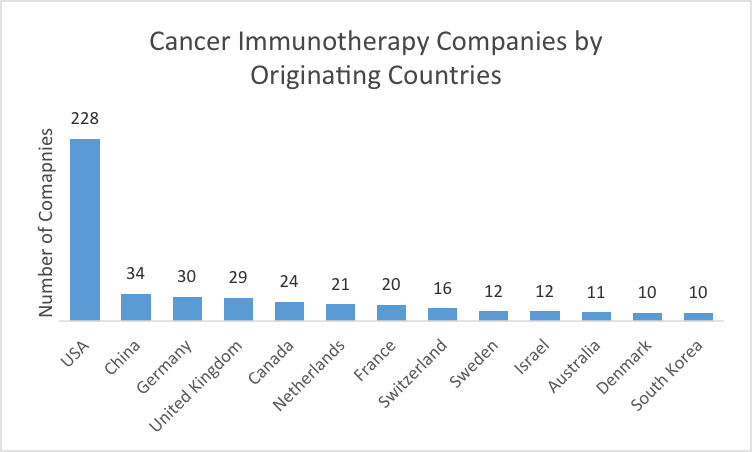
Companies targeting cancer therapies are spread across the globe. The U.S. has the largest number overall, while the UK, Germany, and France are the European countries with the most. North America and Europe are the two areas with the highest concentration of cancer therapeutics, while several Asian countries, such as China, Japan, and South Korea also have a significant number. (See Figure 4.)

Figure4

Figure 4

With the growing number of cancer therapies and the expansion of the cancer market, there are a large number of investors with this interest. LSN has interviewed biotech investors across a wide range of categories who are interested in funding companies targeting neoplasm, cancer, and oncology therapeutics. (See Figure 5.)

Venture capital is the largest group among the ten categories of investors. Private equity firms, angel groups, and family offices also show a high interest in cancer companies. When looking for funding, companies should keep an eye on various categories of investors and the development stage they are interested in.

Figure5

Figure 5

An analysis of investors’ exposure preference by region is strikingly similar to the regional distribution of oncology companies. (See Figure 6.)

Figure6

Figure 6

Most investors are looking to allocate their capital to U.S.-based companies, which corresponds to the concentration of assets in the country. Although investors are attracted to established markets in North America and Europe, a significant portion will consider emerging markets in Asia and Latin America. Since the oncology investor landscape is rapidly shifting, it is important to note that global investors are the third largest group of investors.

For fundraising entrepreneurs, keeping track of all the different types of investors in an indication like this given the global nature of so many investors today, is no small task. However limiting your research and outreach to only a few classes of investors or just within your local geography will undoubtedly hurt your chances for a successful fundraise. In an indication with as much competition as oncology, investors have to focus on technology and management in order to be successful. More and more they are looking overseas for the best possible opportunities  and as an entrepreneur, you should be doing the same.

[1] “Cancer-drug market zooms toward $100B, thanks to costly targeted therapies,” May 6, 2014, FierceMarkets.com.

Double RESI Conference Panel Announcement: Big Pharma & Diagnostic Investors

4 Dec

By Tom Crosby, RESI Conference Manager, LSN

Tom 2This week, LSN announces two panels for the upcoming Redefining Early Stage Investments Conference: Big Pharma & Large Biotech, and Diagnostic Investors.

Panel Announcement #1: Big Pharma

Panelists will discuss in-depth the key motivators behind big pharma’s shift towards an early stage strategy as a way to fill the gaps in their pipelines. What indication areas are currently most sought after? How does an early stage entrepreneur interface with business development executives from pharmaceutical companies? LSN’s Big Pharma RESI Panelists will shed light on these questions and more.

Moderated by Tomas Landh, Director, Novo Nordisk, the audience will hear from:

Kevin Lynch, VP, Search and Evaluation, Abbvie

Imran Nasrullah, Director, Innovation Sourcing, Boehringer Ingelheim

Thorsten Melcher, Senior Director, New Ventures & Partnerships, J&J Innovation

Shafique Virani, Global Head, Partnering (Neuro), Roche / Genentech

Hear from big pharma executives as they explain how they engage with early stage startups, and how they like to be contacted. The speakers will help the audience understand their timeline for contact, and give advice on how to create a dialogue that leads to a relationship and an eventual alliance. If you need to understand the timeframe and limitations of how big pharma corporate works, this expert session is crucial for you to attend.

Panel Announcement #2: Diagnostic Investors

In addition to drug developers and medical device engineers, LSN also welcomes diagnostic startups to RESI, and for the first time, RESI 4 will present a discussion panel exploring the challenging landscape of the diagnostics sector. The investors joining this panel are highly diverse, representing both nonprofit and for-profit interests in the diagnostics field.

These panelists will discuss what an entrepreneur needs to know about raising capital for an innovative diagnostic product. The panel will explore how to pitch a diagnostic opportunity, how to navigate the strategic challenges in diagnostics, and what will differentiate your product from the pack.

Moderated by Steven Young, President & COO, Addario Lung Cancer Institute, the audience will hear from:

Bill Cadwallader, Senior Commercialization Officer, Diagnostics, PATH

Momei Qu, Senior Associate, Baird Capital

Gary Kurtzman, Senior Vice President and Managing Director, HealthcareSafeguard Scientifics, Inc.

Nola Masterson, Founder and Managing Director, Science Futures

Life Science Nation and FreeMind Group Align In San Francisco for Early Stage Fundraising Executives

26 Nov

By Dennis Ford, Founder & CEO, LSN

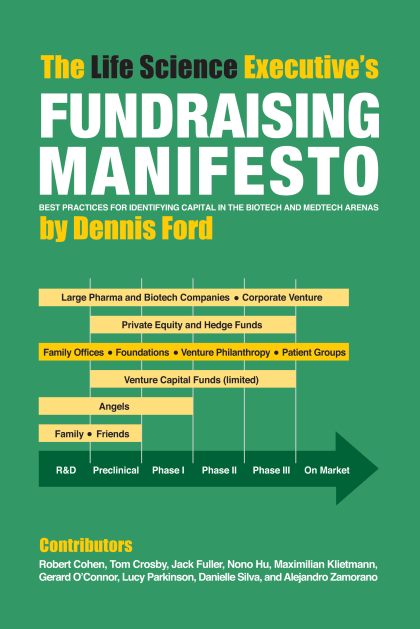
Dennis bookToday, Life Science Nation (LSN) accelerates the funding of early stage life science firms via a Match.com-like sourcing platform for private investment, making CEOs more efficient in their capital raising efforts. The FreeMind Group (FMG) specializes in assisting life science organizations secure non-dilutive funding from US Federal Agencies and Private Foundations. LSN and FMG are experts in early stage private and non-dilutive funding respectively, and this complementary expertise fully supports the early stage financing needs of life science entrepreneurs.  As both of these financing sources are vital to early-stage financing, CEOs benefit from understanding both domains:  LSN’s 10 categories of private early stage and FMG’s governmental non-dilutive funding.

LSN and FMG have been working side by side for years, and recently saw that combining both pools of attendees at their respective conferences could transform each from a one-day event into a two-day conference offering dynamic partnering and compelling financing content to the early-stage CEOs visiting San Francisco during the JP Morgan Healthcare Conference.

Dennis Ford, CEO, LSN, stated “FreeMind and LSN give scientist entrepreneurs a 360 degree view of all the funding options available today.  Both the private and governmental capital landscape has morphed over recent years and I think this is a fabulous opportunity to help early stage CEOs get up to speed on both financing options. A savvy entrepreneur will go after all the capital available to them, both non-dilutive and private.  Indeed, most early stage companies already have a hybrid of each type of funding.  It’s part of the early stage gestalt.”

Ram May-Ran, Managing Partner, FMG, explained “Raising capital is fundamentally a numbers game.  Each financing option needs to be thoroughly explored, and that means both private and non-dilutive.”  Ram went on to say that many government funders offer matching funds for private capital brought into a company.  “It makes total sense for the CEOs to investigate and become knowledgeable on all the funding alternatives as this can greatly reduce the time spent raising capital.”

LSN owns and operates the Redefining Early Stage Investments (RESI) conference series.  The next RESI will be held on January 13th in San Francisco, at the Marines’ Memorial Club and Hotel. FMG owns and operates the Non-Dilutive Funding Summit, which will be held on January 14th in San Francisco at the Nikko Hotel. By virtually connecting these two events, attendees at LSN’s RESI will automatically be registered for FMG’s Non-Dilutive Funding Summit, and in turn Summit attendees will be able to get a discount coupon to register for RESI.  Executives from each firm agree that this may become an ongoing relationship, as creating these venues for partnering and fundraising can support a groundswell to aid in the commercialization of science.

For more information on LSN and RESI:

http://www.resiconference.com/

For more information on FMG and Non-Dilutive Funding Summit:

http://www.freemindconsultants.com/10th-annual-non-dilutive-funding-summit-2/