Tag Archives: food

RESI JPM 2026 Investor Panels Announced 

16 Dec

Attendees voted with their RESI Cash alongside judges’ scores to determine this year’s winners.

By Claire Jeong, Chief Conference Officer, Vice President of Investor Research, Asia BD, LSN

Life Science Nation is pleased to announce the investor panelists for RESI JPM 2026, taking place January 12–13 during JPM Healthcare Week. Across two full days, RESI JPM will bring together active investors, strategic partners, and industry leaders for focused discussions on the funding environment, partnership strategies, and emerging opportunities across life sciences and healthcare. 

RESI investor panels are designed to provide founders and executives with direct insight from decision-makers who are actively deploying capital, forming partnerships, and shaping the future of the industry. Each panel features experienced investors and strategics sharing candid perspectives, followed by opportunities to continue conversations through RESI’s structured partnering platform. 

Investor Speakers on Day 1 (January 12)


Sharon Chan

Johnson & Johnson Innovation – JLABS Asia Pacific

Irene Cheong

A*STAR

Ansbert Gadicke

MPM BioImpact

Dushyant Pathak

Autobahn Labs

Andrew Krowne

Dolby Family Ventures

Robert Balfour

ALSA Ventures

Rick Berenson

Mass Medical Angels

Gunes Bozkurt

Beiersdorf

Jian Cao

Medtronic

Jeff Chu

Features Capital

Karen Chu

Harvest Integrated Research Organization (HiRO)

Rod Cotton

2Flo Ventures

Juan Cueva

Johnson & Johnson Innovation

Bettina Ernst

BERNINA BioInvest

Jack Florio

NuFund Venture Group

Nirdesh Gupta

Cedars-Sinai Technology Ventures

Karen Harris

Alzheimers Drug Discovery Foundation

Uplaksh Kumar

Foresite Capital

Ken Lin

ABIES Capital

Michael Loftus

PoC Capital

Brianna McDonald

Ecosystem Venture Group

Swati Mehta

25BIO

Ahmed Mousa

LAFANA

Mahesh Narayanan

Neuvation Ventures

Kenny Nova

Mid Atlantic Bio Angels

Jessica Owens

INITIATE Ventures

Jojo Platt

Corundum Neuroscience

Steven Saltzstein

FORCE Family Office

Garth Smith

Ontario Brain Institute

James Spann

Boyd Street Ventures

Jessica Tam

Baxter Healthcare

Lee Chuan Teck

Enterprise Singapore

Varun Turlapati

Chaanakya Capital 

Investor Speakers on Day 2 (January 13)


Friedemann Janus

Bayer

Jiaping Gu

Takeda Ventures

David Berry

Averin Capital

Ekaterine Kortkhonjia

Johnson & Johnson Innovation

Nick Naclerio

Illumina Ventures

Eric Schaefer

March of Dimes

Marc Appel

Pacific Bridge NY

Anjan Aralihalli

Raya Therapeutic

Yaron Daniely

aMoon Fund

Miriam Dong

ID3 Ventures

Cristina Escoda

Tachyon Ventures

Yinghong Gao

Viva BioInnovator

Gary Gershony

BayMed Venture Partners

Tom Gibbs

Debiopharm Innovation Fund

Rohit Jain

HBS Alumni Angels of Northern California

Sai Jasti

Bayer

Anula Jayasuriya

Kidron Capital

Gautam Kainth

TCP Health Ventures

Jin Lee

Oxonian Ventures

Brian Miglionico

Agios Pharmaceuticals

Ralph Morales III

Aquillius Ventures

Stephanie Oestreich

Myeloma Investment Fund

Donna Parr

Cross-Border Impact Ventures

Bibi Sattar Marques

Buenavista Equity Partners

Takehiko Sawabe

Beyond Next Ventures

Venkat Srinivasan

Innospark Ventures

Anthony Vallance-Owen

We Venture Capital

Chensu Wang

Yonjin Venture

Chris Yoo

Xcellerant Ventures

Qing Zhang

LDV Partners

Register for RESI JPM 2026 

RESI JPM 2026 offers more than panels. Attendees gain access to curated investor meetings through RESI’s partnering system, targeted networking, and programming designed to support meaningful connections during one of the most important weeks in healthcare investment. 

Register for RESI JPM 2026

Innovator’s Pitch Challenge Winners Announced at RESI London 2025 

9 Dec

Attendees voted with their RESI Cash alongside judges’ scores to determine this year’s winners.

By Claire Jeong, Chief Conference Officer, Vice President of Investor Research, Asia BD, LSN

Life Science Nation is pleased to announce the winners of the Innovator’s Pitch Challenge (IPC) at RESI London 2025. This year’s competition featured 26 participating companies, each showcasing early-stage technologies to a panel of experienced investors and an audience of global attendees. 
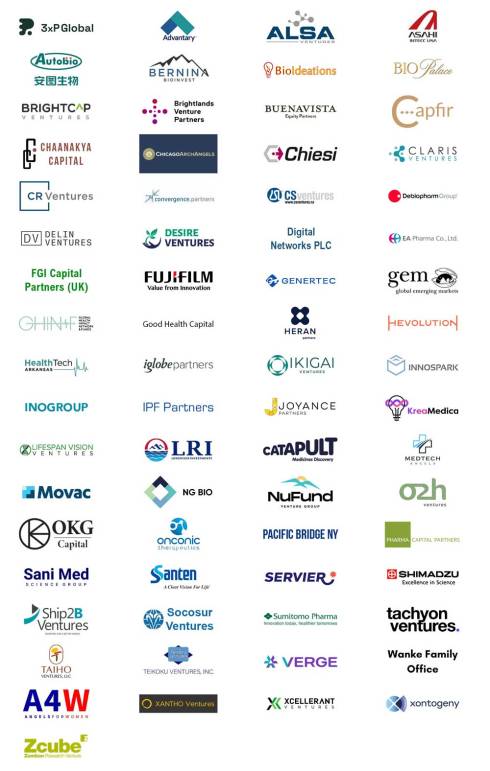
The IPC remains a cornerstone of every RESI conference, allowing founders to present to a coordinated group of investors who provide interactive questions and valuable feedback. Attendees cast votes using their RESI Cash, which was combined with judges’ assessments to select this year’s top companies. 

Congratulations to the RESI London 2025 IPC winners: 

These companies stood out among a highly competitive group of innovators spanning therapeutics, medical devices, diagnostics, and digital health. 

Congratulations, as well, to the companies from each session who received the highest judges scores:  

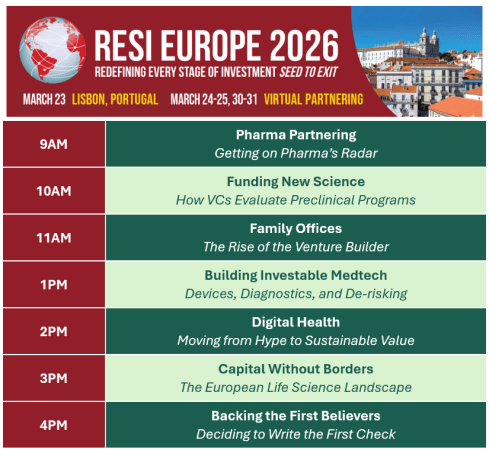
Looking ahead: Applications are now open for Life Science Nation’s next European conference, taking place in Portugal on March 23, 2026. Companies interested in pitching can apply here. 

Apply to Pitch at RESI Europe

The Needle Issue #20

9 Dec
Juan-Carlos-Lopez
Juan Carlos Lopez
Andy-Marshall
Andy Marshall

By our count, there are now 15 bi-specific antibodies approved by the US Food and Drug Administration (the last peer-reviewed count from 2024 we found chalked up 13). This year has been a bumper year for bi-specifics — antibodies that recognize two molecular targets. Several of 2025’s largest deals have involved assets in this class, including Genmab’s $8 billion acquisition of Merus in September and Takeda’s $11.4 billion splurge on an anti-Claudin18.2 bi-specific antibody and antibody-drug conjugate (ADC) from Innovent Biologics.

Not only is this trend likely to continue, but we predict that it will expand to encompass tri- and multi-specific antibodies, the development of which is an area of intense research activity. Just a couple of weeks ago, South Korea’s Celltrion clinched a $155 million (biobucks) deal for TriOar’s tri-specific ADCs for cold tumors. And at the SITC meeting last month (which we covered in issue 19) tri-specifics were highlighted by no less than five companies: Nextpoint (B7-H7 x CD3 x TMIGD2), CrossBow (cathepsin G peptide x CD3 x CD28), TJ Biopharma (CDCP1 x CD3 x 4-1BB), Biocytogen (DLL3 x CD3 x 4-1BB) and Radiant Therapeutics (potentially tri-specific/trivalent).

Building an antibody that recognizes three or more targets at the same time is not trivial, though. There are multiple technical, clinical and regulatory hurdles that developers need to overcome before the antibody reaches patients. Why, then, go through the trouble of creating a multi-specific antibody when a bi-specific may show clinical benefit? As it turns out, there are several reasons why a multi-specific antibody may be worth the effort.

First, as tumors often escape by downregulating or mutating a single target epitope, a multi-specific antibody may reduce the likelihood of escape by simultaneously targeting multiple tumor antigens. Second, multi-specifics could increase safety and reduce toxicity of a therapy. For example, a multi-specific antibody can be designed to require co-expression of two or more antigens on the same cell to bind effectively. Healthy cells expressing only one antigen would be spared, thereby reducing off-tumor toxicity. Similarly, targeting multiple mechanisms with a single antibody may reduce the need to use several separate drugs, simplifying dosing and reducing risks for patients. Third, and perhaps most important, a multi-specific antibody can simultaneously block several disease pathways, yielding synergistic effects that a bi-specific might not achieve. In solid tumors, for example, tumor heterogeneity, limited immune-cell infiltration and an immunosuppressive microenvironment often result in therapeutic failure. Multi-specific antibodies could combine tumor targeting, immune-cell recruitment and checkpoint modulation in a single molecule.

Perhaps the best example of this comes from the field of T-cell engagers (TCEs). A tri-specific antibody can incorporate not only tumor-cell binding and CD3 engagement, but also a co-stimulatory domain, such as CD28. This can boost T-cell activation, persistence and potency more than a bi-specific that only binds to CD3.

In this regard, a recent paper in PNAS is an excellent example of the power of the approach. A research team from EvolveImmune Therapeutics reports on the development of EVOLVE, a next-generation TCE that integrates CD3 binding with CD2-mediated co-stimulation to enhance T-cell activation, durability and tumor-killing capacity, while avoiding target-independent toxicity.

Conventional CD3-bi-specific TCEs activate T cells through a stimulation signal but often fail to provide the complementary co-stimulation necessary for sustained effector function. This can result in T-cell dysfunction, reduced persistence and limited clinical durability. To address this, Jeremy Myers and his colleagues systematically compared multiple costimulatory pathways and identified CD2 as a superior target owing to its broad expression on naïve, activated and exhausted CD8⁺ T cells, and its sustained expression within tumor-infiltrating lymphocytes.

The team engineered tri-specific antibodies that fuse a CD58 extracellular domain (the natural CD2 ligand — Lymphocyte Function-Associated Antigen 3;LFA-3) to affinity-tuned CD3 binders within an IgG-like format. They showed that integrated CD2 co-stimulation substantially improves T-cell viability, proliferation, cytokine production and cytotoxicity across tumor types.

When optimizing the molecule, they found that CD3 affinity must be attenuated: high-affinity CD3 domains cause target-independent T-cell activation and cytokine release (superagonism), whereas intermediate-affinity variants retain potent tumor-directed killing with reduced off-target activation.

The EVOLVE tri-specifics outperformed matched bi-specifics targeting HER2, ULBP2, CD20 and B7-H4, with increases up to >50-fold in potency, depending on the target. The optimized tri-specifics also showed superior tumor control in vivo, achieving durable tumor regression in humanized mouse models even after cessation of the treatment.

Even though tri- and multi-specific antibodies could offer clear advantages over bi-specifics, they are not without problems. From the technical standpoint, multi-specifics combine multiple binding specificities and often non-natural architectures. This feature increases complexity at every step from discovery to manufacturing. The assembly of IgG-like multi-specifics can result in heavy/light and heavy/heavy chain mispairing leading to heterogeneous products. Although antibody engineers have come up with strategies to address this issue, each solution adds constraints to developability.

Multi-specific antibodies can also have lower expression, cause more host-cell stress and require more advanced cell-line engineering or multi-vector expression systems. Moreover, downstream purification often needs additional steps to separate mis-paired species. Similarly, multi-specific antibodies are often less stable, more aggregation-prone, and more sensitive to formulation conditions, impacting shelf life and immunogenicity risk.

It is also important to show identity, purity and functional activity for each specificity and for the multi-specific activity (that is, simultaneous binding, cell-bridging). So, establishing robust potency assays is often the greatest challenge. What is a good model system to design a development candidate going after several targets at the same time? With each additional binder, complexity in discovery and development increases.

From the clinical standpoint, although multi-specifics can potentially be safer than bi-specific antibodies, as we mentioned above, other toxicological risks exist.

TCEs have been known to trigger cytokine-release syndrome, neurotoxicity, or unexpected tissue toxicity if targets are expressed on normal tissues. First-in-human dosing strategies are therefore critical. Moreover, multi-specifics may have non-linear pharmacokinetics (target-mediated clearance for each target), and dual-target engagement can alter distribution and half-life; selecting a safe, effective dose requires integrated PK/PD modeling and biomarker strategy.

And the headaches don’t stop there. Efficacy of a multi-specific may depend on co-expression of two or more targets. Stratifying patients may therefore complicate trial enrollment and endpoint definition, not to mention that it may be necessary to develop companion diagnostics (already expensive and complex for conventional monoclonal antibodies). And related to this point, when multiple targets are engaged, it can be hard to know which specificity caused an adverse event, complicating risk–benefit evaluation and mitigation.

Finally, from the regulatory perspective, although expectations are still evolving, agencies expect a pharmacological package that reflects multi-specific mechanisms, particularly with regards to toxicology. Regulators routinely require robust control strategies to ensure product consistency. Again, this is going to be more complicated for multi-specifics because small changes in manufacturing can alter pairing or potency.

Multi-specific antibodies are gaining momentum. They represent a potentially powerful technology, but many questions still surround their development. Success may depend on striking the right balance between choosing the appropriate therapeutic indication, identifying the simplest effective format, heavy upfront developability and analytical work, and early interactions with regulators to align on pre-clinical packages.

You are Invited! Join Kansai Life Science Accelerator Program (KLSAP) Demo Day at RESI JPM 2026 

2 Dec

By Claire Jeong, Chief Conference Officer, Vice President of Investor Research, Asia BD, LSN

Join us for a special showcase of Japan’s most promising early-stage life science innovators at the KLSAP 2025 Demo Day, presented by the Kobe Biomedical Innovation Cluster (KBIC). This dynamic session will feature three finalists from the Kansai Life Science Accelerator Program alongside eight KBIC startups and alumni. Companies will deliver focused pitches highlighting new advances in therapeutics, medical platforms, diagnostics, and digital health, followed by live Q&A with global investors.

Hosted during RESI JPM 2026, this session is an excellent opportunity for investors, BD teams, and innovation scouts looking to connect with high-potential Japanese technologies poised for global expansion.

📅 January 13, 12:00–2:00pm PST
📍 Golden Gate C3 Room, Marriott Marquis San Francisco

Agenda: 
12:00–12:03 Opening – KLSAP Overview


12:03–12:45 KLSAP 2025 Demo Day 
Featuring 3 Finalist Companies (7 minute pitch + 6 minute Q&A with investor panel) 

C-Biomex GeneMedicine ixgene

12:45–12:50 KLSAP 2025 Demo Day Closing – KBIC Introduction 


12:50–1:53 KBIC Startups and Alumni Speed Pitches 
Featuring 8 startups (5 minute pitch) 

aceRNA-Technologies Celaid CellFiber
CynosBio FerroptoCure linqmed
quadlytics

1:53–2:00 KBIC Session Closing 

RSVP to Attend

The Needle Issue #19

25 Nov
Juan-Carlos-Lopez
Juan Carlos Lopez
Andy-Marshall
Andy Marshall

Although therapeutic antibodies represent a $160 billion-dollar annual market and comprise a third of all approved drugs, discovering new antibody molecules remains a labor-intensive process, requiring slow experimental approaches with low hit rates, such as animal immunizations and or the panning of phage- or yeast-displayed antibody libraries. The drug hunter’s dream would be to design an antibody to any target by simply entering information about that epitope into a computer. Now that dream is one step closer with a recent proof of principle peer-reviewed paper published in Nature on work disclosed last year from the team of 2024 Nobel Laureate David Baker. Baker and his colleagues at the University of Washington introduce the first generalizable machine-learning method for designing epitope-specific antibodies from scratch without relying on immunization, natural antibody repertoires, or knowledge of pre-existing binders.

Unlike small-molecule drug development, which has benefitted from an explosion of interest in the use of machine-learning models, in-silico design of antibody binders has lagged far behind. One reason for this is the paucity of high-resolution structures of human antibody–antigen pairs—currently only ~10,000 structures for 2,500 antibody-antigen pairs have been lodged in SAbDab (a subset of the RCSB Protein Data Bank). Most of these structures are soluble protein antigens, but there’s little data to model antibody binders to GPCRs, ion channels, multipass membrane proteins and glycan-rich targets, which are of most commercial interest. Overall, the antibody–antigen structural corpus is orders of magnitude smaller, noisier and narrower than that available for small molecules, lacking information on binding affinities and epitope competition maps via PDBBind/BindingDB/ChEMBL.

For these reasons, most companies have focused on machine learning prediction of developability properties—low aggregation, high thermostability, low non-specific binding, high solubility, low chemical liability/deamidation and low viscosity—for an antibody’s scaffold, rather than in-silico design of the six complementarity determining-regions (CDRs) on the end of an antibody’s two binding arms.

Even so, several recently founded startups have claimed to be using machine-learning models to predict/design antibody binders from scratch. These include Xaira TherapeuticsNabla BioChai Discovery and Aulos Bioscience.

Xaira debuted last year with >$1 billion in funding to advance models originating from the Baker lab. Nabla Bio also raised a $26 million series A in 2024, publishing preprints in 2024 and 2025 that describe its generative model (‘JAM’) for designing VHH antibodies with sub-nanomolar affinities against the G-protein coupled receptor (GPCR) chemokine CXC-motif receptor 7 (CXCR7), including several agonists. In August, Chai announced a $70 million series A financing based on its ‘Chai-2’ generative model disclosed in a preprint that details de novo antibodies/nanobodies against 52 protein targets, including platelet derived growth factor receptor (PDGFR), IL-7Rα, PD-L1, insulin receptor and tumor necrosis factor alpha, with “a 16% binding rate” and “at least one successful binder for 50% of targets”.

Finally, Aulos emerged with a $40 million series A in 2021 as a spinout from Biolojic Design. This program has generated computationally designed de novo CDR binders with picomolar affinities for epitopes on HER2, VEGF-A, and IL-2. The IL-2 antibody (imneskibart; AU-007)—designed to selectively bind the CD25-binding portion of IL-2, while still allowing IL-2 to bind the dimeric receptor on effector T cells and natural killer cells—reported positive phase 2 results in two types of cancer just last week. Absci, another more established company, has also been developing de novo antibodies, publishing a generative model for de novo antibody design of CDR3 loops against HER2, VEGF-A and SARS-CoV-2 S protein receptor binding domain.

Overall, though, computational efforts have largely optimized existing antibodies or proposed variants once a binder already exists. Recent generative approaches have often needed a starting binder, leaving de novo, epitope-specific antibody creation as an unmet goal. The Baker paper now provides a generalizable, open-source machine-learning approach that can find low nanomolar antibody binders to a wide range of targets.

To accomplish this task, the authors use RFdiffusion, a generative deep-learning framework for protein design, extending its capabilities by fine-tuning it specifically on antibody–antigen structures. Their goal was to enable the in-silico creation of heavy-chain variable domains (VHHs), single-chain variable fragments (scFvs), and full antibodies that target user-defined epitopes with atomic-level structural accuracy.

Their approach integrates three major components: backbone generation with a modified RFdiffusion model, CDR sequence design via the algorithm ProteinMPNN, and structural filtering using a fine-tuned RoseTTAFold2 predictor (the authors note that improved predictions can now be obtained by swapping out RoseTTAFold2 for AlphaFold3 developed last year by Google Deepmind and Isomorphic Labs). The refined RFdiffusion model can design new CDRs while preserving a fixed antibody framework and sampling diverse docking orientations around a target epitope. The resulting models generalize beyond training data, producing CDRs unlike any found in natural antibodies.

Baker and his colleagues created VHHs against several therapeutically relevant targets, including influenza H1 haemagglutinin, Clostridium difficile toxin B (TcdB), SARS-CoV-2 receptor-binding domain, and other viral or immune epitopes. High-throughput screening via yeast display or purified expression led to the identification of multiple binders, typically with initial low affinities in the tens to hundreds of nanomolar range. Cryo-EM confirmed near-perfect structural agreement between design models and experimental complexes, particularly for influenza haemagglutinin and TcdB, demonstrating atomic-level accuracy across the binding region and the designed CDR loops. To enhance affinity, the authors used OrthoRep, an in-vivo continuous evolution system, for the affinity maturation of selected VHHs. The affinity of the resulting VHHs improved by roughly two orders of magnitude while retaining the original binding orientation.

Baker and his team further challenged their method with the more difficult problem of de-novo scFv design, which requires simultaneous construction of six CDR loops across two amino acid chains. The team introduced a combinatorial assembly strategy in which heavy and light chains from structurally similar designs were mixed to overcome cases where a single imperfect CDR would compromise binding. This enabled the discovery of scFvs targeting the Frizzled epitope of TcdB and a PHOX2B peptide–MHC complex. Cryo-EM validation of two scFvs showed that all six CDR loops matched the design model with near-atomic precision.

Future work is needed to extend de novo antibody prediction via this method to tougher target classes, such as membrane proteins. Clearly, modeling across all six CDR loops and the heavy and light chains remains a hard problem; indeed, the paper’s marquee result was designing a single scFv where all six CDRs matched the designed pose at high resolution; more generally, scaling reliable heavy- and light-chain co-design beyond a few cases remains an open engineering challenge that future methods will need to solve. For the field to gather momentum, benchmarking efforts like the AIntibody challenge will be needed, together with public efforts to create datasets of negative binding data, akin to those described in a paper published earlier this year.

Overall, the Baker paper is seminal work that establishes a practical and accurate approach to designing epitope-specific antibodies from scratch. It represents a major advance in the development of therapeutic antibody discovery.

RESI London Innovator’s Pitch Challenge Finalists 

18 Nov

By Claire Jeong, Chief Conference Officer, Vice President of Investor Research, Asia BD, LSN

The Innovator’s Pitch Challenge showcases early-stage companies developing breakthrough technologies across key sectors of life sciences.

The Innovator’s Pitch Challenge (IPC) returns to RESI London with a full lineup of pioneering startups presenting across multiple themed sessions. Each finalist will pitch to panels of relevant investors and industry leaders, gaining practical feedback and creating valuable connections with partners actively seeking new technologies. The IPC provides fundraising companies with a platform to elevate their visibility and engage with a global network of investors and strategics.

If you are attending RESI London, make time to see these pitches and meet the founders throughout the day. Delegates participating in partnering can also schedule one-on-one meetings with the finalists. Full event and registration details are available at resiconference.com/resi-london.

Meet the RESI London Innovator’s Pitch Challenge Finalists

Session 1 | 9:00 – 10:00 AM | Therapeutics

Session 2 | 10:00 – 11:00 AM | Diagnostics Tools & Platforms

Session 3 | 11:00 AM – 12:00 PM | Therapeutics

Session 4 | 1:00 – 2:00 PM | Therapeutics & Medical Devices

Session 5 | 2:00 – 3:00 PM | Therapeutics

Session 6 | 3:00 – 4:00 PM | Medical Devices

Session 7 | 4:00 – 5:00 PM | R&D and Enabling Technologies

Register for RESI London

From Lab to Market: Why Life Science Companies Are Drawn to Singapore 

12 Nov

By Claire Jeong, Chief Conference Officer, Vice President of Investor Research, Asia BD, LSN

LSN is proud to announce our partnership with Enterprise SG for RESI JPM 2026, to foster meaningful conversations on global life science innovation, investment and cross-border collaboration. Learn how Singapore is a dynamic launchpad for innovation and home to cutting-edge startups ready to collaborate on your next breakthrough. Join us at our upcoming panel on January 12 to find out more! 

As global healthcare challenges intensify, innovative biomedical technologies from Asia are stepping up to drive change, translating life science research into real-world solutions. Increasingly, investors, corporates, startups, and healthcare systems around the world are seeing the urgency in bridging the East and West to improve healthcare outcomes and deliver value-based care.

Singapore, located at the heart of Asia, is a dynamic hub for biomedical innovation, driven by a strong network of global investors, researchers, mentors, and innovators. With decades of sustained government investments and a robust talent pipeline from world-class universities and research institutes, it is home to over 500 biomedical and medtech companies. The ecosystem has attracted venture capitalists and venture builders like MPM BioImpact, Polaris Partners, and Flagship Pioneering, as well as global pharma leaders such as Pfizer, Roche, and Johnson & Johnson. These players work closely with government agencies, like Enterprise Singapore, that drive startup development, provide patient funding, expertise, infrastructure, and networks crucial for producing globally competitive solutions.

Singapore’s strategic position as a bridge between Asian and global markets enables it to play an outsized role in driving biomedical advancements. This works both ways, as a gateway for global companies to access the growing opportunities in Asia, and as a springboard for regional companies to expand worldwide. For example, through partnerships with healthcare organisations like Cedars-Sinai and Mayo Clinic in the US, Enterprise Singapore supports Singapore startups to test and scale their solutions in overseas markets, facilitating a bi-directional flow of innovation to improve healthcare for communities.

Join Enterprise Singapore at the ‘Asia Cross Border Investments Panel’ to explore how cross-border capital, talent, and technologies are converging to drive breakthroughs in precision medicine, innovative therapies, and next-generation diagnostics. The panel will take place on January 12, 2026, from 11:00 am to 12:00 pm at RESI JPM by LSN, held at the Marriott Marquis, San Francisco. Learn from prominent industry leaders how transcontinental partnerships, including those with Singapore, are shaping the future of healthcare innovation – from discovery to global commercialisation.

To join the conversation, please contact Claire Jeong, VP of Investor Research, Asia BD, at c.jeong@lifesciencenation.com.