Category: Redefining Every Stage Investments (RESI)
The Redefining Every Stage Investments (RESI) Conference is an ongoing conference series that provides an international venue for life science companies across Biotech, Medtech, Diagnostics and Healthcare IT and to source investors from around the globe, create relationships, and eventually, secure funding.
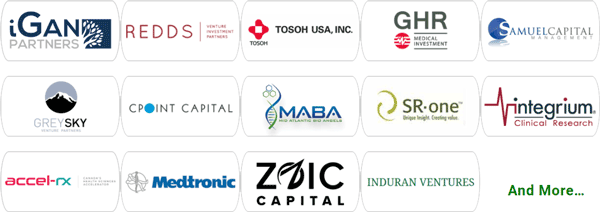
On April 10th, the 3rd annual RESI on MaRS conference will bring over 300 early stage life science investors into the Toronto ecosystem. The Life Science Nation Investor Research team thoroughly vets each of these investors, and collects detailed information on their focus sectors and investment criteria. Below are some of the firms who will be at the MaRS Discovery District in three weeks, separated by sector of interest. Click here to register for the conference.
Large corporations, especially in the pharmaceutical and biotech world, play a very important role in anchoring an innovation ecosystem. The most notable activity of these corporations is perhaps their role as an investor in and buyer of innovation – an exit partner. However, attracting and concentrating talent, and providing access to resources and experts are also vital elements of a healthy entrepreneurial community that big pharma brings with its presence. Corporate venture funds, which can serve as a vehicle for big pharma to make riskier/earlier investments, continue to find their way into more and more biotech venture rounds every year.
Toronto, looking to ramp up commercialization of its world-class research and put its name on the map as a life science powerhouse, will host the RESI conference for the third time as a part of the Toronto Health Innovation Week and welcome a panel of Corporate Venture investors. This increasingly important investor class will discuss trends in the space, their current interests, and how entrepreneurs can best prepare to pitch to and work with a group like theirs.
Moderated by Salim Teja, President, Venture Services, MaRS Discovery District, this panel will feature:
Marian Nakada, VP of Venture Investing, Johnson & Johnson
Jens Eckstein, President, SR One
Richard Osborn, Managing Partner, TELUS Ventures
Tom Gibbs, Director, Debiopharm Innovation Fund
By registering for RESI on MaRS, you’ll be able to listen to the Corporate Venture Capital panel live and learn how to position yourself to work with this type of group as well as interact with the a range of investors and entrepreneurs and experience numerous opportunities to expand your network in the life sciences.
Medical device innovation is known for being a challenging area for raising capital. Given the timelines and capital requirements involved, as well as the increasing consolidation of the major firms that make up the exit landscape for devices, entrepreneurs may find it difficult to build their investment story. However, LSN is in contact with hundreds of investors who are seeking deals in the device space, either for purely return-driven investments or for adding to a strategic pipeline. At RESI, we aim to bridge the gap between early stage device firms and investors and help entrepreneurs close those ‘last three feet’ to make deals.
At RESI on MaRS, we welcome a Medical Device Investors panel featuring experienced investors from across North America, including both strategic players and financially-driven venture investors who will explore and elucidate the world of early stage device investment from every angle. The panel will be moderated by Sam Ifergan, President & CEO, iGan Partners, and the participants are:
Katherine Parra Moreno, Vice President of Business Development, Epic Capital Management
Zishan Haroon, Chairman and General Partner, Julz Co LLC
V Kadir Kadhiresan, Vice President, Venture Investments, Johnson & Johnson Innovation
An interview with Zishan Haroon, Chairman and General Partner, Julz Co
– By Claire Jeong, ResearchAnalyst, LSN
Claire Jeong
Earlier this week, I had the pleasure of speaking with Dr. Zishan “Z” Haroon, Chairman and General Partner of Julz Co. Z has been a tremendous supporter of the Redefining Early Stage Investments (RESI) Conference Series and a frequent contributor to several of our ongoing investor panels. As many of you already know, the RESI Conference is a one-day partnering conference dedicated to early-stage life sciences technologies, from therapeutics, medical devices, diagnostics, and digital health. In fact, we have recently learned that the firm’s latest investment was in a company Z had met through RESI! In this interview, Z discusses his perspectives on his RESI experience, Julz’s most recent investment, and some tips for fundraising CEOs.
Claire Jeong: First of all, please tell us a little bit about your background.
Z Haroon: My name is Zishan “Z” Haroon and I am the Chairman and General Partner of Julz Co, an investment management firm which invests in healthcare companies internationally including the USA, Europe, and China. I am an MD, Ph.D. by education. I graduated from Duke University and initially worked in academic and pharma research. Later, I moved into venture, private equity, and corporate/business development. I have worked on helping entrepreneurs with commercialization for many years, and have been involved in transactions and operations in China for 15+ years before founding Julz.
Claire Jeong: How many RESI conferences have you attended? What was your first impression of the RESI Conference series?
Z Haroon: I have attended 5 conferences to date and found them to be a very fast-paced and active environment. The timeline of RESI is great because it allows us to go through companies we have interviewed in depth and make our decision regarding next steps and then prepare for the next event. Overall, the experience we have had with companies at RESI has been very positive.
Claire Jeong: In general, what do you think of the companies that attend RESI?
Z Haroon: There has been a constant improvement in the quality of attending companies, and our interaction with them has always been positive. In comparison to other similar events, there are more early-stage companies and we like that mix. Some conferences are therapeutics-focused, some are medical-device-focused, but at RESI there is a very good mix of all sectors and we enjoy this diversity.
Claire Jeong: What successes have you experienced through RESI?
Z Haroon: We just closed an investment in a company called PhotoniCare. This is our first successful investment in a company we’ve met at RESI. We first met the company at RESI San Diego in June 2017 and continued a great relationship that eventually led to an investment. (You can read more about this investment in-depth at http://www.julzco.com/2018/03/09/photonicare-secures-series-seed-funding.)
Claire Jeong: In your opinion, what are the greatest strengths of RESI?
Z Haroon: One of RESI’s greatest strengths is the partnering platform, which is a very approachable system for reviewing companies and scheduling meetings. You make it extremely easy for investors to attend your conferences and engage with companies. It is only a one-day event but highly efficient and a win-win for both sides.
Also, from the investor perspective, it is helpful to be able to touch base on a periodic basis with companies that we previously spoke with. This enables us to continue to build and strengthen relationships with companies. What we have found from many companies is that they are very responsive to the feedback we provide, and we find them significantly improved since our initial RESI meeting.
Claire Jeong: Do you have any suggestions for RESI?
Z Haroon: I would suggest RESI expand to other geographies, such as the Midwest. Currently, most of your events are done in the West or East coast in major biotech hubs, but we would be curious to explore technologies in different areas. Companies with innovative technologies that may not have enough bandwidth for travel would find your conferences very helpful and valuable.
RESI would also do well internationally, in regions like Europe or China. RESI’s partnering system is great for small companies, so a start-up-focused event like RESI would definitely gain a lot of international momentum.
Claire Jeong: As an active investor and partner seeking early-stage opportunities, do you have any advice you would like to give to startups?
Z Haroon: The biggest gaps we see in early-stage companies when they present to us is that they themselves are not very well caught up with their technology and business plan. Like other sophisticated investors, we get to the nitty gritty very quickly. I would encourage start-ups to do their homework: understand what they are trying to accomplish and be focused about it. If we see that the management team is not on top of the technology and commercial landscapes and are vague or elusive in answering our questions, we will likely pass on the opportunity.
The initial meeting is where you have to create the right impression about the company and the management team, educate us on the market opportunity and technology, and explain how you are seeking to scale and enter the market. Answering these questions well and leaving us with a good impression will lead to a great, long-term relationship and potential investment.
We obviously enjoy our time at RESI and it is always very exciting. Keep it up!
About Julz Co:
Julz Co is an investment management company focused on investing in early-stage healthcare companies in the area of therapeutics, medical devices, services and digital healthcare. The company has offices in Chapel Hill, North Carolina, USA and Suzhou, China. Julz invests globally in companies that have novel and proprietary technology addressing a vital market need and are driven by experienced management teams.
By Gregory Mannix, Vice President International Business Development, LSN
Life Science Nation’s Redefining Early Stage Investments (RESI) Conference series is a great opportunity to network and make connections with key players that can help move your company to the next phase. The RESI conference series, because of its unique focus and format, is by far the best opportunity for early-stage companies to meet and partner with investors and strategics. But, like everything else in life, it is competitive and it is challenging.
I have worked with many sell-side RESI attendees. Some are consistently very successful getting many good investor meetings at each and every RESI conference they attend, while others struggle to get any meetings at all.
So what is the key to success?
Clearly, your degree of success is directly proportionate to the effort you put into it. There are 4 key elements to successful partnering:
Create a compelling and complete profile for your company and yourself on the Partnering Platform
Spend time on developing an outbound meeting request message
Request as many meetings as possible
Follow up frequently
Yes, this is a big task and a lot of work over the weeks leading up to a conference, but the effort you put into partnering will determine the outcome. Let’s have a look at each key element of your partnering strategy.
PROFILE
a. Start with brief overview, similar to your “elevator pitch”, that simply introduces your company and describes what you do and what makes you special.
b. Complete all of the sections in the profile with concise information that investors can easily navigate. The sections to complete are:
Technology Overview
Alliances and Collaborations
Supporting Metrics or Evidence
Current Financing Needs
Current Investors
Current Timeline
IP Status
Management Team Highlights
Recent milestones
Personal profiles of attendees at RESI
c. Upload your logo, your website and any supporting materials for investors to review, like an investor deck and Executive Summary
OUTBOUND MEETING REQUEST MESSAGE
Make your message compelling as this is what the investor is going to see before deciding whether to look at your profile in more depth. Include the key points, without making it so long that you lose the interest of the reader. The key elements should include the following:
1. Introduce yourself, your title, and the name of your company. Although obvious, you might be surprised by how many people don’t do this.
2. Introduce Your Company. Give a brief overview of your company so that an investor can determine from the first sentence whether you are a fit for their investment mandate. Here are five key data points that are likely to affect investor fit:
a. Where your company is based
b. What sector your company is in (biotech, medtech, diagnostics, healthcare IT, etc.)
c. The indication you are treating or problem you are trying to solve
d. Your product’s stage of development
3. Key Value Proposition/Elevator Pitch. Use the next part of the email to describe the key value proposition of your technology. This should include a high-level description of the core technology and its major differentiators from currently available products or solutions. This is the core of your messaging and should reveal enough information to grab the investor’s interest.
4. The Stage of Your Fundraising Campaign. You should clearly state where you are in the fundraising process (beginning, middle or end) and what the use of those proceeds will be. This way an investor can gauge if your round is a fit for their capital allocation.
5. Reaffirm. You should do your homework on every investor you reach out to and reference a relevant data point to reaffirm the reason you are reaching out.
6. Request the meeting.
REQUEST MANY MEETINGS
Keep in mind that investors are juggling their own agendas for the day of the conference and are in high demand. Use the RESI Partnering Platform to determine which investors are a fit for you, and request meetings with all of those that you target. Our data show that the fundraising companies that get the most meetings sent out upwards of 50 invitations. See graph below:
FOLLOW UP FREQUENTLY
A common pitfall in partnering is to not follow up sufficiently until you achieve your goal: to get that investor meeting. It is usually not sufficient to send a meeting request out and just wait for the answers to come rolling in.
The best strategy is to begin your outreach as soon as the Partnering Platform opens. This will give you time to follow up sufficiently with investors you want to meet with. After sending out all of your initial meeting requests, wait for about a week. At that point, send a message through the Partnering Platform using the “SEND A MESSAGE” option to all those who have not answered you after a week, simply reminding them that you hope to meet with them at RESI. If you still don’t hear back, continue to reach out. Be organized and persistent. Use the platform messaging option, email (if you have Premier Partnering Plus), LinkedIn, telephone… whatever it takes to get a response back.
If you follow these steps, you will see the results and have a better partnering experience.
An interview with Life Science Nation’s CEO Dennis Ford regarding the up and coming Redefining Early Stage Investments conference series
– By Ying Tam, Managing Director, Health Ventures, MaRS
Dennis Ford
With the Redefining Early Stage Investments Conference headed back to MaRS on April 10th, Next Phase would like to revisit this interview between Dennis Ford (CEO, Life Science Nation) and Ying Tam (Managing Director, Health Ventures, MaRS). Read on for a discussion of how RESI’s unique high-touch Partnering system and 1:1 ratio of investor to startup attendees makes RESI a standout event for fundraising CEOs.
Ying Tam, Managing Director, Health Ventures, MaRS:
Dennis, what is the key differentiator of the Redefining Early Stage Investments (RESI) Conference?
Dennis Ford, Founder & CEO, Life Science Nation; Creator of RESI Conference Series:
The sweet spot – RESI is the only “dedicated” early stage global investor conference out there that I can find. We attract investor attendees from 10 categories of early-stage investors. Also, RESI is one of the very few conferences that is cross-domain, in that it features Biotech, Medtech, Diagnostics and Health IT. Many investors have multiple investment mandates covering multiple silos in the life science arena.
What is also compelling about RESI is that it is an ongoing conference series that takes place at all the major technology hubs of North America. The basic RESI format is unique in that it is held regularly every few months at these innovation hubs (an industry first) and gives both fundraising CEOs, early stage investor/partners and service providers a capability to use RESI as part of their ongoing yearly business activities. Scientist/entrepreneurs can weave themselves into the RESI conference series and dramatically increase face time with prime partnering targets. The ability to carry on that dialogue every few months greatly aids in transmitting the latest information and cultivating the relationship.
Ying Tam: Who does the RESI Conference compete with?
Dennis Ford:There are other conferences with which we share the marketplace. Other conferences tend to be information-centric, as opposed to relationship-centric. The conferences are either more general, including later-stage investing, or specific in their content to a particular sector of the life sciences. In contrast, RESI has 16 panels dedicated to early-stage investment content aimed precisely at fundraising CEOs and scientist-entrepreneurs.
Ying Tam: Explain how you and other conferences know you are getting the right investors?
Dennis Ford: I attend these conferences regularly and pay very high fees to go and therefore get the attendee lists. For example, at one conference, I download the alleged 120 investors attending and gave them to our research group to validate. What we found was only 22 investors that actually had investment mandates for early-stage preclinical companies and the rest were I-Banks, consultants, and finance BD folks who go to these events trying to get fundraising CEOs to pay them a monthly stipend for services to aid in raising capital. RESI only allows “real” investors with vetted mandates. RESI investors need to adhere to these strict guidelines. RESI@JPM had 500+ investors so the numbers speak for themselves.
Ying Tam: What about Pharma partners?
Dennis Ford: All of the Big Pharma players globally regularly attend RESI conferences and present on our RESI panels. They are seeking technology assets for their pipelines. Pharma attendees are the scouts and BD players and are typically the buy-side staff for the Pharma.
Ying Tam: How is RESI business model different?
Dennis Ford: I created the RESI conference and the business model is a real challenge because the price point has to stay relatively low for our scientist-entrepreneur and fundraising CEOs audience. The challenge is investors don’t (and won’t) pay, so only half the attendees pay and that makes it hard from the business side. I can understand why other conferences in the market are more general and have a broader content reach as that really helps the bottom line. That said, RESI is a success on many other fronts which is providing a vehicle every 45 days for CEOs to get in front of investors and start a dialogue that leads to a relationship and, hopefully, an allocation. We now have 5 RESI conferences a year – JPM, Toronto, BIO, Boston and NYC, and that means that a CEO can get 16-20 investor meetings per event and that is a BIG deal as fundraising is a numbers game. RESI provides a vehicle to match up investors and scientist-entrepreneurs and, if they attend all 5 RESI meetings, can have up to 100 investor meetings and that is a game changer.
Ying Tam: How successful is RESI in terms of getting companies funded?
Dennis Ford: We have run some metrics and have found 15-20% of the firms who buy our global investor database, attend our RESI conferences, and use the techniques outlined in my book do raise capital. We can do better than that but that would mean really getting the sell-side players educated and more efficient at branding and messaging and understanding how to run a compelling fund raising campaign.
Dennis Ford, Founder & CEO, Life Science Nation; Creator of RESI Conference Series
Dennis Ford is an entrepreneur and author with expertise in sales, marketing, and business development. He has spent most of his career launching new companies. Over the last decade, he has worked extensively with global alternative investors interested in high-growth early-stage technologies. His expertise encompasses using database subscription services to create business solutions and using the Internet to create an interactive dialog between buyers and sellers. He is a big proponent of using profiling and matching technology to find that all-important business fit in the marketing and selling process. Before LSN, Dennis was the President and CEO of Brighton House Associates (BHA). BHA was launched in order to improve the way hedge fund and private equity fund managers raised capital and marketed their funds to investors. Ford is the author of The Peddler’s Prerogative and The Life Science Executive’s Fundraising Manifesto, two well-received sales and marketing books.
Ying Tam, Managing Director, Health Ventures, MaRS
Ying Tam is a seasoned entrepreneur and business executive, and is currently Managing Director, Health Ventures for MaRS, one of the world’s leading urban innovation hub. MaRS works with a large network of corporate partners and venture funds to help entrepreneurs launch and grow the innovative companies that are changing the future. Ying has co-founded several start-up companies, including Mindful Scientific, a medical device company addressing concussion diagnostics and management, abridean (acquired by nCipher PLC), a software company developing application provisioning and identity management solutions, and i-HRx (acquired by Healthconnex), a digital health company focused on chronic disease management. He has significant strategic and functional experience with operating roles in a wide range of organizations, from early stage companies to major multi-national corporations.
Toronto Health Innovation Week is coming up in early April, and when RESI Partnering launches on Monday March 12th, RESI on MaRS attendees will be able to book meetings with other participants. LSN is projecting a total of about 700 attendees, and we expect meeting spots to move fast.
With both local Toronto firms and global strategic investors in attendance, the investors attending RESI on MaRS represent a huge pool of capital, and RESI’s unique Partnering system allows those investors to home in on the startups that match their technological focus areas and investment criteria. Look below to see which investors you could meet at RESI.











 Dennis Ford is an entrepreneur and author with expertise in sales, marketing, and business development. He has spent most of his career launching new companies. Over the last decade, he has worked extensively with global alternative investors interested in high-growth early-stage technologies. His expertise encompasses using database subscription services to create business solutions and using the Internet to create an interactive dialog between buyers and sellers. He is a big proponent of using profiling and matching technology to find that all-important business fit in the marketing and selling process. Before LSN, Dennis was the President and CEO of Brighton House Associates (BHA). BHA was launched in order to improve the way hedge fund and private equity fund managers raised capital and marketed their funds to investors. Ford is the author of The Peddler’s Prerogative and The Life Science Executive’s Fundraising Manifesto, two well-received sales and marketing books.
 Ying Tam is a seasoned entrepreneur and business executive, and is currently Managing Director, Health Ventures for MaRS, one of the world’s leading urban innovation hub. MaRS works with a large network of corporate partners and venture funds to help entrepreneurs launch and grow the innovative companies that are changing the future. Ying has co-founded several start-up companies, including Mindful Scientific, a medical device company addressing concussion diagnostics and management, abridean (acquired by nCipher PLC), a software company developing application provisioning and identity management solutions, and i-HRx (acquired by Healthconnex), a digital health company focused on chronic disease management. He has significant strategic and functional experience with operating roles in a wide range of organizations, from early stage companies to major multi-national corporations.