Category: Redefining Every Stage Investments (RESI)
The Redefining Every Stage Investments (RESI) Conference is an ongoing conference series that provides an international venue for life science companies across Biotech, Medtech, Diagnostics and Healthcare IT and to source investors from around the globe, create relationships, and eventually, secure funding.
If investors find interest in your slide deck and executive summary, what is the next thing they typically do? They look you up on the internet. A fundraising entrepreneur would not want to miss out on this opportunity to connect with interested investors. As a key component of your branding and messaging strategy, a good website provides a fully integrated and interactive package of information about your story, technology, team, and most recent updates. In this week’s edition of summer reading series, we will explore the issues a life science executive must consider when creating a strong web presence.
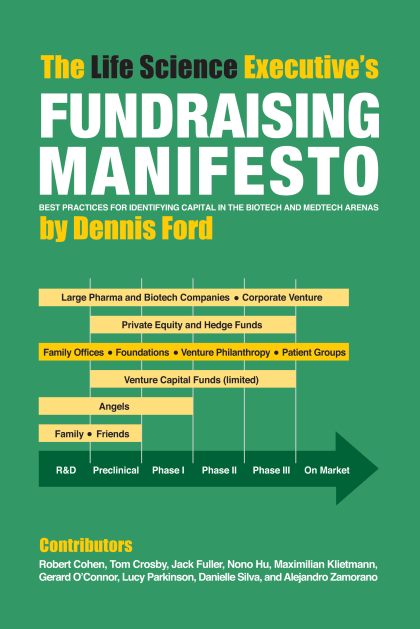
Chapter 7 of The Life Science Executive’s Fundraising Manifesto, “Establishing a Web Presence,” discusses what makes a simple and effective website, whether to do it yourself or hire a web designer, how to employ search engine optimization to drive traffic to your site, and the importance of constantly managing and updating your content.
Over the past few weeks, we have laid the groundwork for a marketing campaign. Join us next week as we go outbound in Chapter 8, “Leveraging Cloud Infrastructure to Manage an Outbound Campaign,” where we identify useful tools for managing your outbound activities.
Advances in computer science and engineering in recent decades mirror and enable advances in the life sciences. The trends of miniaturization, massive parallelization, and faster processing are now applicable to cell handling, and investors are therefore taking a keen interest in this rapidly developing field.
Current instruments aim to separate and enrich desired cells from complex matrices using smaller sample sizes, all while shrinking device size to handheld or benchtop scale. Many of these new technologies make use of microfluidics and/or microelectromechanical systems (MEMS) which employ microscale electric, acoustic, or magnetic fields to separate cells on the basis of character.
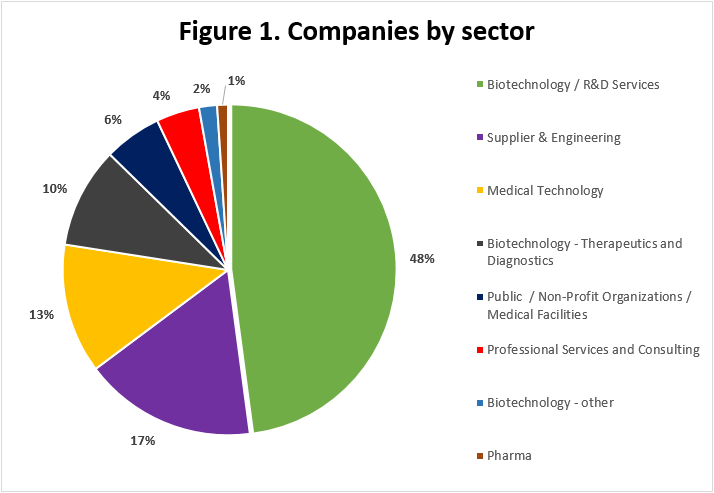
These novel cell sorting and isolation technologies have applications in R&D in CRO, pharma, and academic settings, as well as in point-of-care clinical settings. The LSN Company Database contains 285 companies with a description containing “cell separation” and “chip”. A breakdown of these companies by sector (Figure 1) shows an emphasis on development of technology for use in the R&D or industrial settings, followed by chips developed for use in medical care.
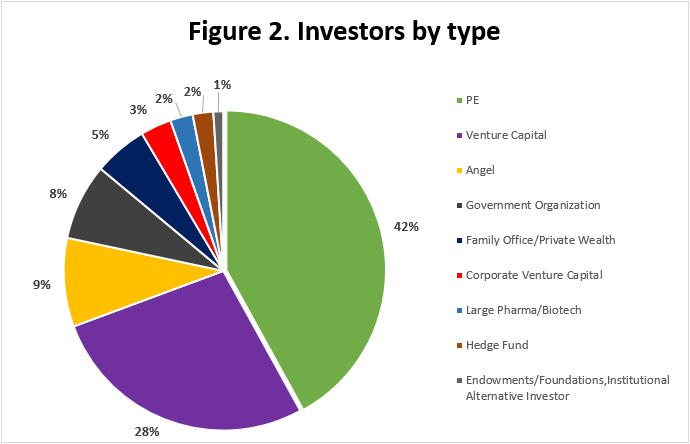
Within the LSN Investor Platform, we have identified 520 investors with a potential interest in “biochips” and “screening” for use in R&D Settings (Figure 2). Of these investors, private equity groups are the most prevalent followed by venture capitalists. The high level of interest shown by private equity groups is indicative of technologies that are becoming mature; PE groups feel comfortable and interested in providing later stage funds to companies seeking growth, expansion, and buyout. The second most prevalent investment type is venture capital, which speaks to the continuing interest in developing novel chip technologies.
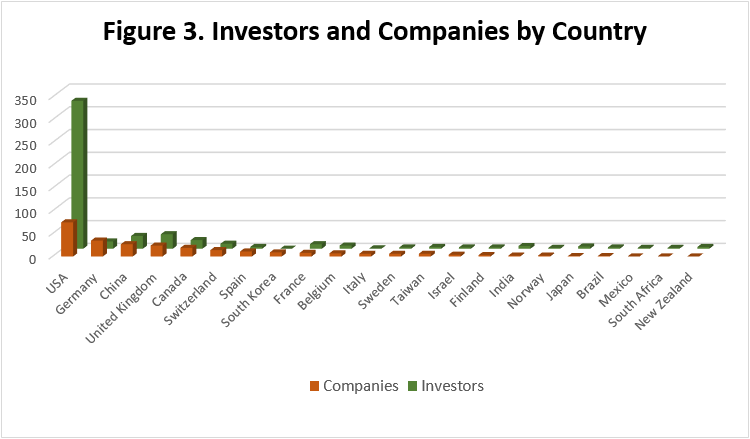
A breakdown of investors and companies by country (Figure 3) using the results of the aforementioned searches shows that the US, Germany, and China are leading in numbers of early stage companies with cell sorting chip technology. The greatest number of investors interested in these technologies are located in the US, followed by investors in the United Kingdom. However, many of these investors are looking globally for investment opportunities. German cell sorting chip investment opportunities notably outnumber local investors, meaning Germany-headquartered companies might need to look abroad for investors.
Cells isolated from their endogenous origins – bodily fluids and tissues, ground water, soil, etc, are truer representatives of nature and therefore have great advantage as research and diagnostic subjects. This growing awareness has resulted in a gradual shift away from stock strains, and is relevant to antibiotic drug discovery, microbiome research, cancer diagnosis, and personalized medicine. The cell sorting market is predicted to grow to $6.3 billion by 2020, and the space is becoming more competitive as new technologies hit the market and gain traction with researchers. LSN will be looking for future developments in this increasingly crowded landscape.
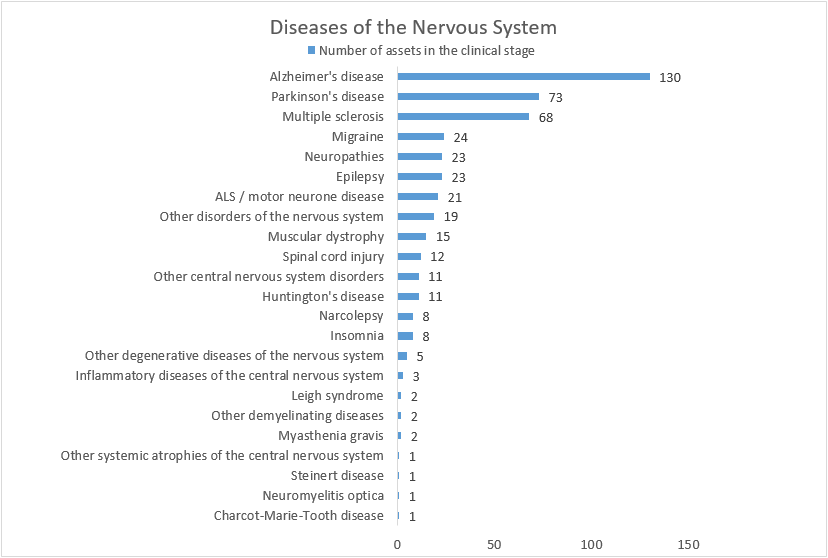
Drawing on a sample from the LSN Company Platform of assets under development worldwide, we can take a look at the top areas in both diseases of the nervous system and in mental and behavioral disorders. In diseases of the nervous system, this sample includes 647 assets, of which 464 relate to a specific clinical area, as shown in Figure 1 below:
Alzheimer’s disease remains the field with the most assets under development, in spite of continuing setbacks in late-stage trials. However, among other top areas of neurology, Parkinson’s disease has undergone market pipeline growth, overtaking MS to become the second largest developmental pipeline in neurology. With large pharma companies taking increasing interest in Parkinson’s disease, we can expect significant competition in the future if these programs are successful. We also see a substantial increase in development of treatments for neuropathies. This may reflect the increasing rate of diabetes, a major population health concern that has attracted the interest of scientists and investors.
There remain many rare neurological diseases in which few cures are under development; however, there are now treatments under development for two of these rare diseases that we highlighted previously as having no potential cures within our data sample, Charcot-Marie-Tooth disease and Steinert disease. Given the strong investor interest in drugs that qualify for orphan designation, we hope to see treatments entering the clinic in the future in other rare neurological conditions.
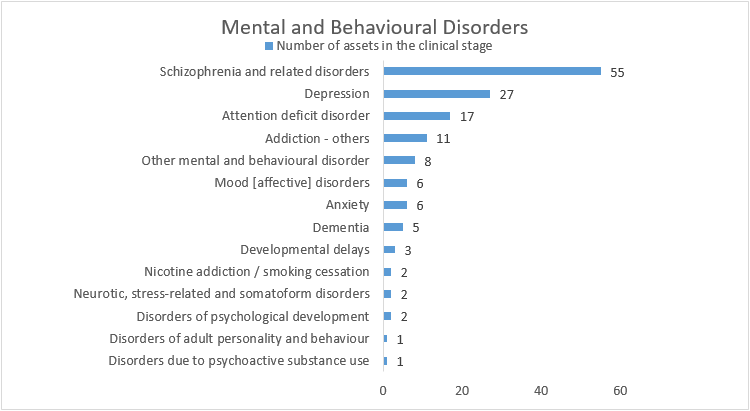
In the field of mental and behavioral disorders, the LSN Company Platform sample includes 146 drug assets. Schizophrenia and depression remain the most crowded pipeline areas; however, there are an increasing number of drugs under development to treat addictions.
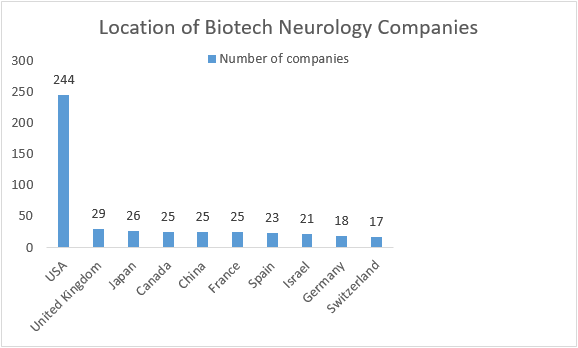
We still see new neurology therapeutics being developed by startup companies worldwide. The US remains dominant in neurology innovation, but China has seen an increase in neurology innovation. Figure 3 below shows the top 10 countries for clinical stage neurology assets.
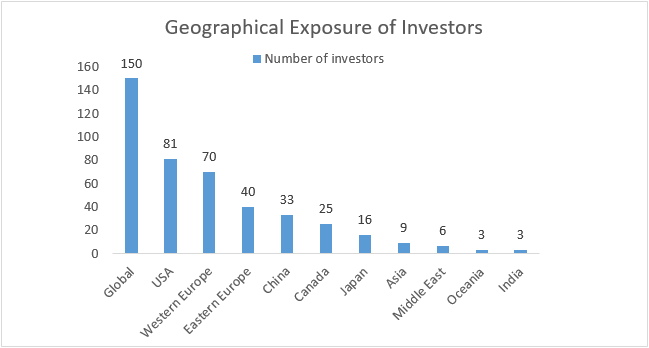
In spite of the well-known challenges in the sector, there remains significant investor appetite for neurology therapeutics, with investors chasing potential blockbusters in disorders that currently have few or no treatment options, such as Alzheimer’s disease and Parkinson’s disease. The LSN Investor Platform now includes detailed mandate information from 362 investors that are interested in clinical stage assets in neurology. 150 of these investors are looking globally for deals, and others are looking in several different regions. The below chart shows the number of investors we’ve contacted who are looking for deals in each region:
Neurology remains a very active area for therapeutic development, with many severe diseases, some of them widespread, currently lacking any disease-modifying treatments. However, there are well known difficulties in bringing a product to market in neurology, including the difficulty in identifying the right patient populations for late stage trials. LSN will be tracking these assets through the pipeline, and will continue to reach out to investors who are focused on the future possibilities in neurology.
Last week we discussed how to determine where your company fits within your marketplace. Once you have completed that process, the next step in a fundraising campaign is to develop your marketing materials. In this week’s edition of the summer reading series, we describe the importance of and what constitutes a strong set of marketing materials in the life science fundraising world. While your team and your technology are what will ultimately secure an allocation, having marketing collateral that clearly and concisely communicates your message will help you tremendously in getting in the door with investors.
Chapter 6 of The Life Science Executive’s Fundraising Manifesto discusses in depth the different pieces of marketing collateral you should be putting into the marketplace and how to develop everything from your logo to your pitch deck.
The first Redefining Early Stage Investments (RESI) Conference took place on September 16, 2013, and three years later, following highly successful events in San Francisco, Houston and Toronto, RESI will return to Boston for the 10th RESI Conference. Life Science Nation will be hosting the RESI Boston conference in collaboration with Johnson & Johnson Innovation, JLABS on September 13th, 2016.
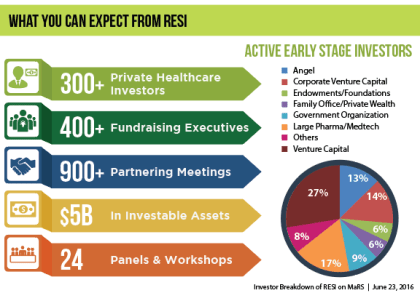
RESI Boston is a venue for entrepreneurs to meet with 10 categories of investors that LSN tracks including Family Offices, Corporate Venture Funds, Angel Groups, Venture Philanthropy, Venture Capital and more. Through the RESI Partnering, fundraising executives can have up to 16 scheduled meetings as well as many more ad-hoc meetings with diverse life science investors who fit their company’s technology sector, indication and stage of development. Additionally, through an expansive series of panels and workshops, attendees will have the chance to hear firsthand accounts from investors explaining their current investment mandates and process for identifying and qualifying candidates.
Last week at RESI on MaRS, the MaRS HealthKick Innovation Challenge showcased 30 companies from the digital health, biotech, medical device and diagnostics sectors. These companies were screened and selected from over a hundred applicants; all were very strong competitors, but only one winner could emerge from the all-day exhibition-style contest. Here are the top 4 entrants, with a tie for third place!
First Place: Perimeter Medical Imaging (Toronto, Canada)
Complimentary tickets to 3 RESI Conference Series events (2 tickets per event) and a GoPro Camera sponsored by MedMarc
Perimeter Medical Imaging develops, patents, and commercializes advanced surgical imaging tools that allow surgeons, radiologists and pathologists to better assess microscopic tissue structures during surgical procedures. Perimeter’s Optical Tissue Imaging System (OTIS™) is the only solution that provides clinicians with an ultra-high resolution image of the entire surface of an excised tissue specimen, providing accurate information in real time, and enabling better surgical decisions and outcomes.
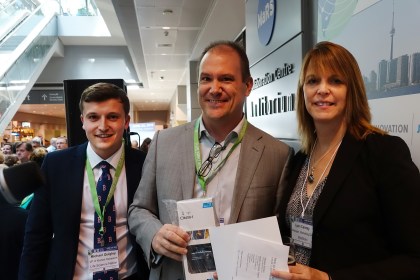
Michael Quigley, VP of Market Research, Life Science Nation Paul Weber, President and CEO, Perimeter Medical Imaging Lynn Carney, Manager, Marketing Dept, Medmarc Insurance Group
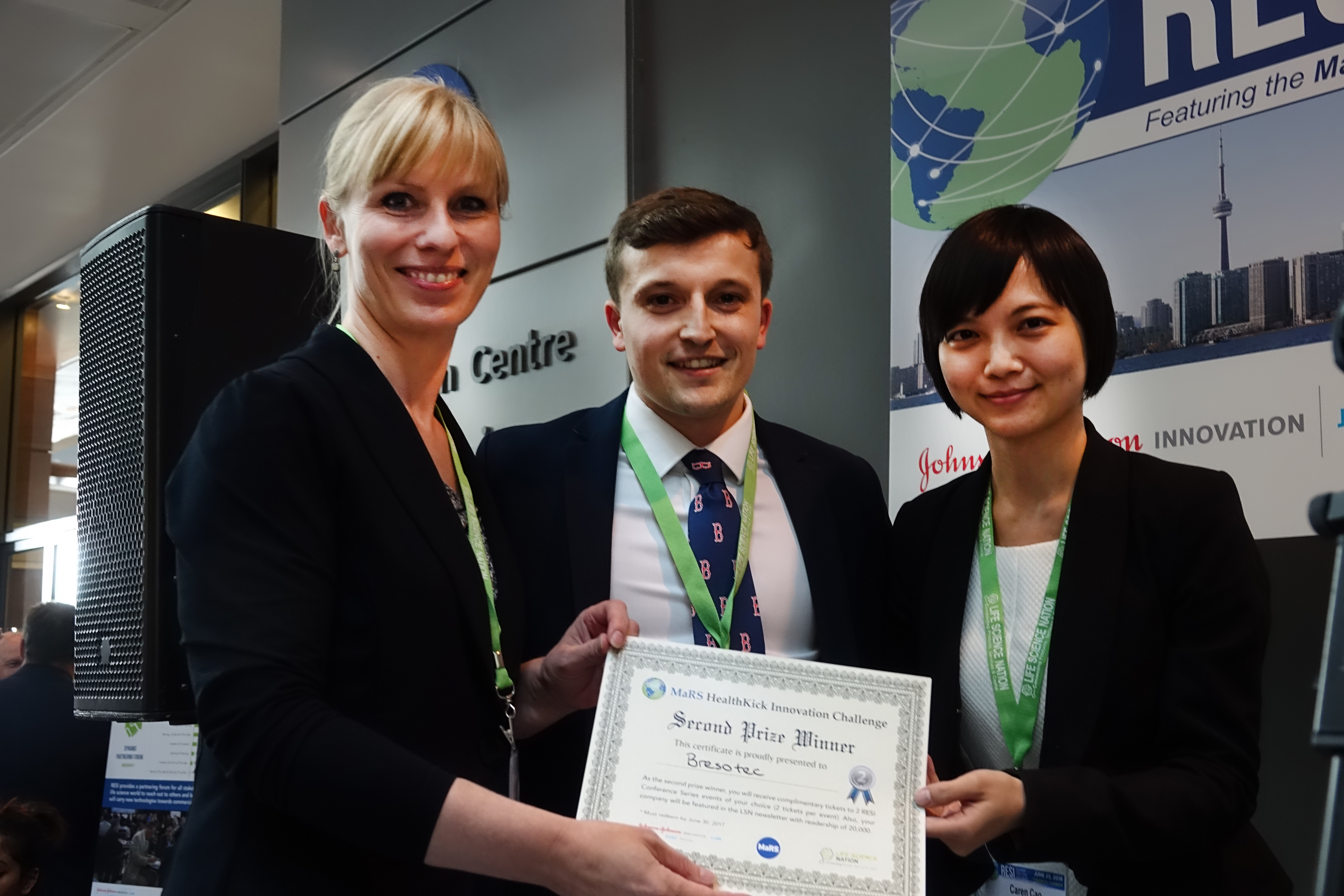
Second Place: BresoTec Inc. (Toronto, Canada)
Complimentary tickets to 2 RESI Conference Series events (2 tickets per event)
BresoTec Inc., a Canadian company based in Toronto, Ontario, develops, manufactures and sells products for the diagnosis and treatment of sleep disorders. BresoTec was founded by UHN (University Health Network) and MaRS Innovation.
BresoTec’s first product, BresoDx®, is an innovative device using proprietary acoustic and movement recording technology as an aid in the diagnosis of sleep apnea.
BresoDx® is a cordless, battery operated device that patients can use at home, in their own bed. The accuracy of BresoDx® versus the PSG standard has been tested and validated in several clinical trials led by Drs. Hisham Alshaer and Douglas Bradley of the University Health Network. Such accuracy in a simple, cordless device establishes BresoDx® as an accurate, easy-to-use and cost-effective home sleep test for physicians, patients and health care providers as an aid in the diagnosis of sleep apnea.
Julie Brogren, COO & VP of Global Sales and Marketing, Bresotec Inc. Michael Quigley, VP of Market Research, Life Science Nation Caren Cao, International Business Liaison, Bresotec Inc.
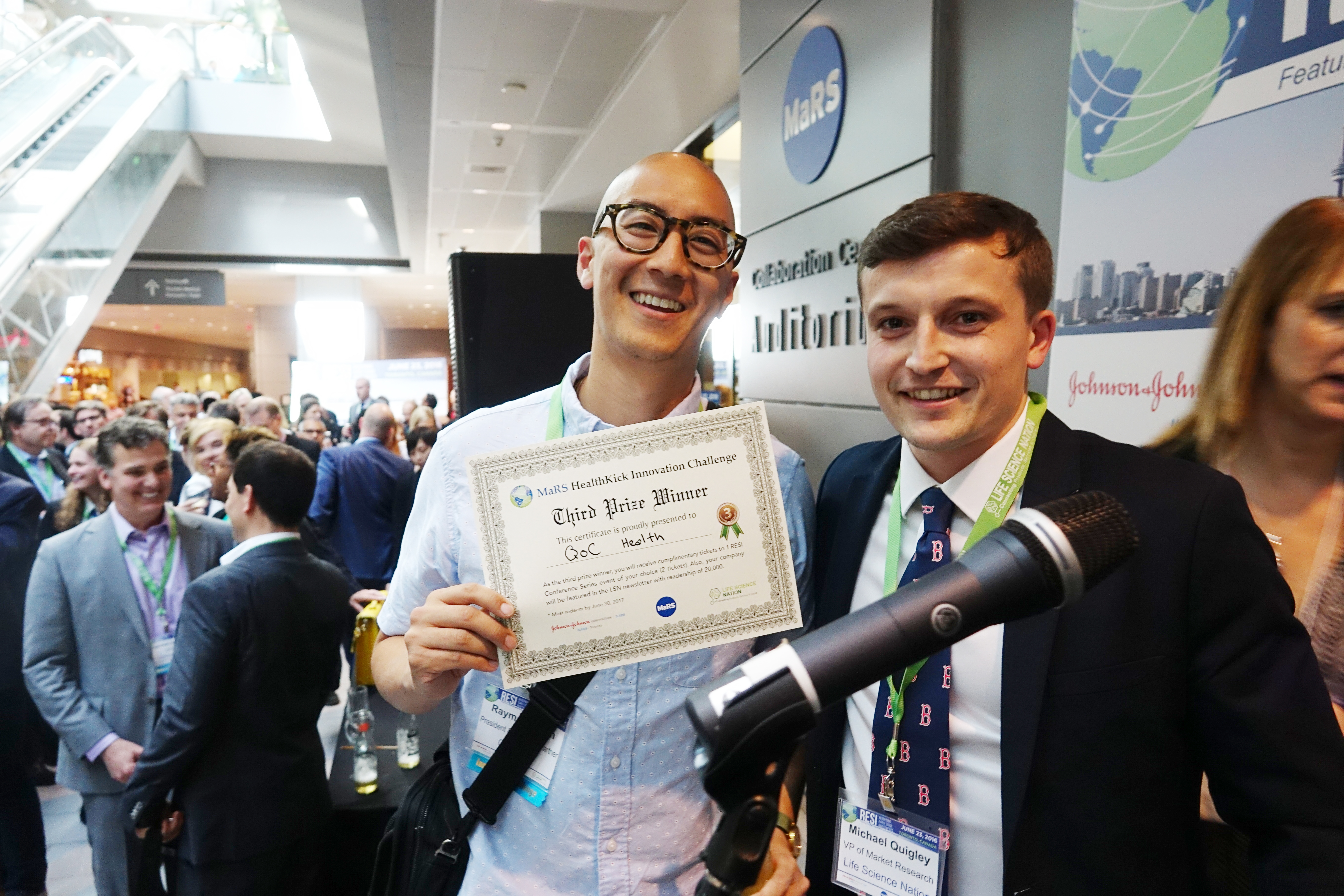
Third Place (Tie): QoC Health (Toronto, Canada)
Complimentary tickets to 1 RESI Conference Series event (2 tickets)
QoC Health is a Certified B Corp enabling patient centered care with mobile solutions, new service delivery models, and cloud computing. QoC Health’s Cloud Connect platform is a healthcare API (or digital spine) on which health tools are added, including post-surgery discharge monitoring, wound care, transitions in care, and decision aids.
QoC Health’s tools are co-designed with patients and clinicians to maximize user experiences. With best-in-class security and privacy, the company’s solutions can interact on a two-way basis with electronic medical records and personal health records to maximize information sharing. The solutions improve patient outcomes and reduce costs for healthcare providers.
Raymond Shih, President & Co-Founder, QoC Health Michael Quigley, VP of Market Research, Life Science Nation
Third Place (Tie): Woven Orthopedic Technologies (Manchester, CT)
Complimentary tickets to 1 RESI Conference Series event (2 tickets)
Woven Orthopedic Technologies is a medical device business that designs and develops orthopedic technologies to treat the rapidly aging global population affected by orthopedic conditions. Their premier technology addresses the #1 problem with the #1 technology used in orthopedics today by enhancing screw fixation in patients who receive treatment for fractures.
Today, the company operates at the core of the intersection between science, technology, and medicine by leveraging advances in smart engineered bio-textiles to design technologies that help provide better care for less cost, to more people around the world.
Michael Quigley, VP of Market Research, Life Science Nation Ilana Odess, CEO, Woven Orthopedic Technologies
Thank you to all who competed in the MaRS HealthKick Innovation Challenge, and to all the RESI attendees who took part by investing their votes in their favorite competing companies. If you’d like to be part of the RESI Boston Innovation Challenge, apply now.
In this latest edition of the summer reading series, we will be explaining the importance of understanding where your opportunity fits within the marketplace. Knowing who you are and how you compare with other companies in the space is crucial in determining the investors to whom you should be reaching out, what you should be highlighting in your marketing materials, and, in some cases, whether you need to “pivot,” or change, your commercialization plan.
Chapter 5 of The Life Science Executive’s Fundraising Manifesto, “Knowing Who and What You Are, and Where You Fit,” discusses how to define yourself and your market, as well as the importance of being able to pivot after receiving feedback and how to identify when it is strategically relevant to do so.
We hope this text proves to be informative. Join us next week for Chapter 6: “Branding and Messaging”, for some tactical tips on how to build a brand for your company.