Tag Archives: technology

Hot Investor Mandate: China-Based Investment Firm Backs Companies and Funds, with Strong Interest in Therapeutics and Medtech Companies With Local Market Fit

5 Aug

An investment firm headquartered in China invests in both fund-of-funds and direct equity opportunities. Life sciences and healthcare represent one of its primary focus areas, though the firm maintains a multi-sector approach. Its investment sweet spot begins at the pre-A stage and extends through to pre-IPO. While the firm primarily targets opportunities within China, it is open to global companies, particularly those seeking a soft landing in China or with a strong China angle. The firm is flexible on deal structure and is open to both leading investments and co-investments. 

Within the healthcare and life sciences sector, the firm is especially interested in biotech therapeutics and medtech. On the therapeutics side, it is open to a range of modalities (excluding mRNA) and indications, with particular interest in areas such as central nervous system (CNS) disorders and oncology. On the medical device side, the firm prioritizes innovative technologies, including invasive solutions, imaging platforms, and brain-computer interfaces. It does not invest in non-innovative categories such as consumables. 

The firm does not maintain strict requirements regarding the background of founding teams, though it has a strong preference for companies that are interested in expanding into Shanghai or the broader Chinese market. 

If you are interested in more information about this investor and other investors tracked by LSN, please email salescore@lifesciencenation.com

Hot Investor Mandate: Early-Stage VC Focused on Deeptech Innovation, Investing in Platform and Enabling Technologies from Pre-Seed to Series A

5 Aug

An early-stage venture capital firm focuses on deeptech innovation, with strategic emphasis on the Cleantech and Biotech sectors. The firm acknowledges the critical role that advanced materials play in promoting both planetary and human health. 

The firm typically invests from Pre-Seed through Series A, with average initial allocations around USD $500k and reserves for follow-on participation. Geographically, the firm targets North America and Asia, and is also open to public-ready companies or those preparing to go public. 

Within biotech, the firm seeks novel therapeutics and global health-enhancing medical breakthroughs. While broadly sector-agnostic, the firm prioritizes companies with a technology backbone. Preferred areas include: platform technologies, enabling tools for drug discovery & development, and synthetic biology 

The firm is indication-agnostic, though generally less interested in infectious diseases. 

There are no strict team or company prerequisites, though the firm prefers to have an investor presence on the board. 

If you are interested in more information about this investor and other investors tracked by LSN, please email salescore@lifesciencenation.com

Hot Investor Mandate: Canada-Based VC Invests in AI-Driven Technologies Including Medical Devices, Diagnostics, and Digital Health Across the Globe

5 Aug

A venture capital corporation is based in Canada with the government serving as a limited partner participates in Angel through Series A rounds, typically allocating CAD $100K to $200K for Angel rounds and CAD $500K to $1M for Pre-A and Series A rounds. It is open to co-investments and occasionally acts as a limited partner in other investment funds. The firm seeks innovative projects that align with the interests of its affiliated operating company, which specializes in immunology-based diagnostics. 

In addition to direct investments, the firm in-licenses intellectual property from universities and engages in joint ventures with other partners. With its own internal management and engineering team, the firm plays an active role in helping startups enter the market and commercialize their products. The firm is open to working with companies globally. 

Its core areas of interest include AI-driven digital health, medical devices, and diagnostics – particularly those involving antigen and antibody pairs. The firm favors companies that are nearing commercialization and can be integrated into its existing AI platform. A board seat is typically preferred in investments. 

If you are interested in more information about this investor and other investors tracked by LSN, please email salescore@lifesciencenation.com

Get on Pharma’s Radar: What Big Companies Look for in Early-Stage Innovation

5 Aug

Live at RESI Boston – September 17 | Westin Copley Place 

By Momo Yamamoto, Senior Investor Research Analyst, LSN

For many early-stage life science companies, partnering with a major pharmaceutical firm can be a transformative milestone. Beyond capital, Big Pharma brings global reach, regulatory know-how, and commercialization muscle, opening doors that would otherwise be out of reach. But breaking through the noise and earning that opportunity requires more than a strong pitch deck.

The “Partnering with Big Pharma” panel at RESI Boston will offer a rare, inside look at how business development and licensing leaders identify and evaluate emerging innovation, including therapeutics and enabling technologies.

What Does Big Pharma Look For?

This 50-minute session will dive into the key criteria pharma decision-makers use to vet early-stage companies. From the strength of the data package and differentiation in a crowded landscape to alignment with therapeutic priorities and unmet need, the panel will shed light on how early is too early and when is just right to engage.

Attendees will also gain insight into how large pharma teams structure search & evaluation processes, how red flags are interpreted, and what signals strong partnership potential.

Moderated by Jeremy Sohn, Managing Partner at P74 Ventures, this conversation brings together key voices shaping pharma’s external innovation strategy:

Jeremy-Sohn Hyelim-Cho Nikhil-Mutyal
Jeremy SohnManaging Partner
P74 Ventures
(Moderator)
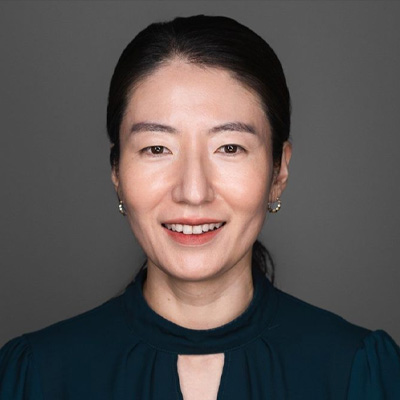
Hyelim ChoSenior Director, BD and Alliance Management
RayzeBio
(a Bristol Myers Squibb company)
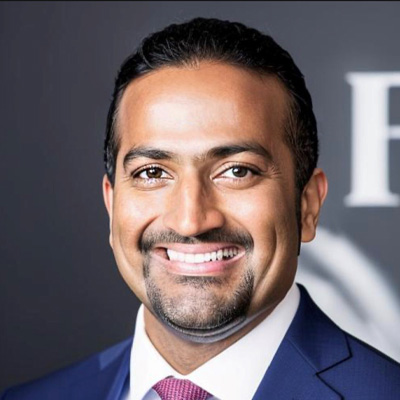
Nikhil MutyalHead of Search and Evaluation, Respiratory and Immunology
AstraZeneca
Armin-Rump Jenny-Wang
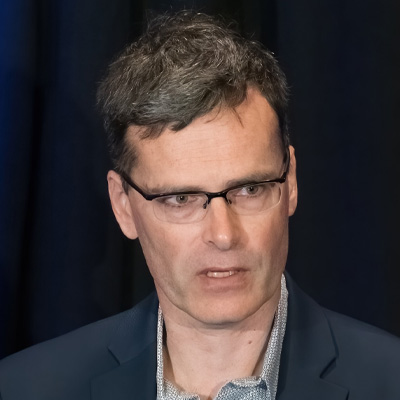
Armin RumpDirector of Global Business Development
Otsuka Pharmaceutical Co., Ltd.
Jenny WangDirector, Search & Evaluation, Oncology
AbbVie

These leaders are actively scouting for high-impact innovations and will share how their organizations assess risk, potential, and fit in a rapidly evolving landscape. You will hear how shifting trends are reshaping pharma’s partnering approach, and what startups can do to stand out in a competitive environment.

Whether you are aiming for a strategic investment, licensing deal, or co-development partnership, this panel offers direct access to the minds shaping pharma’s innovation agenda. Founders, BD professionals, and investors alike will walk away with actionable insights into what it takes to get – and stay on – Big Pharma’s radar.

Register today and save with early bird rates.

China’s Biotech Boom: Innovation, Influence, and Rising Tensions 

5 Aug

By Sougato Das, President and COO, LSN

Sougato-Das

As 2025 progresses, China’s biotech and pharmaceutical sectors are not just growing—they’re reshaping the global industry landscape. With skyrocketing innovation, bold regulatory reform, and a deepening rivalry with the U.S., Chinese biotech firms are asserting their global presence at unprecedented speed. The GSK / Hengrui Pharma deal, involving a major collaboration potentially worth up to $12.5 billion, is the latest example. The deal focuses on developing up to a dozen drug candidates, primarily in respiratory diseases, immunology, infection, and oncology. GSK will pay Hengrui an upfront fee of $500 million, with the potential for significant milestone payments and royalties if the collaboration is successful. China will continue to play a major role in the worldwide biopharma ecosystem as…

China Emerges as a Global Drug Development Powerhouse

  • Record Licensing Activity: China-to-West drug licensing hit a record $41.5 billion in 2024, a staggering 66% jump from the previous year. Nearly 30% of global innovative drug assets now trace their origin to China.
  • Biotech Licensing Leadership: In 2024, 42% of all global biotech licensing deals over $50 million involved Chinese firms—up from 22% in 2023.

Drug Discovery Is Going East

  • Rapid Shift in Molecule Sourcing: One in three externally sourced molecules by global biopharma firms now comes from China—a dramatic rise from virtually none in 2019. Chinese biotech firms are lauded for their speed, efficiency, and low-cost synthesis of new compounds, positioning them as preferred partners for drug discovery.

Clinical Trials and Regulatory Momentum increases in China

  • China’s Clinical Surge: In 2023, nearly 28% of global clinical trial sponsorships originated from China—up from just 4% a decade ago. Registrations alone rose by 26% last year.
  • Faster to Market: Thanks to reforms by China’s National Medical Products Administration (NMPA), investigational new drugs can now be approved for human testing in just 60 working days.
  • FDA Recognition: Chinese trials are increasingly qualifying for FDA priority pathways, challenging the traditional dominance of U.S.-based clinical development.

China is at the Cutting Edge of Gene Editing

  • CRISPR Leadership: Chinese startups like YolTech (in vivo CRISPR therapy) and Huidagene (brain-targeted CRISPR trials) are leading in next-gen gene editing.
  • Global Recognition: According to Goldman Sachs, China is at the forefront of CRISPR and CAR-T research.

Tensions and Regulatory Hurdles deepen with the US

  • Geopolitical Pressure: Proposed U.S. legislation—the BIOSECURE Act—would prohibit drugmakers with federal contracts from using Chinese firms like WuXi AppTec and WuXi Biologics after 2032. This could disrupt global supply chains and complicate R&D strategies for U.S. companies.
  • Scientific Chilling Effect: Fears of increased scrutiny are causing some Chinese and Chinese-American researchers to avoid applying for NIH grants, impacting U.S.-China scientific collaboration.
  • Investment Headwinds: Despite innovation, venture capital investment in Chinese biotech has declined due to geopolitical uncertainty.

Cross-Border Deals Multiply

  • Western Biopharma Engagement: U.S. and European firms are actively pursuing licensing and partnership deals with Chinese biotechs—particularly in ADC and bispecific antibody platforms, expanding beyond oncology.
  • Investor Sentiment Splits: Some U.S. investors advocate for protectionist strategies, while others see China’s rise as an opportunity for strategic alignment and access to novel therapies.

What Does All This Means for the Industry>

China is no longer simply a “fast follower” in biotech. It’s now an originator of breakthrough science, shaping the future of global drug development, even as geopolitical tensions threaten to redraw the map of international collaboration.

As global biopharma leaders and investors reassess their strategies, one thing is clear: ignoring China’s biotech ascent is no longer an option.

Partnering Launches August 11 for RESI Boston September 

5 Aug

By Max Braht, Director of Business Development, LSN

Max-Braht-Headshot

Partnering at RESI Boston 2025 is set to launch next Monday, August 11. The RESI series have consistently been the largest early-stage life science partnering events, in terms of investor attendance, and with 400+ investors/ strategic licensing partners expected to participate in September, RESI Boston September will be a turnkey event for entrepreneurs who are looking to raise capital.

With both in person and virtual registration options, as well as a handful of remaining spots open in our Innovator’s Pitch Challenge, companies can take advantage of Life Science Nation (LSN)’s unique partnering system to set meetings directly with global investors/ in-licensors who are a fit for their product’s sector, indication, stage of development and geographic region.

Companies looking to register can do so before this Friday, August 8th to take advantage of our Early Bird Pricing discounts. LSN will also be hosting a free partnering tutorial webinar on August 18th to help companies maximize the number of secured meetings.

Pullan’s Pieces #4 – China, Japan, Europe, Korea vs US- Collaborate or Compete?

5 Aug

As a deal maker, where should I go for a deal?  Where is my competition?

There is so much written about China, I thought I would try to put it in the context of other countries.

DEMOGRAPHICS:  China is Big but low GDP per capita, Japan has the oldest population.  Both Japan and China may have reached peak population, while the US has immigration to continue growth.  China and Japan have more big cities (making clinical trial recruitment easier).

The Medical Culture varies tremendously.  

The US, with the 3rd largest population and private insurance, has the biggest market

But there are even bigger differences in the magnitude of sales of new drugs. In the US, to be in the top 10 in 2031 means double digit billions.

The biggest company R&D budgets per company are in “Global companies”.

The biggest European and Japanese companies have become global companies. 

The biggest companies in the US have 45%-70% of their Rx sales in the US.

The biggest companies in Europe have 15%-30% of their Rx sales in Europe.

The biggest companies in Japan have <10% (Takeda) to 39% of their sales in Japan. (Smaller Japanese companies have most of their Rx sales in Japan)

The biggest Chinese companies have 80-95% of their sales in China.

2024 saw a surge in approvals: In 2024, China first-approved 93 innovative drugs, with 42% being domestically developed. But China is losing domestic market share to MNCs.

The biggest Korean companies with biologics (Samsung and Celltrion) have 10-20% of their sales in Korea.  The other big Korean companies have 70-90% of their Rx sales in Korea.

But China has almost as many drugs in Phase 1 thru 3 as the US, in almost as many companies as in the US.  

There are more companies getting series A in the US and in China but the dollar amount is smaller in China. 

The US leads in IPOs

But the Hong Kong Hang Seng Biotech Index was up 87% year to date (while the US XBI was down 6%).  

Europe is active in company acquisitions, but Asia is not.  

For companies with headquarters in the US, Europe, Japan and Korea:  most partnering deals are early and with more in-licensing than out-licensing. 

China does more out-licensing than in-licensing.  

So as a deal-maker, what do I think this data suggests?

1)  You need to capture value from the US, the biggest market and home of blockbusters.

2) US companies do the most in-licensing. US and Europe do the most M&A.

3) The most deals in 2024 and 1st Half of 2025 are still done at discovery and preclinical.

4) Japanese companies are increasingly global companies and do more in-licensing than out-licensing.

5)  China is a source of drugs to bring in, with many drugs in the pipeline and new series A companies needing partners to maximize their value. China does more out-licensing than in-licensing.  Presumably, the huge China vs China competition is pushing Chinese companies to innovate more to compete and to do deals.   And more exits (IPOs and M&A) encourages more VC funding of innovation.

6)  But the low cost and the high populations cities (for fast recruitment) means China should be considered for collaborations for your drug development.  (Just remember you need 20% of patients in the US for FDA approval).

7) Korea is a high-income market but small.  In-licensing deals are often early or at market stage.