A corporate venture capital firm invests globally in technologies with potential to impact mortality rates at scale by improving healthcare quality and outcomes to support the parent company’s initiatives. The firm’s fund prioritizes technologies that address acute, time-critical conditions and makes investments internationally. The firm will invest up to $5M USD for their first check with capital reserved to follow on. The firm is actively deploying capital.
The firm invests solely in medical devices, diagnostics, and digital health. The fund does not invest in therapeutics, biotech, pharma, and CROs. The fund looks at acute, time-critical areas of healthcare and is interested in solutions that support prevention, earlier identification and intervention, and improved therapeutics for these conditions. Key areas of focus include, but are not limited to cardiovascular care, sepsis, stroke, trauma and surgery, maternal and neonatal care, emergency medicine, and healthcare education & training.
The firm can act both as a lead and co-investor. The firm needs to see committed and full-time teams with demonstrated product market fit. The fund invests in pre- and post- FDA approval companies, but companies should have an MVP and licensed IP where relevant.
If you are interested in more information about this investor and other investors tracked by LSN, please email salescore@lifesciencenation.com.
By Dennis Ford, Founder & CEO, Life Science Nation (LSN)
The official program guide for RESI Boston, June 2025 is now available! Redefining Every Stage of Investment (RESI) is built to connect life science and healthcare innovators with a global network of investors representing a wide range of funding strategies, from Seed through Series B and beyond.
This guide provides an overview of what to expect throughout the conference, detailing all of the content and layout for our in-person event on June 16th. Inside, you’ll find the full agenda, speaker bios, panel descriptions, and key information to help you navigate your RESI experience. Whether you’re participating in investor meetings, pitch sessions, workshops, or ad hoc networking, this guide is your resource to stay informed and get the most out of RESI Boston.
By Claire Jeong, Chief Conference Officer, Vice President of Investor Research, Asia BD, LSN
RESI Boston takes place on June 16, and Life Science Nation is pleased to announce the investor judges participating in this event’s Innovator’s Pitch Challenge (IPC). With more than 50 companies presenting across 14 sessions, the IPC offers life science startups a high-impact opportunity to gain visibility, pitch directly to active investors, and receive valuable feedback in real time.
Each session will feature investor and strategic partner judges with expertise spanning therapeutics, medical devices, diagnostics, digital health, and life science tools. Following every pitch, judges will lead a live Q&A to assess the opportunity and share insights from the investor perspective.
Every IPC company will also have a dedicated table in the RESI Exhibition Hall, making it easy for attendees to connect with founders and learn more.
All registered attendees will be invited to vote online for their favorite companies, and the Top 3 companies will be announced at the end of the day’s cocktail reception. Winners will receive a prize and be featured in an upcoming issue of the LSN newsletter.
Scroll down to see which investors will serve as judges for this year’s IPC:
John Abeles
General Partner Northlea Partners
Chris Aleong
VP BioIdeations
Christina Ansted
Sr. Managing Partner RCP Venture Capital
Jit Basak
Investor Launchit Ventures
Jay Batchu
Entrepreneur in Residence Xontogeny
Randy Berholtz
Sr. Advisor Mesa Verde Venture Partners
Jeff Berman
Managing Partner & Co-Founder Big Tree Innovation Fund
CFIUS, short for the Committee on Foreign Investment in the United States, is an interagency committee tasked with reviewing foreign investments into U.S. companies that may present national security risks. Though created in 1975, CFIUS has recently expanded its focus to include sectors such as biotechnology, in light of evolving global priorities and concerns.
A recent presidential memorandum has signaled heightened attention to biotech transactions, particularly those involving sensitive technologies and personal health data. The memo also outlines a more streamlined process for investment reviews involving allies of the United States, while suggesting a more cautious stance toward investments from jurisdictions deemed non-aligned. Although not yet codified into law, these signals indicate that the regulatory environment is tightening for some international investors.
Biotech startups should not interpret this shift as a prohibition, but rather as an evolving framework that will increasingly require awareness, strategic planning, and legal clarity when engaging global investors and partners. This is particularly relevant for companies with potential funding interest from regions such as Asia, including China and, more recently, jurisdictions currently under enhanced CFIUS scrutiny.
Global Fundraising: A Numbers Game with Strategic Implications
For over a decade, Life Science Nation has been building and guiding early-stage companies through capital fundraising and licensing campaigns from a global perspective. There are two fundamental reasons why this work must be approached as a numbers game. In today’s fragmented global funding landscape, visibility, volume, and variety are essential for finding and securing the right partners. First, if you confine your outreach to your home region or country, you can quickly exhaust the pool of suitable targets. Second, when you do find a lead investor or licensing partner, they typically want to see a geographically diversified syndicate. As development progresses and commercialization strategies take shape, having informed and engaged partners across key global regions becomes not optional, but essential.
Failing to secure global relationships early on, whether due to limited strategy, policy restrictions, or lack of access, can create real obstacles to growth. Overly restrictive capital policies risk unintentionally slowing innovation and creating pressure for startups to move offshore. In an increasingly interconnected life science ecosystem, enabling global access to capital and partnerships is critical to maintaining U.S. leadership in biotech innovation.
Moving Forward
As the landscape for global biotech investment continues to evolve, early-stage startups will benefit from understanding CFIUS and related frameworks. While the regulatory terrain may shift, it still presents a significant opportunity for those who prepare strategically.
Early-stage biotech companies that navigate these cross-border dynamics with foresight and structure will be best positioned to engage international capital, generate high-value data, and build toward global commercialization.
Startups are encouraged to attend RESI Boston on June 16th or connect with industry experts for a deeper discussion. Register RESI Boston June now.
Ex vivo HSC lentiviral gene therapies have been on the market for nearly a decade, with six products approved and at least 55 now in clinical testing for rare inherited diseases, HIV infection or cancer. And yet, their commercial success remains in question. Bluebird Bio—which was valued at $10 billion only a few years ago and successfully shepherded to market Zynteglo against transfusion-dependent β-thalassemia, Skysona for early cerebral adrenoleukodystrophy, and Lyfgenia for sickle-cell disease (SCD)—was sold earlier this year to private-equity firms Carlyle and SK Capital for a measly $29 million. Last November, the company had treated only 57 patients (35 for Zynteglo; 17 for Lyfgenia and 5 for Skysona), with just 28 of 70 medical centers across the US ready to treat patients due to delays in accreditation and training of personnel. In Europe, Orchard Therapeutics halted marketing and production of a treatment for severe combined immunodeficiency caused by adenosine deaminase mutations (Strimvelis) after six years, forcing Fondazione Telethon to take over production. Even market uptake of Vertex’s much-heralded CRISPR/Cas9 BCL11a SCD therapy Casgevy has been sluggish.
These subpar commercial launches relate to the complexity of ex vivo lentiviral gene therapy: patient identification and qualification is lengthy; HSC mobilization and sourcing efficiencies vary due to patient heterogeneity; and manufacture and distribution processes remain lengthy and convoluted (sometimes requiring repetition if a poor quality product batch is generated). From first evaluation, patients are required to make several hospital visits over a period (of up to a year) and must undergo punishing conditioning regimes with lymphodepletive bisulfan before infusion, which itself carries infertility and cancer risks. All of these challenges have added impetus to the search for alternative and more efficient approaches for carrying out HSC gene therapy.
The potentially year-long patient journey for an ex vivo lentiviral HSC therapy (Source: Vertex)
A group led by Alessio Cantore and Luigi Naldini, from the San Raffaele Telethon Institute for Gene Therapy in Milan, Italy, report in Nature that it may be possible to obviate these challenges by delivering recombinant lentiviral vectors in vivo soon after birth, when HSCs continue to circulate in the bloodstream in large numbers and are beginning their transition from the liver (where they are located in the fetus) to bone marrow (where they remain through adulthood).
Cantore, Naldini and their colleagues started by measuring the number of circulating HSCs in neonatal, 1-, 2- and 8-week-old mice, looking at the peripheral blood, spleen, liver and bone marrow. They found that HSCs were present in the circulation right after birth and that their number immediately declined. These cells could be transduced with lentiviruses, successfully engrafted, and persisted in the mice for several months.
Outlines of the experiments testing in vivo lentiviral therapy using a green fluorescent protein marker (top) or adenosine deaminase (ADA) gene construct in ADA-SCID mice (bottom). Source: Nature
To show that these HSCs could be harnessed to treat genetic disorders, the team tried to correct three mouse models of disease — adenosine deaminase deficiency, autosomal recessive osteopetrosis and Fanconi anemia. Although the therapeutic effect of the cells varied depending on the disease, the results provided compelling evidence for the potential for in vivo gene transfer to HSCs.
The authors reported that human neonates also have circulating HSCs in high numbers. And although the therapeutic window in the mouse only existed during the neonatal period, it was possible to lengthen it by mobilizing the HSCs from their niche in two-week-old animals using protocols in clinical use (granulocyte-colony stimulating factor/CXCR4 antagonist Plerixafor) These observations raise the possibility of therapeutically targeting HSCs in newborns, potentially opening the gates to treatment of a variety of inherited conditions.
Compared with the headaches of ex vivo manipulation, the authors’ concept of simply injecting a lentiviral gene therapy into a newborn to bring about a genetic cure is certainly alluring. But reducing this to clinical practice will require optimization of many different factors. How to account for the heterogeneity and fragility of patient HSCs in a particular disease? How to measure the cellular activation/metabolic state of HSCs in newborns and assess the affect on amenability to lentiviral transduction in the hostile milieu of blood? What effect would shear stress in circulation have on lentiviral transduction efficiencies in situ? What would be the selective engraftment advantage provided to HSCs after engraftment of a particular gene? And what would be the potential safety implications of off-target transduction events in cells other than HSCs, given instances of dysplastic syndromes have been reported with ex vivo lentivectors?
Current ex vivo lentiviral gene therapy like Lyfgenia and Zynteglo infuse between 3–5×10⁶ gene-modified CD34+ HSCs/kg in a patient. The challenge for in vivo lentiviral gene therapy will be to achieve transduction efficiencies that transduce as many cells and obtain similar engraftment rates in the rapidly turning over HSC population. Beyond these issues, there are additional practical challenges: can genetic testing of an infant happen fast enough to take advantage of the short therapeutic window for which an in vivo lentiviral HSC therapy could work?
Clearly, the new work raises many intriguing questions for the lentiviral gene therapy space. And for newborns with genetic diseases, such as severe immunodeficiencies or Fanconi anemia, in vivo HSC gene therapy may open up new treatment options.
A venture arm of an international pharmaceutical company is committed to advancing healthcare innovation globally. The firm identifies, supports, and invests in transformative technologies that align with the parent company’s strategic vision of improving health and quality of life.
The firm seeks opportunities in therapeutics, diagnostics, digital health, and medical devices, with a particular emphasis on products and innovations that can expand the parent company’s Women’s Health portfolio. The organization is especially interested in solutions that improve the healthcare journey for women and address gaps in existing therapeutic and diagnostic options.
The firm is open to collaborations in addition to investments, including partnerships with companies whose products are already on the market and are looking to expand into new geographies. Leveraging the parent company’s extensive global network, the firm aims to help these companies access new markets and scale their impact.
The firm supports management teams with diverse expertise and a strong commitment to innovation. While a proven track record in the life sciences is advantageous, the firm is eager to collaborate with promising teams developing solutions aligned with the parent company’s strategic priorities. The venture is open to co-investment opportunities with partners who share its vision.
If you are interested in more information about this investor and other investors tracked by LSN, please email salescore@lifesciencenation.com.
A venture capital firm headquartered in Israel typically invests at the earliest stages of pre-seed or seed. The firm aims to promote Jewish-Arab collaboration and support companies in their earliest stages. The firm is currently investing from their second fund and typically makes 5-7 investments per calendar year. The firm has invested in over 20 companies out of this current fund. The firm prefers to invest within Israel, however, the firm is open to making investments globally.
The firm invests in medical device, therapeutics, and diagnostics. The firm is modality- and indication- agnostic. The firm does not invest in digital health.
The firm has no strict team requirements.
If you are interested in more information about this investor and other investors tracked by LSN, please email salescore@lifesciencenation.com.
The firm is focused on therapeutics companies and does not invest in medical devices, diagnostics, or digital health. The firm is open to considering assets of very early stages, even those as early as lead optimization phase. The firm considers various modalities, including antibodies, small molecules, and cell therapy. Currently, the firm is not interested in gene therapy. Indication-wise, the firm is most interested in oncology and autoimmune diseases but has recently looked at fibrotic diseases and certain rare diseases as well.
The firm is opportunistic across all subsectors of healthcare. Within MedTech, the firm is most interested in medical devices, artificial intelligence, robotics, and mobile health. The firm is seeking post-prototype innovations that are FDA cleared or are close to receiving clearance. Within therapeutics, the firm is interested in therapeutics for large disease markets such as oncology, neurology, and metabolic diseases. The firm is open to all modalities with a special interest in immunotherapy and cell therapy.
A strategic investment firm of a large global pharmaceutical makes investments ranging from $5 million to $30 million, acting either as a sole investor or within a syndicate. The firm is open to considering therapeutic opportunities globally, but only if the company is pursuing a market opportunity in the USA and is in dialogue with the US FDA.
The firm is currently looking for new investment opportunities in enterprise software, medical devices, and the healthcare IT space. The firm will invest in 510k devices and healthcare IT companies, and it is very opportunistic in terms of indications. In the past, the firm was active in medical device companies developing dental devices, endovascular innovation devices, and women’s health devices.
A venture capital firm founded in 2005 has multiple offices throughout Asia, New York, and San Diego. The firm has closed its fifth fund in 2017 and is currently raising a sixth fund, which the firm is targeting to be the largest fund to date. The firm continues to actively seek investment opportunities across a […]

 The official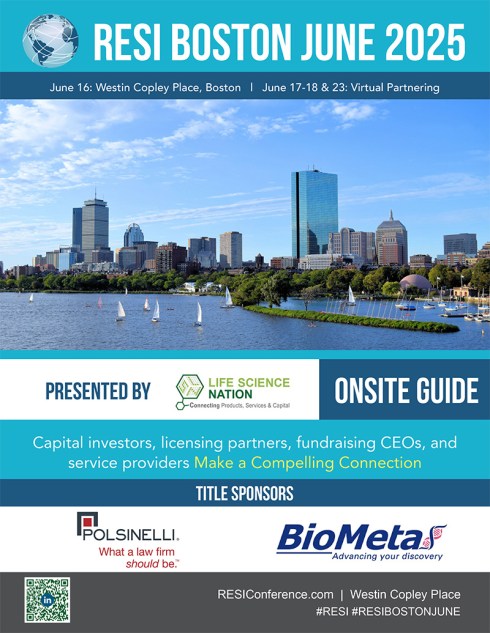















































 Next Phase Newsletter