By Caitlin Dolegowski, Program Director, LSN

Building a biotech company requires far more than breakthrough science. It demands navigating complex organizational, funding, regulatory, and manufacturing realities. Starting with this issue, Life Science Nation (LSN) is bringing The Business of Biotech podcast directly into Next Phase, giving our community regular, in-inbox access to peer-driven executive insights on advancing novel therapies from early concepts to clinical success.
About The Business of Biotech
Created exclusively for the leaders of new and emerging biotech and pharmaceutical companies, The Business of Biotech tackles funding, R&D and organizational strategy, regulatory policy, manufacturing, and commercial considerations with insight from company founders, investors, and industry experts with lived experience translating novel science into new medicines.
Meet the Host: Ben Comer
The podcast is hosted by Ben Comer, Chief Editor of Life Science Leader magazine and Host of The Business of Biotech. Ben has covered the biopharmaceutical, medtech, and medical device industries for 15 years as a reporter and editor, and previously worked as a senior manager in PwC’s Health Research Institute. His deep industry background brings sharp, operational focus to every founder conversation.
What to Expect in Next Phase
Across Therapeutics, Medical Devices, Diagnostics, and Digital Health, LSN’s mission is to connect early-stage innovators with the global capital and licensing partners that move technologies forward. Embedding The Business of Biotech into Next Phase adds an executive storytelling dimension to our weekly newsletter, allowing readers to learn directly from founders actively building today’s biopharma companies.
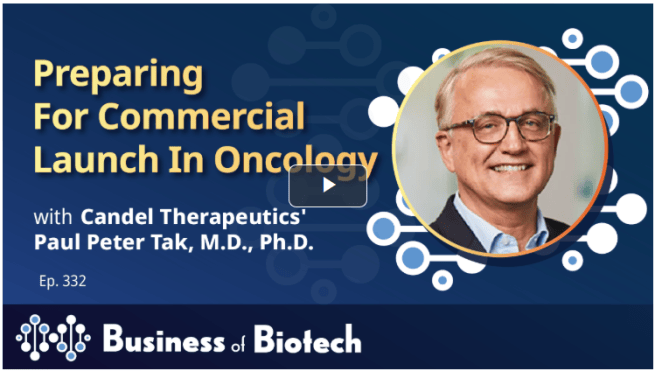
Listen to this week’s featured episode below.
On this week’s episode of the Business of Biotech, Paul Peter Tak, M.D., Ph.D., CEO at Candel Therapeutics, talks about the path from Phase 3 data to BLA submission for aglatimagene in localized prostate cancer and why “in situ immunization” could change how solid tumors are treated. He also talks through leadership and operating choices for minimizing risk in late-stage development, how FDA’s Fast Track and RMAT designations aided communication and CMC planning, and how an outsourced commercial model can help companies prepare for launch and avoid premature fixed costs.