Behind the Curtain of RESI Partnering

Natasha Eldridge, Marketing Manager – RESI Conference Series, LSN

Organizing RESI Partnering was an amazing experience for me, and with the help of Alisdair Stamps from Meeting-Mojo, RESI Boston successfully had more than 1,300 meetings.

Now, I would like to remove the curtains as the Wizard of Oz or RESI and share a few tips on what I learned about partnering and getting meetings with investors.

Investor Profiles Are Filled Out in Depth

I have been to many partnering conferences and rarely see investor profiles filled out besides the name of the attendee representing the firm. A strong differentiator of the RESI Conferences is LSN’s ability to populate investor profiles with their up-to-date investment preferences and criteria. The reason for this is to help fundraising companies make the most of their time by meeting with the right investors.

Through the search options, you can find investors that are actively investing in your technology type, indication, and phase of development. You don’t have to imagine a list of investors looking specifically for your asset(s) because we put that list together for you.

It’s a Numbers Game

One request to a few investors is not going to cut it. You can generate your list by using the search function – now use it.  Research and message the entire list of investors.  At LSN, sometimes we have to contact investors 5, 10 or 25 times to get a response, and we know the investors! Don’t be disappointed if you do not hear from an investor immediately.  They may be very distracted by other matters, or out of the office on a trip. The point is they are busy, so keep messaging them until you get a response.

Partnering Requests Are a 10-Second Pitch, Not a 350-Page Novel

Actually, according to a recent study by Microsoft most people have an attention span less than a goldfish, or just 8 seconds. Now that you know an investor might spend about 8 seconds reading your request, what do they need to know about your company. Well, it only takes these 6 key elements to get your message across in a short amount of time.

1st — Introduce Yourself

Introduce yourself, your title, and the name of your company. Although obvious, you might be surprised by how many people don’t do this.

2nd — Introduce Your Company

Give a brief overview of your company so that an investor can determine from the first sentence whether you are a fit for their investment mandate. Remember, every investor is unique and therefore not every investor is a fit for your opportunity. Here are five key data points that are likely to affect investor fit:

Where your company is based

What sector your company is in (biotech, medtech, diagnostics, healthcare IT, etc)

The modality you are using

The indication you are treating or problem you are trying to solve

Your product’s development phase

3rd — Key Value Proposition/Elevator Pitch

Use the next part of the email to describe the key value proposition of your technology. This should include a high-level description of the core technology and its major differentiators from currently available products or solutions. This is the core of your messaging and should reveal enough information to pique interest.

4th — The Stage of Your Fundraising Campaign

You should clearly state where you are in the fundraising process (beginning, middle or end) and what the use of those proceeds will be. This way an investor can gauge if your round is a fit for their capital allocation.

5th — Reaffirm

You should do your homework on every investor you reach out to and reference a relevant data point to reaffirm the reason you are reaching out.

6th — The Next Step

Finish the email by laying out when you plan on connecting with them and how the both of you should connect. As this is a conference partnering message, this can be as simple as telling them to accept the meeting request if they would like to meet up.

By sticking to these fundamentals you will make it a lot easier for an investor to identify you as a fit for their investment strategy. This will lead to higher response rates and more productive meetings.

Company Marketing Materials Need to be On Point

Take a look at your marketing material. Is it full of graphs, charts and before & after pictures of mice? Can an investor immediately identify the value proposition of the company and products? Humans relate to stories and investors are the same. Make sure your charts, graphs and pictures (and words) are creating an amazing story about your assets. Again, do not create a novel to tell your story. Stick with a maximum 2-page Executive Summary and 10-12-page PowerPoint Pitch Deck.

So What, You Had a Few Scheduled Meetings? Ad-Hoc Meetings Matter

I have spoken with several investors who enjoy meeting companies on the fly, after a panel session, or during the cocktail reception. I have also spoken with several companies who got funded by talking to investors companies on the fly, after a panel session, or during the cocktail reception. Either way investors and fundraising companies are using the RESI Conference to build relationships. Sometimes you will hit it out the park on your first time at bat or first RESI Conference and get funded and sometimes you need a few more times at the plate to get your first hit or attend several RESI Conferences to meet the right investor.

Partnering opens for RESI San Francisco on December 5th. Take this time to get prepared and I will see you in San Francisco.


162801425610010374

RESI San Francisco Panel Announcement: Healthcare IT

By Lucy Parkinson, Director of Research, LSN

The healthcare investment world is just over 90 days out from the annual San Francisco conference week, and investors are already inking their plans for a busy week. Within that hectic JPM ecosystem, RESI SF is a key venue to meet with early stage startups, and many investors are already made their plans to attend.

LSN would like to make our first RESI San Francisco panel announcement: Healthcare IT Investors.  This panel focuses on investors that are looking for innovative startups using software to solve healthcare problems, from drug discovery and development to care provision and management. Significant investment is pouring into this sector, with an estimated $4.5 billion invested in 2015. At RESI, we’ll hear from 5 highly active investors from a diverse variety of firms on what they’re looking for in healthcare IT at present, and how an opportunity can catch their attention.

The participants will be:

Join us at RESI to hear from these experienced investors discuss how they search for and assess healthcare IT opportunities, and what areas of this diverse sector are most attractive at present.

162801425610010374

Life Science Financing Rounds Report: See the Latest Biomed Deal Stats

By Nono Hu, Director of Marketing, LSN

Hot off the press in September, LSN’s partners at Venture Valuation have created a report on life science financing round data from around the world.

This free report summarises every recorded round that took place in August, and provides summaries of the investment sizes, stages and the hottest areas for life science investment, along with highlights of the most significant financings.

This information is based on reports from dozens of bioclusters worldwide, in addition to the work of a team of analysts focused on early stage life science startups. Subscribers to the LSN Company Platform can access all this information directly.

You can read the report here: “Biotech Financing Summary“.

Heading to JPM? Read The RESI SF Agenda

By Dennis Ford, Founder & CEO, LSN

dennis-websit

Biotech and medtech industry executives are already drawing up their itineraries for January’s healthcare conference week in San Francisco. It’s on track to be a busy week for us all. Among the many events and receptions taking place, the Redefining Early Stage Investments Conference (RESI SF) stands alone in providing a targeted opportunity for early stage biotech and medtech companies to schedule up to 16 face-to-face investor meetings in one venue, with the potential for many more ad-hoc investor discussions throughout the day.

Partnering is RESI’s core, but at RESI SF also provides a full day of investor panels and workshops devoted to early stage life science investment topics. We’ll see the return of the RESI Asia-North America track, with content for entrepreneurs who are looking to the Asia Pacific region as a source of investment or future customers. RESI will also feature sessions focused on investors in each main life science technology vertical, and on key investor categories including Family Offices, Angels and Big Pharma, and a new session on Tech Giants in Healthcare.

With a full day of content and meetings, we’re on course for another sellout San Francisco RESI event. Don’t leave it too late to get your ticket.

agendawp

162801425610010374

Life Science Investor Landscape: Who’s Out There, and What Are They Looking For?

By Lucy Parkinson, Director of Research, LSN

LSN’s research staff continue to inverview life science investors from all over the world and collect in depth information on each investor’s unique parameters and focus areas. In this article, we’ll take a quick overview of the current landscape.  All these charts are based on a sample of investors that have been interviewed by LSN Research in 2016.

Firstly, what type of investors are currently looking into life science and health innovation deals?  While venture capital and private equity remain a significant source of startup funds, we also speak with many major corporations in healthcare and their corporate VC arms, in addition to private and family office investors, angels, foundations, and others. A successful fundraise may involve speaking with investors from all of these groups.

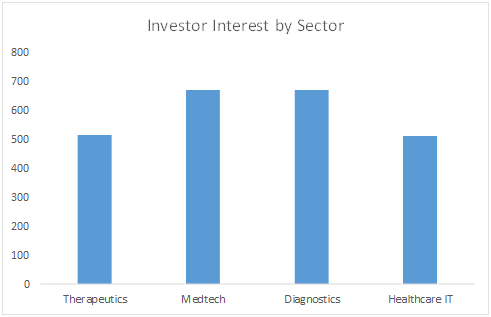
LSN focuses on four main verticals within health innovation; therapeutics, medical devices, diagnostics and healthcare IT. Many firms invest in more than one of these sectors; others have a specific lens on only one sector. Among the investors LSN has spoken with recently, medical technology and diagnostics are the most popular sectors. These products can attract interest both from traditional life science investors and from newer players in the sector, including major technology firms that are increasingly taking an interest in healthcare innovation.

01

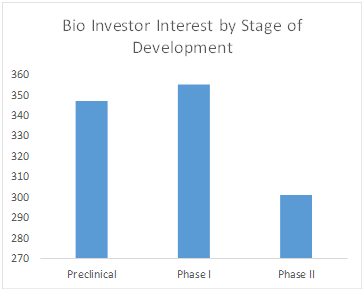
Many investors are particular about what stage of development a lead asset must have reached before they’re willing to make an investment.  LSN finds that most often, the biotech investors we speak to are looking for preclinical-stage or Phase I assets, with many also open to considering assets at Phase II or later. Given the need for funding at these crucial early stages of product development, our bias is to uncover investors that are willing to stake their money at or soon after the IND.

In medtech and diagnostics, it’s a somewhat different story due to the much compressed development timeline of these products as compared with therapeutics. We find the greatest amount of interest in devices and diagnostic tests that are in clinical trials. While there are many investors out there that will make medtech investments prior to entering the clinic, slightly more are interested in marketed products that need capital for commercialization and growth.

03

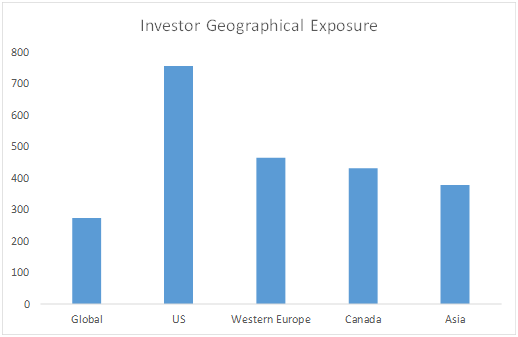
Where are these investors looking for deals?  About a third of those we speak with are open to life science opportunities anywhere in the world. Others are focused on one or more regions; the major life science investment regions are shown below.

04

If you’re looking for capital and need to prepare for a fundraising roadshow, LSN’s curated information on what investors want to see and how to contact them could help you to map out your campaign. If you’d like to take a closer look at the investors that are looking for new technologies in your sector, you can reach out to info@lifesciencenation.com for a demo.

LSN Summer Reading Series, Chapter 14: “Thirty-One Tips for Effective Fundraising”

By Nono Hu, Director of Marketing, LSN

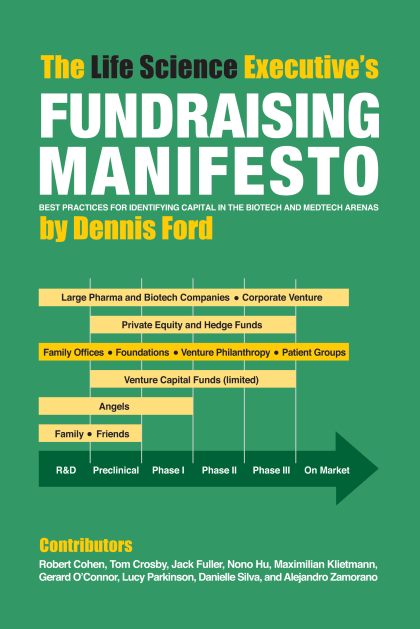
To bring LSN’s Life Science Executive’s Fundraising Manifesto toward a close, we provide some motivational advice and tactical reminders to help a fundraising CEO bring their outbound campaign to a successful resolution.

With illustrations and helpful mottos, this ‘cheat sheet’ chapter will help the reader find their way through the fundraising maze in good spirits. From how to stay optimistic during the tough times, to when to stop marketing to investors, this chapter has it covered.

Click here to download/print the chapter PDF

Join us next week for the book’s addendum: “The View Beyond Venture Capital.”

Enjoyed the preview? Buy now from Amazon.com or Barnes & Noble

Bookcover-Front

Big Data, Digital Medicine, and A View of the Future at RESI X

By Caitlin Kramer, Research Analyst, LSN

caitlin-wp

RESI X featured the arrival of a new panel session – Big Data in Healthcare.  If you were unable to attend, you will have another opportunity to hear insights from investors and influencers in the space at RESI SF on January 10th.

The panel, available for your viewing below, was moderated by Nicole Fisher (Founder & CEO, HHR Strategies) and featured the thoughts and experiences of:

Each discussed the unique approaches their firms take toward evaluating big data and software investment opportunities, how they partner with and shape start-up growth, and how the healthcare system landscape is (or is not) shifting to enable a realization of the big data vision.

A unique angle toward the healthcare system and policy was brought to the table by moderator Nicole Fisher, who works on Capitol Hill as a senior healthcare policy advisor, Forbes’ Contributor, and Founder and CEO of HHR Strategies.

At many points throughout the panel discussion, the conversation trended toward how data can improve healthcare delivery and outcomes. Emerging technologies blending healthcare, science, and data do not enter the same marketplace as other generalist tech software; instead they must interface with provider systems and policies in ways that are new and different from the existing therapeutic and device sectors. Morris gave an illustrative example of the “noise” created by this new relationship: he and his primary care physician ordered genetic tests, and faced with interpreting the 24 pages of results realized “neither of us are cardio-geneticists, so now what?” While the technologies advanced by new companies may provide actionable information, the health system will ultimately play a central role in their utilization and continued innovation in the space.

Entrepreneurs need to know that technology itself frequently takes a back seat to other aspects of a company. Getting blunt, de Winter shared: “The way investors think is driven by fear and greed. You want to think about how your idea specifically addresses the greed part of that equation.” Morris, an entrepreneur himself, had to transition away from his natural enthusiasm for the underlying science of a company when he began his career in venture capital. “The order of operations in the way we look at a company is market, then team, then the product, and then finally technology”, he said.

There is consensus that teams are central to accomplishing a company’s goals. Hazlehurst describes how oftentimes a company’s goal is to “translate science into software”. She goes on, “It’s a fun and challenging problem because the lifestyle and culture between the people building in these different domains is very different, and getting everyone you need working together is more than just a technical problem.” Deep and practical expertise in life sciences and software engineering are indeed vastly separate, and teams need to effectively coordinate internally and externally with strategics to formulate long-term visions.

With regard to the technology, two main aspects of big data technologies were touched upon: algorithms and data. Entrepreneurs may be surprised to learn that IP around algorithms is not a core focus of potential investors. Algorithms will change and evolve in response to higher quality or increased data. Therefore, a more important focus is access to high quality proprietary data through partnerships or through its generation as part of the platform. “We have now over 300 million individual patient records spanning 5-10 years, but that’s not enough and we still crave more”, said Pan.

Wearables, which continuously record certain metrics for individuals, inevitably enter conversations about health data. Their true utility to big data applications in healthcare is still unclear, although it is clear that in many respects they empower individuals to better understand and track their daily habits. Creating a distinction, and if necessary a distance, between digital health trends and rigorously validated data acquisition is important to avoiding hype cycles and fostering continued innovation in the field.

How we can ultimately arrive at the vision shared by entrepreneurs, investors, established companies, and individuals is explored in moderator Nicole Fisher’s recently authored whitepaper “The Digital Medicine Crystal Ball: Unlocking the Future of Real-Time, Precise, Effective, Healthcare”, published by EBD Group last month: “It is time we agree on defining and refining the meaning of digital medicine, particularly as it pertains to the toys versus the tools that will usher in a new age of healthcare. This will determine how the proper tools can lead to the most efficient and effective R&D process, strengthen the patient-physician relationship, and simultaneously enable individuals to become the CEO of their own health.”1

Life Science Nation is proud to have hosted these thoughtful and influential individuals and the firms they represent, as well as the many inspiring entrepreneurs doing the heavy lifting to champion their technologies. Said Hazlehurst, “One of the beauties of investing in early stage companies is that you’re waiting for the day an entrepreneur is going to walk through your door and pitch you on something that’s really unique and disruptive.” To our life science entrepreneurs in the audience: get out there and do it. Many, like LSN, are here to help.

  1. Fisher, Nicole. The Digital Medicine Crystal Ball: Unlocking the Future of Real-Time, Precise, Effective, Healthcare. Publication. Carlsbad: EBD Group, 2016. 4.