RESI JPM 2026 expands the opportunity to connect by adding Sunday partnering and event space, giving attendees an early start to JPM Week. With RESI JPM running Monday–Tuesday, Sunday provides a strategic window to schedule investor meetings, host receptions, or bring teams together while momentum is already building across San Francisco.
RESI JPM is the only JPM conference where 700+ investors actively providing seed to Series B funding attend, alongside in-licensors seeking preclinical through Phase 2 assets. For preclinical and clinical-stage biotech, medtech, diagnostic, digital health, and AI companies, RESI JPM remains the most efficient way to connect with aligned investors and strategic partners during JPM Week. Many companies schedule 10–20 meetings in a single day, making partnering the core of the RESI experience.
New Sunday Partnering Opportunities Added
Life Science Nation is announcing additional partnering slots on Sunday, January 11, hosted at the Marriott Marquis. These meetings take place ahead of the main conference and allow attendees to secure valuable investor conversations before calendars fill up.
The Sunday Partnering Slot sign-up form is available to RESI attendees, allowing registered participants to request meetings and plan their schedules in advance.
Start JPM Week with Purpose
This added day gives companies a head start to:
Schedule investor or in-licensor meetings
Connect with fellow RESI attendees
Host private meetings or team gatherings
Located in the center of the JPM ecosystem, the Marriott Marquis offers a convenient and efficient setting to begin JPM Week with focused, high-value interactions.
With Sunday now in play, RESI JPM 2026 delivers more time, more access, and more opportunities to make meaningful connections before the week reaches full pace.
By our count, there are now 15 bi-specific antibodies approved by the US Food and Drug Administration (the last peer-reviewed count from 2024 we found chalked up 13). This year has been a bumper year for bi-specifics — antibodies that recognize two molecular targets. Several of 2025’s largest deals have involved assets in this class, including Genmab’s $8 billion acquisition of Merus in September and Takeda’s $11.4 billion splurge on an anti-Claudin18.2 bi-specific antibody and antibody-drug conjugate (ADC) from Innovent Biologics.
Not only is this trend likely to continue, but we predict that it will expand to encompass tri- and multi-specific antibodies, the development of which is an area of intense research activity. Just a couple of weeks ago, South Korea’s Celltrion clinched a $155 million (biobucks) deal for TriOar’s tri-specific ADCs for cold tumors. And at the SITC meeting last month (which we covered in issue 19) tri-specifics were highlighted by no less than five companies: Nextpoint (B7-H7 x CD3 x TMIGD2), CrossBow (cathepsin G peptide x CD3 x CD28), TJ Biopharma (CDCP1 x CD3 x 4-1BB), Biocytogen (DLL3 x CD3 x 4-1BB) and Radiant Therapeutics (potentially tri-specific/trivalent).
Building an antibody that recognizes three or more targets at the same time is not trivial, though. There are multiple technical, clinical and regulatory hurdles that developers need to overcome before the antibody reaches patients. Why, then, go through the trouble of creating a multi-specific antibody when a bi-specific may show clinical benefit? As it turns out, there are several reasons why a multi-specific antibody may be worth the effort.
Bi-specific T-cell engagers (TCEs) trigger two signals required for T-cell activation: recognition of the tumor antigen by the TCR and a co-stimulatory signal provided by nearby antigen-presenting cells (APCs) acting through a receptor such as CD28, CD2 and 4-1BB. Cold tumor microenvironments lack the second signal, which can be replaced by a TCE. Source: Biocentury
First, as tumors often escape by downregulating or mutating a single target epitope, a multi-specific antibody may reduce the likelihood of escape by simultaneously targeting multiple tumor antigens. Second, multi-specifics could increase safety and reduce toxicity of a therapy. For example, a multi-specific antibody can be designed to require co-expression of two or more antigens on the same cell to bind effectively. Healthy cells expressing only one antigen would be spared, thereby reducing off-tumor toxicity. Similarly, targeting multiple mechanisms with a single antibody may reduce the need to use several separate drugs, simplifying dosing and reducing risks for patients. Third, and perhaps most important, a multi-specific antibody can simultaneously block several disease pathways, yielding synergistic effects that a bi-specific might not achieve. In solid tumors, for example, tumor heterogeneity, limited immune-cell infiltration and an immunosuppressive microenvironment often result in therapeutic failure. Multi-specific antibodies could combine tumor targeting, immune-cell recruitment and checkpoint modulation in a single molecule.
Perhaps the best example of this comes from the field of T-cell engagers (TCEs). A tri-specific antibody can incorporate not only tumor-cell binding and CD3 engagement, but also a co-stimulatory domain, such as CD28. This can boost T-cell activation, persistence and potency more than a bi-specific that only binds to CD3.
In this regard, a recent paper in PNAS is an excellent example of the power of the approach. A research team from EvolveImmune Therapeutics reports on the development of EVOLVE, a next-generation TCE that integrates CD3 binding with CD2-mediated co-stimulation to enhance T-cell activation, durability and tumor-killing capacity, while avoiding target-independent toxicity.
Conventional CD3-bi-specific TCEs activate T cells through a stimulation signal but often fail to provide the complementary co-stimulation necessary for sustained effector function. This can result in T-cell dysfunction, reduced persistence and limited clinical durability. To address this, Jeremy Myers and his colleagues systematically compared multiple costimulatory pathways and identified CD2 as a superior target owing to its broad expression on naïve, activated and exhausted CD8⁺ T cells, and its sustained expression within tumor-infiltrating lymphocytes.
Expression data (red) and MHC class I/II (orange) data fromDICE and Human Protein Atlas databases suggest that CD2 co-stimulation by CD58 is superior to other costimulatory receptor-ligand pairs (CD80–CD28, 4-1BBL-4–1BB or TNFSF9–TNFRSF9). Source: PNAS.
The team engineered tri-specific antibodies that fuse a CD58 extracellular domain (the natural CD2 ligand — Lymphocyte Function-Associated Antigen 3;LFA-3) to affinity-tuned CD3 binders within an IgG-like format. They showed that integrated CD2 co-stimulation substantially improves T-cell viability, proliferation, cytokine production and cytotoxicity across tumor types.
When optimizing the molecule, they found that CD3 affinity must be attenuated: high-affinity CD3 domains cause target-independent T-cell activation and cytokine release (superagonism), whereas intermediate-affinity variants retain potent tumor-directed killing with reduced off-target activation.
The EVOLVE tri-specifics outperformed matched bi-specifics targeting HER2, ULBP2, CD20 and B7-H4, with increases up to >50-fold in potency, depending on the target. The optimized tri-specifics also showed superior tumor control in vivo, achieving durable tumor regression in humanized mouse models even after cessation of the treatment.
Even though tri- and multi-specific antibodies could offer clear advantages over bi-specifics, they are not without problems. From the technical standpoint, multi-specifics combine multiple binding specificities and often non-natural architectures. This feature increases complexity at every step from discovery to manufacturing. The assembly of IgG-like multi-specifics can result in heavy/light and heavy/heavy chain mispairing leading to heterogeneous products. Although antibody engineers have come up with strategies to address this issue, each solution adds constraints to developability.
Multi-specific antibodies can also have lower expression, cause more host-cell stress and require more advanced cell-line engineering or multi-vector expression systems. Moreover, downstream purification often needs additional steps to separate mis-paired species. Similarly, multi-specific antibodies are often less stable, more aggregation-prone, and more sensitive to formulation conditions, impacting shelf life and immunogenicity risk.
It is also important to show identity, purity and functional activity for each specificity and for the multi-specific activity (that is, simultaneous binding, cell-bridging). So, establishing robust potency assays is often the greatest challenge. What is a good model system to design a development candidate going after several targets at the same time? With each additional binder, complexity in discovery and development increases.
From the clinical standpoint, although multi-specifics can potentially be safer than bi-specific antibodies, as we mentioned above, other toxicological risks exist.
TCEs have been known to trigger cytokine-release syndrome, neurotoxicity, or unexpected tissue toxicity if targets are expressed on normal tissues. First-in-human dosing strategies are therefore critical. Moreover, multi-specifics may have non-linear pharmacokinetics (target-mediated clearance for each target), and dual-target engagement can alter distribution and half-life; selecting a safe, effective dose requires integrated PK/PD modeling and biomarker strategy.
And the headaches don’t stop there. Efficacy of a multi-specific may depend on co-expression of two or more targets. Stratifying patients may therefore complicate trial enrollment and endpoint definition, not to mention that it may be necessary to develop companion diagnostics (already expensive and complex for conventional monoclonal antibodies). And related to this point, when multiple targets are engaged, it can be hard to know which specificity caused an adverse event, complicating risk–benefit evaluation and mitigation.
Finally, from the regulatory perspective, although expectations are still evolving, agencies expect a pharmacological package that reflects multi-specific mechanisms, particularly with regards to toxicology. Regulators routinely require robust control strategies to ensure product consistency. Again, this is going to be more complicated for multi-specifics because small changes in manufacturing can alter pairing or potency.
Multi-specific antibodies are gaining momentum. They represent a potentially powerful technology, but many questions still surround their development. Success may depend on striking the right balance between choosing the appropriate therapeutic indication, identifying the simplest effective format, heavy upfront developability and analytical work, and early interactions with regulators to align on pre-clinical packages.
By Max Braht, Director of Business Development, LSN
Life Science Nation is pleased to announce the finalists for the Innovator’s Pitch Challenge (IPC) at RESI JPM 2026. Taking place over two full days in San Francisco, RESI JPM will once again bring together early-stage life science and healthcare innovators with a global community of investors seeking opportunities across drugs, devices, diagnostics, and digital health (4Ds).
This year’s IPC will run as a continuous track, with finalists presenting in dedicated sessions held every hour across both days of RESI JPM 2026. These startups will showcase technologies poised to address key challenges across the 4Ds and advance the next generation of healthcare innovation.
The IPC gives founders a rare opportunity to pitch directly to active investors, including VCs, family offices, corporate venture groups, and angel networks. Presenting companies receive actionable feedback, participate in meaningful conversations with investors, and gain visibility among the hundreds of attendees in the RESI partnering community.
Finalists will also present their technologies in the RESI Exhibition Hall, creating additional touchpoints for networking and ongoing discussion throughout the conference.
About the RESI Innovator’s Pitch Challenge
The IPC remains a defining element of all RESI conferences. Each pitch session brings together a coordinated panel of investors who deliver interactive, constructive feedback designed to help founders refine their fundraising narrative. IPC participants receive conference registration with full access to partnering, exhibit space in the RESI Exhibition Hall, and the opportunity to compete for a complimentary registration to a future RESI event.
Join Us at RESI JPM 2026
RESI JPM 2026 will feature a two-day, in-person experience in San Francisco, offering expanded opportunities for partnering, investor panels, workshops, networking, and an IPC track running every hour across both days. Full event details, including registration and program updates, can be found at the RESI Conference website.
Meet the RESI JPM 2026 Innovator’s Pitch Challenge Finalists:
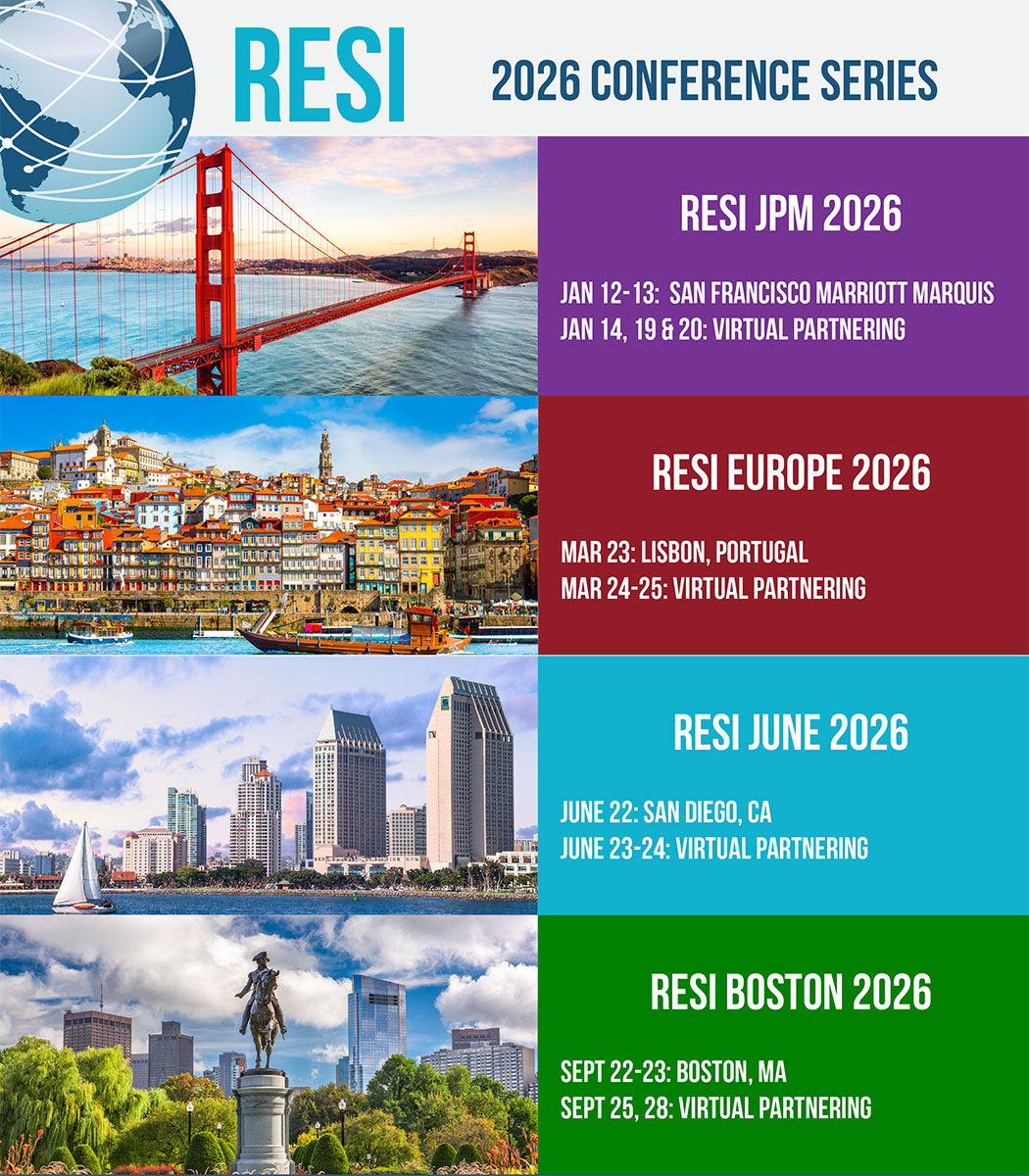
The RESI 2026 Series continues Life Science Nation’s commitment to providing consistent, high-quality partnering opportunities for life science and healthcare innovators. Designed to connect startups with investors and strategic partners that align by sector, indication, and stage of development, each RESI conference offers a structured environment for founders navigating an increasingly competitive fundraising landscape.
Throughout the 2026 Series, attendees will find a familiar mix of investor panels, expert-led workshops, the Innovator’s Pitch Challenge, and a partnering system built to support targeted outreach and productive meetings. These elements work together to help companies strengthen their messaging, expand their networks, and identify capital sources that are the best fit for their technologies.
As scientific progress accelerates and capital deployment becomes more selective, the RESI 2026 Series serves as a reliable forum for global stakeholders to exchange insights, source opportunities, and build lasting relationships across the life science ecosystem.
Although therapeutic antibodies represent a $160 billion-dollar annual market and comprise a third of all approved drugs, discovering new antibody molecules remains a labor-intensive process, requiring slow experimental approaches with low hit rates, such as animal immunizations and or the panning of phage- or yeast-displayed antibody libraries. The drug hunter’s dream would be to design an antibody to any target by simply entering information about that epitope into a computer. Now that dream is one step closer with a recent proof of principle peer-reviewed paper published in Nature on work disclosed last year from the team of 2024 Nobel Laureate David Baker. Baker and his colleagues at the University of Washington introduce the first generalizable machine-learning method for designing epitope-specific antibodies from scratch without relying on immunization, natural antibody repertoires, or knowledge of pre-existing binders.
Overview of the Baker lab’s design pipeline. RFdiffusion performs the backbone design step, given a target, epitope hotspots and antibody framework. ProteinMPNN designs only the sequence of the CDR residues (not the framework residues). Fine-tuned RoseTTAFold2 predicts the structure of the designed antibody, given the target (sequence, structure and, optionally, some fraction of hotspot residues) and designed antibody sequence. Self-consistency (high similarity between predicted and designed structures) and high confidence (low predicted alignment error) define in-silico success. Source: Nature
Unlike small-molecule drug development, which has benefitted from an explosion of interest in the use of machine-learning models, in-silico design of antibody binders has lagged far behind. One reason for this is the paucity of high-resolution structures of human antibody–antigen pairs—currently only ~10,000 structures for 2,500 antibody-antigen pairs have been lodged in SAbDab (a subset of the RCSB Protein Data Bank). Most of these structures are soluble protein antigens, but there’s little data to model antibody binders to GPCRs, ion channels, multipass membrane proteins and glycan-rich targets, which are of most commercial interest. Overall, the antibody–antigen structural corpus is orders of magnitude smaller, noisier and narrower than that available for small molecules, lacking information on binding affinities and epitope competition maps via PDBBind/BindingDB/ChEMBL.
For these reasons, most companies have focused on machine learning prediction of developability properties—low aggregation, high thermostability, low non-specific binding, high solubility, low chemical liability/deamidation and low viscosity—for an antibody’s scaffold, rather than in-silico design of the six complementarity determining-regions (CDRs) on the end of an antibody’s two binding arms.
Xaira debuted last year with >$1 billion in funding to advance models originating from the Baker lab. Nabla Bio also raised a $26 million series A in 2024, publishing preprints in 2024 and 2025 that describe its generative model (‘JAM’) for designing VHH antibodies with sub-nanomolar affinities against the G-protein coupled receptor (GPCR) chemokine CXC-motif receptor 7 (CXCR7), including several agonists. In August, Chai announced a $70 million series A financing based on its ‘Chai-2’ generative model disclosed in a preprint that details de novo antibodies/nanobodies against 52 protein targets, including platelet derived growth factor receptor (PDGFR), IL-7Rα, PD-L1, insulin receptor and tumor necrosis factor alpha, with “a 16% binding rate” and “at least one successful binder for 50% of targets”.
Finally, Aulos emerged with a $40 million series A in 2021 as a spinout from Biolojic Design. This program has generated computationally designed de novo CDR binders with picomolar affinities for epitopes on HER2, VEGF-A, and IL-2. The IL-2 antibody (imneskibart; AU-007)—designed to selectively bind the CD25-binding portion of IL-2, while still allowing IL-2 to bind the dimeric receptor on effector T cells and natural killer cells—reported positive phase 2 results in two types of cancer just last week. Absci, another more established company, has also been developing de novo antibodies, publishing a generative model for de novo antibody design of CDR3 loops against HER2, VEGF-A and SARS-CoV-2 S protein receptor binding domain.
Absci’s generative model generated several de novo CDR3 binders with different conformations to the trastuzumab-HER2 structure. Superimposition of the trastuzumab-HER2 structure with de novo designed binder-HER2 complexes shows conformational differences in the human CDR3 backbone. Main chain backbone traces are depicted as ribbons and spatial conserved side chains are shown as sticks. Source: bioRxiv
Overall, though, computational efforts have largely optimized existing antibodies or proposed variants once a binder already exists. Recent generative approaches have often needed a starting binder, leaving de novo, epitope-specific antibody creation as an unmet goal. The Baker paper now provides a generalizable, open-source machine-learning approach that can find low nanomolar antibody binders to a wide range of targets.
To accomplish this task, the authors use RFdiffusion, a generative deep-learning framework for protein design, extending its capabilities by fine-tuning it specifically on antibody–antigen structures. Their goal was to enable the in-silico creation of heavy-chain variable domains (VHHs), single-chain variable fragments (scFvs), and full antibodies that target user-defined epitopes with atomic-level structural accuracy.
Their approach integrates three major components: backbone generation with a modified RFdiffusion model, CDR sequence design via the algorithm ProteinMPNN, and structural filtering using a fine-tuned RoseTTAFold2 predictor (the authors note that improved predictions can now be obtained by swapping out RoseTTAFold2 for AlphaFold3 developed last year by Google Deepmind and Isomorphic Labs). The refined RFdiffusion model can design new CDRs while preserving a fixed antibody framework and sampling diverse docking orientations around a target epitope. The resulting models generalize beyond training data, producing CDRs unlike any found in natural antibodies.
Baker and his colleagues created VHHs against several therapeutically relevant targets, including influenza H1 haemagglutinin, Clostridiumdifficile toxin B (TcdB), SARS-CoV-2 receptor-binding domain, and other viral or immune epitopes. High-throughput screening via yeast display or purified expression led to the identification of multiple binders, typically with initial low affinities in the tens to hundreds of nanomolar range. Cryo-EM confirmed near-perfect structural agreement between design models and experimental complexes, particularly for influenza haemagglutinin and TcdB, demonstrating atomic-level accuracy across the binding region and the designed CDR loops. To enhance affinity, the authors used OrthoRep, an in-vivo continuous evolution system, for the affinity maturation of selected VHHs. The affinity of the resulting VHHs improved by roughly two orders of magnitude while retaining the original binding orientation.
Baker and his team further challenged their method with the more difficult problem of de-novo scFv design, which requires simultaneous construction of six CDR loops across two amino acid chains. The team introduced a combinatorial assembly strategy in which heavy and light chains from structurally similar designs were mixed to overcome cases where a single imperfect CDR would compromise binding. This enabled the discovery of scFvs targeting the Frizzled epitope of TcdB and a PHOX2B peptide–MHC complex. Cryo-EM validation of two scFvs showed that all six CDR loops matched the design model with near-atomic precision.
Future work is needed to extend de novo antibody prediction via this method to tougher target classes, such as membrane proteins. Clearly, modeling across all six CDR loops and the heavy and light chains remains a hard problem; indeed, the paper’s marquee result was designing a single scFv where all six CDRs matched the designed pose at high resolution; more generally, scaling reliable heavy- and light-chain co-design beyond a few cases remains an open engineering challenge that future methods will need to solve. For the field to gather momentum, benchmarking efforts like the AIntibody challenge will be needed, together with public efforts to create datasets of negative binding data, akin to those described in a paper published earlier this year.
Overall, the Baker paper is seminal work that establishes a practical and accurate approach to designing epitope-specific antibodies from scratch. It represents a major advance in the development of therapeutic antibody discovery.
By Max Braht, Director of Business Development, LSN
As the life science world converges on San Francisco for J.P. Morgan Healthcare Week in January 2026, the RESI Conference plays a central role, and its website’s dedicated “JPM Week Events” page is an essential resource for attendees and stakeholders alike. Here’s a breakdown of what the site offers and why it’s such a valuable hub.
What Is the JPM Week Events Page?
The RESI “JPM Week Events” page is essentially a curated calendar and guide, maintained by Life Science Nation. It compiles an exhaustive list of life science–oriented events happening in parallel with JPM Healthcare Week, from early morning breakfasts to high-level receptions and symposiums.
It’s not just a list; it’s a strategic tool for entrepreneurs, investors, and corporates to plan how to maximize their time during one of the most frenetic weeks in biotech and healthcare investments.
What’s on the Agenda: Highlights from the 2026 Schedule
Here is some standout events listed for January 2026 on RESI’s page:
January 10–11:
San Francisco CEO | Longwood Healthcare Leaders Forum — A full-day leadership forum at the Four Seasons.
9th Annual Neuroscience Innovation Forum — Focused on business development, licensing, and investment, held at the Marines’ Memorial Club.
PwC Executive Women’s Event — A networking event aimed at women leaders in healthcare.
Yafo Capital ACCESS ASIA BD Forum — A cross-border business development forum in San Francisco.
January 12:
RESI JPM 2026 Conference at the San Francisco Marriott Marquis.
AcuityMD Sunrise Partnering Breakfast — An early morning session for high-value partnering.
AdvaMed Member Meeting Space & Receptions — Dedicated space for AdvaMed members.
Incubate & DLA Piper: Innovation at a Crossroads — A policy-focused discussion on biopharma strategy in a changing global landscape.
Lifeblood & Goodwin MedTech CEO-only Forum — A specialized gathering for medtech CEOs.
MassBio Meeting Space & Receptions — Hosted by MassBio at the Parc 55 Hotel.
QNova LifeSciences 12th Annual Partnering Forum — A major partnering event in the Hilton Union Square.
PMI Biotech Reception — A dinner reception at InterContinental Mark Hopkins.
Aquillius Pitch Showcase — A pitching event for life sciences companies.
Biovia Event: Clusters of Excellence — A forum on European life science clusters and global success.
T2Bmeet @ JPM — A streamlined meeting event to facilitate business development and partnering.
Scale Biosciences JPM Happy Hour — Evening social for dealmakers.
STAT @ JPM26 Live — A live event by STAT News.
Reed Smith Reception — At the Museum of the African Diaspora.
Deloitte Reception — A networking evening hosted by Deloitte.
January 13:
Continuation of RESI JPM 2026.
Fierce JPM Week — A track that runs throughout JPM Week, focused on dealmaking and thought leadership.
Biocom California Events — Receptions, meeting space, and more at Omni San Francisco.
KoreaBIO / BioCentury / Sidley Austin IR Forum — Global investor relations forum.
LaunchBio & Inspira Innovators Social Hour — A more informal social event for early-stage founders.
Katten’s Diptyque Client Reception — A luxury experience for select invitees.
Dartmouth Offsite — Hosted at the Beacon Grand Hotel.
Bits in Bio Reception — For emerging biotech companies and leaders.
January 14–15:
Multiple networking breakfasts, partnering forums, and receptions.
HCPEA Women’s Mentor/Mentee Networking Breakfast on January 14.
2026 Stanford Alumni in Healthcare Networking Mixer — A Stanford alumni focused event.
CTIP Innovator Showcase (Jan 15) — For pediatric technology innovators.
MBC BioLabs: Meet the Founders — Founders’ networking at a biotech incubator.
Toplink Conference @ JPM — A full-day conference on tech + life science.
And more receptions, including PCI Pharma Services, California Israel Chamber of Commerce Israel Lounge, and Destination Medical Center Discovery Exchange.
Why This Page Matters
Comprehensive Planning Tool: For anyone attending JPM Week — whether founders, investors, BD execs, or scientists — having a central, curated list of relevant life science events is invaluable. Rather than navigating a sea of scattered invitations, the RESI page brings together a clean, structured schedule.
Partnership Optimization: Many of the events listed are tailored for dealmaking — breakfasts, partnering forums, and pitch showcases. This makes it easier for startups to schedule and maximize high-impact interactions.
Community Spotlight: The page isn’t only about formal conferences; it also highlights social events, networking mixers, and sector-specific receptions (e.g., women in healthcare, neuroscience, medtech). This helps attendees connect on both professional and personal levels.
The RESI “JPM Week Events” page is more than just a listing: it’s a strategic roadmap for navigating one of the busiest and most important weeks in healthcare investing. By consolidating diverse events, boardroom policy talks to rooftop cocktail receptions; it empowers life science professionals to plan smarter, connect deeper, and maximize their time.
For anyone participating in RESI JPM 2026, bookmarking this page is one of the first steps to making the most of the week.
By Max Braht, Director of Business Development, LSN
Showcase your brand, services, and expertise to a global life science audience
Life Science Nation (LSN) is introducing a new opportunity at RESI JPM 2026, the Company Presentation Track, designed for service providers, established companies, and later-stage ventures seeking to elevate their brand visibility and connect with decision-makers across the global life science ecosystem.
Taking place January 12-13, 2026, at the Marriott Marquis in San Francisco, RESI JPM will also feature three days of virtual partnering on January 14, 19–20. RESI JPM will bring together hundreds of early-stage life science and healthcare companies and over 500 global investors for two full days of partnering, investor panels, and networking.
The new Company Presentation Track offers organizations a unique platform to deliver a 15-minute presentation highlighting their business, market positioning, and value proposition. Unlike the Innovator’s Pitch Challenge, which focuses on fundraising and investor feedback for early-stage startups, these company presentations are designed for firms looking to expand their visibility, attract new clients, and strengthen their strategic partnerships.
Participants in this track will have the opportunity to:
Present their company, products, and services to an engaged global audience.
Build brand recognition among investors, partners, and industry peers.
Demonstrate thought leadership and industry expertise in a highly visible format.
This new feature adds to RESI’s robust mix of investor panels, workshops, partnering meetings, and exhibition opportunities, making it a comprehensive platform for business development and partnership-building across the life science sector.
Make your mark at RESI JPM. Share your story, elevate your brand, and connect with investors, innovators, and service providers driving the future of healthcare innovation.
To apply, select Company Presentation during your RESI JPM registration or contact the RESI team at RESI@lifesciencenation.com for more information.
The firm is focused on therapeutics companies and does not invest in medical devices, diagnostics, or digital health. The firm is open to considering assets of very early stages, even those as early as lead optimization phase. The firm considers various modalities, including antibodies, small molecules, and cell therapy. Currently, the firm is not interested in gene therapy. Indication-wise, the firm is most interested in oncology and autoimmune diseases but has recently looked at fibrotic diseases and certain rare diseases as well.
The firm is opportunistic across all subsectors of healthcare. Within MedTech, the firm is most interested in medical devices, artificial intelligence, robotics, and mobile health. The firm is seeking post-prototype innovations that are FDA cleared or are close to receiving clearance. Within therapeutics, the firm is interested in therapeutics for large disease markets such as oncology, neurology, and metabolic diseases. The firm is open to all modalities with a special interest in immunotherapy and cell therapy.
A strategic investment firm of a large global pharmaceutical makes investments ranging from $5 million to $30 million, acting either as a sole investor or within a syndicate. The firm is open to considering therapeutic opportunities globally, but only if the company is pursuing a market opportunity in the USA and is in dialogue with the US FDA.
The firm is currently looking for new investment opportunities in enterprise software, medical devices, and the healthcare IT space. The firm will invest in 510k devices and healthcare IT companies, and it is very opportunistic in terms of indications. In the past, the firm was active in medical device companies developing dental devices, endovascular innovation devices, and women’s health devices.
A venture capital firm founded in 2005 has multiple offices throughout Asia, New York, and San Diego. The firm has closed its fifth fund in 2017 and is currently raising a sixth fund, which the firm is targeting to be the largest fund to date. The firm continues to actively seek investment opportunities across a […]









 Next Phase Newsletter