Tag Archives: travel

Will PubMed be Shutdown? 

15 Oct

By Sougato Das, President and COO, LSN

Sougato-Das

Many in the life sciences research community were spooked when PubMed went down temporarily in March after the Trump administration cut $4 billion in “indirect costs” that supported medical research. More recently, an ominous message appeared on PubMed: “Because of a lapse in government funding, the information on this website may not be up to date, transactions submitted via the website may not be processed…” Many who use PubMed but not other government websites were probably panicked by this, but a quick look at clinicaltrials.gov, NIH Reporter and even NIH’s main site reveals the same message, while different versions of this message appear on the websites of HHS, CMS, etc.

Still, various EU governments have been quietly preparing for a PubMed shutdown by ensuring they will have a PubMed-alternative just in case. Of course, let’s be real: while they may be able to serve the existing content in PubMed, they will not be able to suddenly support the thousands of additional abstracts and articles added each day, along with MeSH tagging, journal selection, XML/JSON feeds, and other critical functions PubMed provides.

While PubMed is critical to nearly every life science researcher, even those with access to Web of Science, Embase, etc., it is especially critical to early-stage life science companies and investors. For basic research, competitive intelligence, due diligence and more, PubMed is indispensable for those without access to paid literature databases. PubMed is also an important source for pipeline database providers that investors and pharma use to find assets and perform CI.

The US government, for decades, has supplied a critical and reliable literature resource for worldwide audiences, both professional and non-professional alike. With the addition of the first and best clinical trial registry in 2000, continued funding for this resource is paramount for global biomedical research.

From RESI Boston to Global Growth: Bilix on Winning the Innovator’s Pitch Challenge

15 Oct
Myung Kim
  CaitiCaitlin Dolegowski

Bilix, recognized as a top Innovator’s Pitch Challenge winner at RESI Boston this past September, is making waves in the biotech space with its innovative multi-modality approach to inflammatory and autoimmune diseases. In this interview, Myung Kim, Founder and CEO, shares how participating in RESI Boston helped the company connect with key investors, refine its strategy, and advance its clinical milestones.

Hear firsthand how Bilix is driving progress in complex disease treatment and discover how your company can join the next generation of innovators pitching at RESI London and RESI JPM. Applications are now open.

Apply to Pitch at RESI London Apply to Pitch at RESI JPM

How 100% Pharma Tariffs Could Ripple Through Early-Stage Biotech Investment 

7 Oct

By Sougato Das, President and COO, LSN

Sougato-Das

We have all heard about the recent 100% pharma tariff announcement, applicable mainly to manufacturers or marketed drugs unless they are in the process of building manufacturing facilities in the US. We know that early stage biotechs are generally not counting on investment to take them through manufacturing, for which they will seek a pharma partner. Nevertheless, these tariffs may still have an effect on early-stage biotech investments. Investment in early-stage (seed, Series A/B) biotech is likely to face increased headwinds under a 100 % pharmaceutical tariff regime. The tariff risk exacerbates existing structural challenges in biotech investing.

Overall Expected Effect (Short to Medium Term) 

  • Slower fundraising pace 
    The number of deals may decline, particularly in the earlier stages. Biotech investors will likely become more selective, preferring de-risked assets, strong data, or compelling platforms with clear strategies to mitigate tariff exposure.
  • Higher effective cost of capital 
    Investors will demand more upside or stricter protections (e.g. liquidation preferences, anti-dilution) to compensate for the added risk.
  • Greater emphasis on capital efficiency / leaner burn models 
    Startups may need to conserve cash more, focus earlier on key inflection points, outsource less, and plan fallback strategies for supply chain risk.
  • Longer timelines / delayed exits 
    Because of the risk, uncertainty, and possible delays, the time to IPO, acquisition, or commercialization may stretch, further compressing IRR for investors.
  • Capital flow shift toward infrastructure and enabling technologies 
    Some portion of venture capital may redirect toward bioprocessing, domestic manufacturing, synthetic biology for local API production, supply-chain tools — companies that can help others evade tariff impact.
  • Public market investment in pharma may slow, leading to less IPOs 
    The tariffs could serve to further erode the attractiveness of the biopharma sector for public market investors, reducing the room for IPOs, and pressuring investment taking place more upstream.

In summary, while the recent 100% pharma tariffs certainly don’t have a direct effect on early-stage biotech investing, their dampening effects will nonetheless be felt.

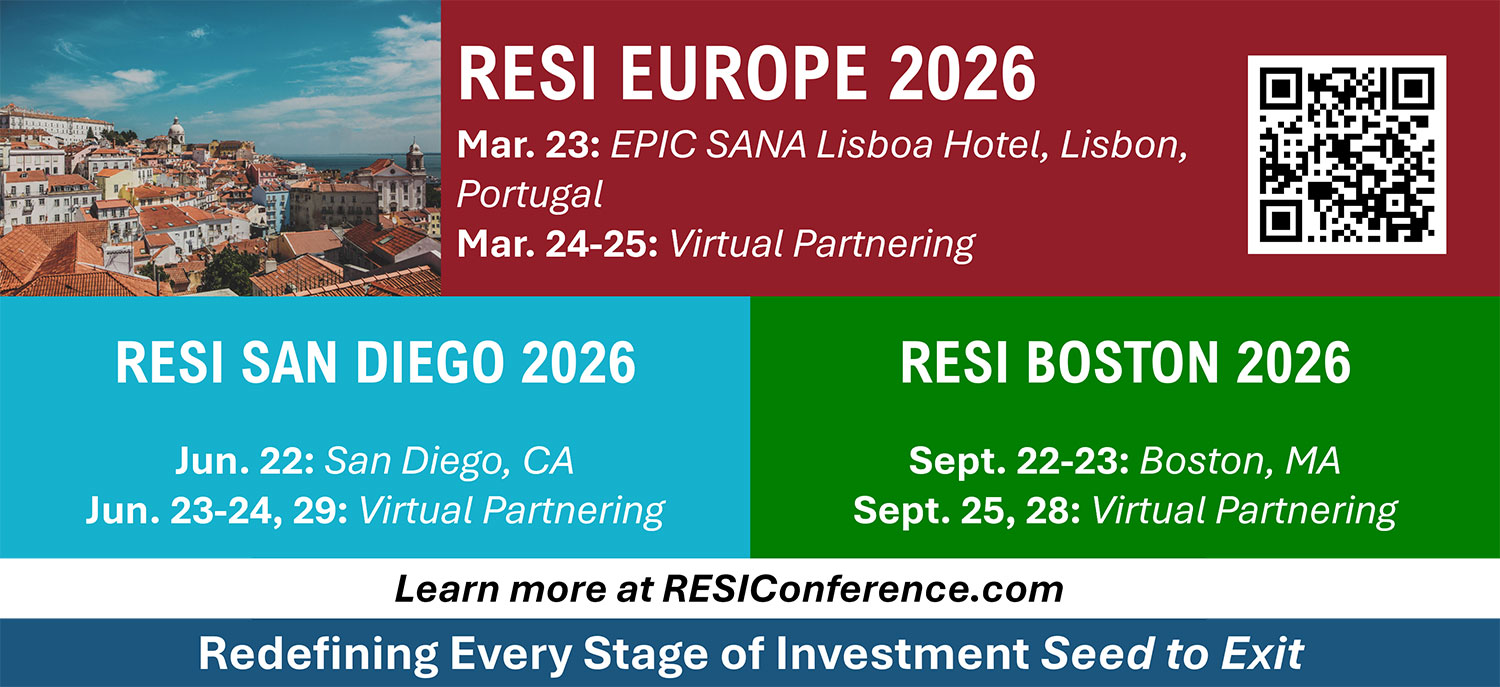
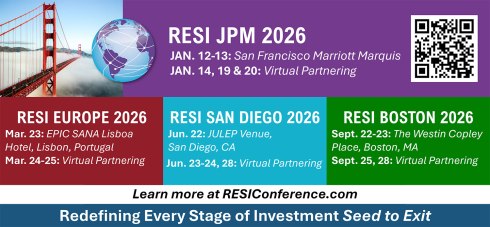
Super Early Bird Rates End October 3 for RESI London and RESI JPM 

30 Sep

By Sougato Das, President and COO, LSN

Sougato-Das

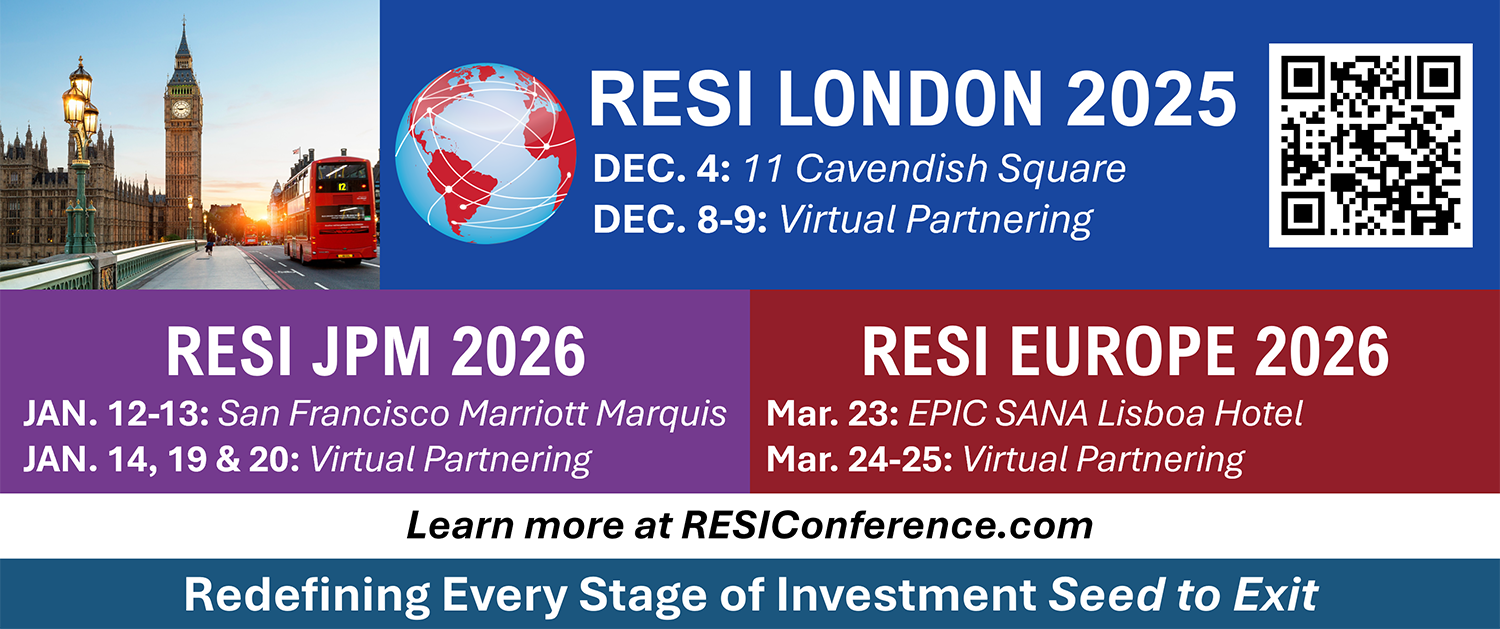
Life Science Nation’s Redefining Every Stage of Investments (RESI) conferences are designed to connect life science companies with global investors and strategic partners. Two major upcoming events, RESI London and RESI JPM, are now open for registration at Super Early Bird rates through October 3. By registering early, attendees can save £300 on RESI London and $800 on RESI JPM.

RESI London 2025

The first week of December marks the largest life science partnering and venture week in the UK. If you are raising pre-seed, seed, round A or round B, or are in phase 2 or earlier development, Life Science Nation’s RESI London, One Nucleus’ Genesis, and ELRIG/SLAS events offer stronger partnering, investment, learning, and procurement opportunities compared to the health care week in late November that runs alongside the Jefferies investment banking event. That November week typically focuses on recent IPOs, companies close to IPO, and phase 3 or more advanced companies seeking partnerships. For companies not yet at that stage, December’s conference series is a more strategic use of critical conference and travel budgets.

RESI London and Genesis are joining to provide a multi-day investment, partnering, and thought leadership event for venture-stage companies pursuing funding and strategic alliances. RESI London will take place on December 4 at 1 Wimpole Street and 11 Cavendish Square, followed by two days of virtual partnering on December 5 and 6. Super Early Bird registration is now open, offering a savings of £300 until October 3.

RESI JPM 2026

RESI JPM will be held January 12–13, 2026, at the San Francisco Marriott Marquis. The program features two days of in-person investor panels, workshops, networking, and one-on-one partnering, followed by three days of online partnering on January 14, 19, and 20.

Previous RESI JPM conferences have drawn more than one thousand attendees, including over 500 investors, innovators, and industry experts from across the globe. The conference is held concurrently with JP Morgan Healthcare Week, January 12–15, 2026, which takes place at the Westin St. Francis. Known as the largest healthcare investment symposium worldwide, JPM attracts thousands of life science professionals each year.

Super Early Bird registration for RESI JPM offers a savings of $800 when completed before October 3.

Register for RESI London
Register for RESI & Genesis Combi Ticket
Register for RESI JPM

Both conferences provide access to global investors and in-licensors, strategic partners, and hundreds of early-stage innovators across therapeutics, medical devices, diagnostics, and digital health. Register now to take advantage of Super Early Bird discounts for RESI London and RESI JPM before October 3.

LSN Staff on Global Event Circuit; Find Out Who, What, and Where

30 Sep

By Max Braht, Director of Business Development, LSN

Max-Braht-Headshot

Life Science Nation is on the move. Between now and RESI London, our team will be attending a series of leading life science and medtech conferences around the world, connecting with innovators, investors, and strategic partners. Getting out into the global ecosystem allows us to better understand emerging trends, foster collaborations, and support life science companies in reaching their fundraising and partnership goals.

These engagements also reinforce the value of our global conference, RESI, which brings together investors, entrepreneurs, and strategic partners from across the world to drive innovation in life sciences. Attending regional and international events helps us strengthen these connections and grow our global community.

Here’s where you can find our team in the coming months:

October 
Oct. 4–8: San Diego for the MedTech conference, engaging with medical device innovators and investors. San Diego, CA
  • Max Braht (m.braht@lifesciencenation.com)
  • Matt Stanton (m.stanton@lifesciencenation.com)
Oct. 4–8: LSN Bootcamp and BioSpain, connecting with early-stage life science companies. Barcelona, Spain
  • Greg Mannix (g.mannix@lifesciencenation.com)
  • Karen Deyo (k.deyo@lifesciencenation.com)
  • Brenda Olmos (b.olmos@lifesciencenation.com)
Oct. 8–10: Japan for BioJapan, focusing on international biotech partnerships. Yokohama, Japan
  • Dennis Ford (dford@lifesciencenation.com)
  • Claire Jeong (c.jeong@lifesciencenation.com)
  • Momo Yamamoto (m.yamamoto@lifesciencenation.com)
Oct. 21-23: Sao Paulo for Corporate Venture in Brazil 2025, highlighting innovation and investment opportunities in Latin America. Sao Paulo, Brazil
  • Dennis Ford (dford@lifesciencenation.com)
  • Max Braht (m.braht@lifesciencenation.com)
  • Matt Stanton (m.stanton@lifesciencenation.com)
Oct 24-25: Washington DC for the 9th Annual KAPAL Conference, meeting global leaders in biotech and healthcare. Washington DC
  • Sougato Das (s.das@lifesciencenation.com)
Oct. 27–28: Miami for the BioHunt Summit, meeting emerging life science startups and investors. Miami, FL
  • Dennis Ford (dford@lifesciencenation.com)
  • Matt Stanton (m.stanton@lifesciencenation.com)
November 
Nov. 2–6: Vienna for BioEurope, connecting with corporate and venture partners across the life science ecosystem. Vienna, Austria
  • Max Braht (m.braht@lifesciencenation.com)
  • Greg Mannix (g.mannix@lifesciencenation.com)
Nov. 12–14: Malta at the MedTech World Summit, exploring opportunities in medical technology. Valletta, Malta
  • Greg Mannix (g.mannix@lifesciencenation.com)
  • Brenda Olmos (b.olmos@lifesciencenation.com)
Nov. 16–20: London for Jefferies London Life Sciences Week, engaging with global investors and biotech innovators. London, UK
  • Max Braht (m.braht@lifesciencenation.com)
  • Greg Mannix (g.mannix@lifesciencenation.com)
December 
Dec. 2: France for Biofit/Medfit, meeting early-stage innovators and strategic partners in biotech and medtech. Strasbourg, France
  • Max Braht (m.braht@lifesciencenation.com)
  • Matt Stanton (m.stanton@lifesciencenation.com)

We look forward to seeing our community at these events. If you’d like to connect with us while we’re on the road, please reach out to resi@lifesciencenation.com

Finalist in the RESI Boston Innovator’s Pitch Challenge – Meet M6P Therapeutics

30 Sep

In this interview, Caitlin Dolegowski speaks with Cuong Do, Founder and Chairman of M6P Therapeutics, about the company’s groundbreaking lysosomal targeting platform, its applications in rare disease and oncology, and the experience of pitching at RESI Boston.

Cuong Do
CaitiCaitlin Dolegowski

Caitlin Dolegowski (CD): M6P Therapeutics has achieved what was long thought impossible, delivering proteins to lysosomes. Can you explain the significance of this breakthrough?

Cuong Do (DO): An enzyme called GlcNac-1-phosphotransferase (PTase) is responsible for adding mannose 6-phosphate to the surface of lysosomal enzymes. People have tried and failed for decades to increase the expression of M6P, and everybody gave up. Our co-founder Stuart Kornfeld never gave up. He and his post-doc were able to engineer a variant of PTase that turned out to be 20X more effective than PTase itself in adding M6P to lysosomal enzymes. We built upon this breakthrough to create a platform that is able to create enzyme replacement therapies that have very high M6P content. Furthermore, our gene therapies are the only ones that result in M6P-containing enzymes being produced by the transduced cells.

We expanded upon the innovation and created chimeric antibodies that contain M6P as well. This allows these antibodies (after they bind to the targeted antigens) to be brought to lysosomes in virtually all cells in our bodies for degradation. This is a significant advantage over traditional antibodies relying on Fc clearance by only select immune cells.

CD: You have multiple rare pediatric drug designations and two programs nearing the clinic. What are the most exciting upcoming milestones for your pipeline?

DO: We are preparing to start an Investigator Initiated Trial in Australia for our M021 ERT for Pompe Disease in hopes of obtaining early human data demonstrating M021’s superiority over the standard of care.

CD: How does your lysosomal targeting platform extend beyond rare diseases, particularly in oncology with your chimeric PD-L1 and PD-1 antibodies?

DO: We figured out a way to add M6P to any protein, including antibodies. Our chimeric antibodies can be cleared by virtually all cells in the body since virtually all cells have receptors for M6P. This is especially effective for clearing surface antigens from cell surfaces. Our chimeric PD-L1 antibody is able to clear virtually all PD-L1 from the surface of tumor cells and thus activate T-cells and drive T-cell mediated tumor killing. Our chimeric version of Keytruda is able to remove PD-1 from the surface of T-cells and has shown to be more effective in inhibiting tumor growth in vivo than Keytruda itself.

CD: Can you walk us through your IP position and how it supports your growth strategy?

DO: We have invested heavily in IP that has created a portfolio of 9 patent families, 9 issued patents, and ~20 still in prosecution.

CD: Where are you in your fundraising journey, and what types of investors or partners are you looking to engage with?

DO: We have raised ~$40 million in our Seed and A rounds, which we invested to get our programs to where they are today. We are trying to raise a $5 million bridge now in anticipation of a $50+ million Series B next year. In addition to investors, we want to engage with potential partners who might be interested in our molecules.

CD: How did participating in the Innovator’s Pitch Challenge at RESI Boston help advance your business development or investor connections?

DO: We met a few companies who might be interested in partnering on some of our molecules. We’re continuing the conversations.


IPC Applications are now open for the next Innovator’s Pitch Challenge at RESI London 2025 and RESI JPM 2026, with spots filled on a rolling basis.

Partnering for Growth: DLA Piper on Supporting Life Science Innovation at RESI Boston 

9 Sep

At RESI Boston, global law firm DLA Piper plays a key role in guiding early-stage innovators through the legal and commercial challenges of scaling in the life sciences. In this interview, Lauren Murdza, Co-Chair of Technology & Life Sciences Licensing & Commercial Transactions, shares why DLA Piper chose to sponsor RESI, what the firm looks for in collaborations, and the trends shaping licensing and commercial transactions today.

Lauren Murdza
CaitiCaitlin Dolegowski

Caitlin Dolegowski (CD): What motivated DLA Piper to sponsor RESI Boston, and why do you see value in supporting this conference?

Lauren Murdza (LM): DLA Piper is committed to supporting innovation in the life sciences sector, and RESI Boston offers a unique opportunity to engage directly with early-stage companies and investors. Sponsoring RESI aligns with our mission to be a strategic partner to emerging life science ventures, helping them navigate legal complexities while fostering meaningful connections that drive growth.

CD: From your perspective, what makes RESI a strong platform for connecting with early-stage life science innovators and investors?

LM: RESI creates a unique environment where entrepreneurs, investors, and advisors come together to solve real challenges. For DLA Piper, it’s an opportunity to listen and engage in conversations that matter—how to protect IP, manage data rights, and structure collaborations that attract capital. Those discussions allow us to show how DLA Piper’s integrated approach—combining legal, regulatory, and commercial insight—helps companies accelerate their next milestone.

CD: Can you share what types of companies, technologies, or partners DLA Piper is most interested in engaging with during RESI?

LM: We’re particularly interested in companies developing novel therapeutics, diagnostics, digital health platforms, and medical devices. Our team seeks to engage with founders and executives who are navigating the transition from concept to commercialization and who value strategic legal guidance in areas such as licensing, IP protection, and regulatory compliance.

CD: How does your team at DLA Piper support life science and healthcare companies as they move from early-stage development to commercialization?

LM: DLA Piper supports clients across the full lifecycle of a company—from corporate formation and IP strategy to licensing, financing, and M&A. We help clients identify the core aspects of their technology, assess patentability, and streamline initial filings to create contingent assets that support fundraising. What sets DLA Piper apart is our ability to deliver this seamlessly across jurisdictions, giving clients the confidence that their legal strategy scales with their business.

CD: Are there particular trends or challenges in licensing and commercial transactions that you think entrepreneurs at RESI should be especially mindful of?

LM: We’re seeing three big themes. First, clarity on data and AI rights is critical—investors want to know who owns what and how data can be used, especially across borders. Second, deal structures are evolving, with more options-to-license, milestone-based terms, and royalty monetization to help bridge funding gaps. Finally, regulatory and supply chain issues—from FDA expectations to manufacturing scale-up—are showing up earlier in negotiations. At DLA Piper, we help clients anticipate these challenges so they don’t slow down growth.

CD: What does DLA Piper hope to accomplish through its participation at RESI Boston this year?

LM: We aim to deepen our engagement with the life sciences community, share actionable insights through workshops and panels, and identify promising companies that could benefit from our legal and strategic expertise. RESI Boston is a chance to listen, learn, and contribute to the ecosystem that’s shaping the future of healthcare innovation.

CD: Looking ahead, what excites you most about the current life science innovation landscape, and how does DLA Piper plan to play a role in advancing it?

LM: We’re excited by the convergence of AI, data science, and biotechnology, which is accelerating discovery and personalization in medicine. DLA Piper plans to continue supporting innovators by offering forward-thinking legal solutions and fostering connections that help companies bring transformative technologies to the market.