Boston is often called the center of the global biotechnology industry, and it’s therefore no surprise that investors are flocking to RESI Boston to meet with early stage drug development entrepreneurs. LSN has gathered a panel of 5 top investors in therapeutics to share their tips and insights on the assessment of novel therapeutic technologies.
These five panelists will be sharing their expertise with RESI’s audience:
Mark Day, Senior Director, Corporate Development, Alexion
The panel will cover the challenges of raising capital for early stage drug development. It’s a high-risk, high-reward investment sector, and these five investors have a wealth of experience in searching for the strongest early stage opportunities. Representing diverse groups, from foundations to VC to pharma, these investors will explain how you can position your company to work with them. If you’re interested in catching this panel live, you can sign up for RESI Boston now.
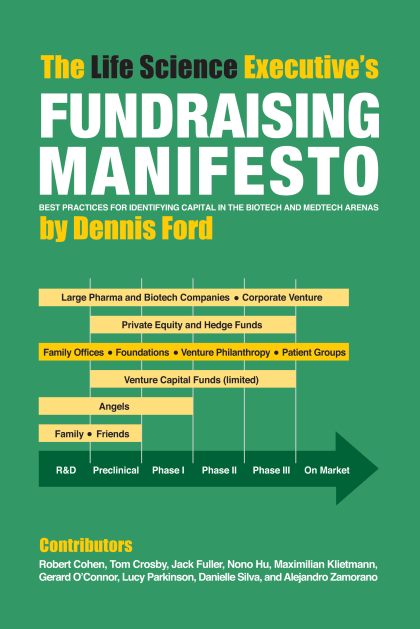
Last week, we provided an overview of the infrastructure required to execute an outbound campaign. This week, we take a deeper look at how to build your target list of investors.
Chapter 9: “Global Target List—Match Your Firm with Investors That Are a Fit” explains the importance of finding alignment between your life science company and an investor’s interests. Here we outline how to use information on past financing rounds to uncover potential investors, and how to screen these leads to find active investors that may be interested in your company’s technology. Finally, we’ll anatomize an investment mandate, and examine the factors that determine fit, including your location, the type of product you’re developing, and the stage of development your asset has reached.
Due to their recent trend toward making direct allocations (as opposed to fund investments) family offices have certainly caught the attention of biotech and medtech entrepreneurs, with many early stage companies keen to add one to their cap table.
Viewed as deep-pocketed, patient capital sources, entrepreneurs tend to have a lot of misconceptions surrounding family offices. Family offices are notoriously heterogeneous; they come in many shapes and sizes and no specific investment characteristics apply to them all. At our most recent RESI event at the MaRS Discovery District, representatives from four different family offices spoke to how they like to be approached, what they look for in an entrepreneur and the importance of the relationship, the types of deals they like to do and what they avoid.
Tailor your message based on who you’re approaching – do your homework
This point goes for all investors, but goes a bit deeper and is even more important for the family office. First off, you want to make sure you are talking to the right investor or else you’re wasting everyone’s time – it’s unlikely that an investor whose only ever played in the therapeutics space will be interested in looking at an investment opportunity in a medical device or health IT project. That being said, if your technology isn’t in the same sector but is addressing the same indication as one of their portfolio companies or there is synergy between your project and a portfolio company, this should be noted in the outreach. These types of things can go a long way and can’t be uncovered if you don’t research the investor you’re targeting.
A strong relationship is crucial to securing funding from a family office
Some family offices have professionals manage their money and add structure to their investment process while others are more informal. Either way, since the money is not coming from an institutional fund and family offices typically have longer investment timelines, it is key that the entrepreneur and investor have a good relationship. One investor added that a lot of the deals he’s done begun with a dialogue with the entrepreneur long before the deal was formally presented as an investment opportunity, mentioning that it takes a while to get to know someone and naturally people like to do business with people they like and trust.
Finding a family office takes work
Family offices are a highly sought after investors for good reason and typically don’t always advertise their investment activity thus uncovering which groups are family offices is not as easy as finding angel groups and VCs. As one investor puts it, “You can’t just expect to wake up and know which family office is interested in the sector you are in.” He further notes that the best way to find a family office is by going to relevant conferences and networking events.
It is well known that early stage therapeutic companies require a significant source of funding due to the long road of development. Despite therapeutic companies’ high-risk development timeline, many investors continue to remain focused on investing in biotechnology with a steadfast belief in the potential of the space.
For RESI on MaRS (June 23rd), LSN has assembled five highly experienced investors particularly interested in biotech therapeutics. Held in the heart of Canada’s healthcare innovation hub, MaRS Discovery District, the Early Stage Therapeutic Investors Panel will be moderated by Cynthia Lavoie, Partner of TVM Capital, and will be joined by:
Jennifer Hamilton, Senior Director, New Ventures (Canada), Johnson & Johnson
The panel will serve as an educational opportunity for scientist entrepreneurs to better understand the trends in investment in therapeutics, the investor’s perspective when approaching a deal in a high-risk space, and the best approach to initiate dialogue with them.
This is a tremendous opportunity for biotech life science entrepreneurs to meet and develop relationships with potential investors.
Incubators & Accelerators
It’s a huge challenge to launch a healthcare startup, but an increasing number of incubators and accelerator programs are stepping up to support early stage entrepreneurs and provide services, facilities and capital to speed their paths to market.
Leaders from five of these organizations are gathering at RESI on MaRS to share their experience of working with very early stage companies, and to explore how a startup can work with an incubator or accelerator partner to get ahead on their development pathway.
The moderator, Rebecca Yu, Head of JLABS @ Toronto, will be joined by:
The diagnostics space encompasses a very wide range of technologies targeting indications across the board, and is arguably the most difficult sector, under the life science umbrella, to successfully navigate. Not only do these entrepreneurs have to first identify the correct capital providers and strategic partners to make their technologies a commercial reality, like everyone else, but piquing the interests of those entities may be considerably more difficult. Oftentimes, clearly articulating the value proposition of your diagnostic product/service is a little trickier than that of a more traditional therapeutic or medical device, and the go-to-market strategy for these technologies will usually be more highly scrutinized.
Given the complex strategic landscape diagnostics often face, along with the importance of the having the correct strategy in place, the value of guidance and feedback from experienced diagnostic investors can’t be overstated. This diverse set of panelists, representing a variety of different funds and organizations, will give the audience firsthand perspectives to help position their companies for success.
Registering for the RESI Conference will give you the opportunity to listen to this panel live, connect with relevant investors and network with like-minded entrepreneurs.
Medtech innovation is one of the focuses of Texas Medical Center’s innovation programs, with TMCx focusing its startup acceleration program on medical devices and healthcare IT. RESI@TMCx will provide a venue for investors to meet with innovative medical device startups from Texas and beyond, and this panel session will explore what it takes to get a new device product funded and commercialized.
Moderated by Angela Shah, Editor, Xconomy, the panelists are:
The panelists will share their experience and insight on the medical device sector, including what areas of medical technology are of peak interest right now, what factors they examine when performing diligence on a medical device company, and what opportunities they see for the future of device innovation. If you’d like to hear from these experienced investors and from our expert moderator, you can register for RESI now.
Early stage therapeutics companies have a long road ahead to reach the marketplace, and will require significant investment along their way. The level of risk involved at this stage deters some investors, and much has been written about the pull-back of many venture capital firms from this phase of investment. At RESI, a panel of 5 investors who are highly experienced in investing in early stage therapeutic development will discuss how they pick winning scientfic teams and support their portfolio companies through the challenges of the development process.
Moderated by Lisa Rhoads, Managing Director, Easton Capital, the panel will feature:
This panel will give fundraising entrepreneurs a firsthand look at the strategies used by early stage therapeutic investors to assess companies at the earliest, riskiest stage of development, and will help the audience to position their companies as an attractive investment opportunity.
By registering for RESI@TMCx, you’ll be able to listen to the early stage therapeutic panel live in person, and also experience numerous opportunities to expand your network in the life sciences and to learn more about the fundraising process.
The firm is focused on therapeutics companies and does not invest in medical devices, diagnostics, or digital health. The firm is open to considering assets of very early stages, even those as early as lead optimization phase. The firm considers various modalities, including antibodies, small molecules, and cell therapy. Currently, the firm is not interested in gene therapy. Indication-wise, the firm is most interested in oncology and autoimmune diseases but has recently looked at fibrotic diseases and certain rare diseases as well.
The firm is opportunistic across all subsectors of healthcare. Within MedTech, the firm is most interested in medical devices, artificial intelligence, robotics, and mobile health. The firm is seeking post-prototype innovations that are FDA cleared or are close to receiving clearance. Within therapeutics, the firm is interested in therapeutics for large disease markets such as oncology, neurology, and metabolic diseases. The firm is open to all modalities with a special interest in immunotherapy and cell therapy.
A strategic investment firm of a large global pharmaceutical makes investments ranging from $5 million to $30 million, acting either as a sole investor or within a syndicate. The firm is open to considering therapeutic opportunities globally, but only if the company is pursuing a market opportunity in the USA and is in dialogue with the US FDA.
The firm is currently looking for new investment opportunities in enterprise software, medical devices, and the healthcare IT space. The firm will invest in 510k devices and healthcare IT companies, and it is very opportunistic in terms of indications. In the past, the firm was active in medical device companies developing dental devices, endovascular innovation devices, and women’s health devices.
A venture capital firm founded in 2005 has multiple offices throughout Asia, New York, and San Diego. The firm has closed its fifth fund in 2017 and is currently raising a sixth fund, which the firm is targeting to be the largest fund to date. The firm continues to actively seek investment opportunities across a […]







 Next Phase Newsletter